If you're trying to make sure your team is properly trained and actually OSHA compliant, you're asking the right question — because not all training marketed as "OSHA training" actually meets OSHA requirements.
I've seen companies spend money on training, feel confident they were covered, and then get shut down on a job site because the program didn't hold up. Here's how to vet a training program before that happens to you. The safety training as a cost — something they do to meet OSHA requirements, qualify for jobs, or check a box before a project starts. From real-world experience, that framing misses the point entirely. Safety training is one of the highest-return investments a company can make. Here's what that actually looks like in practice.
If a program costs $70–$80, takes a few hours, and delivers a card the same day, read the fine print carefully. Most of these certificates include language like "for supplemental training only" — which means the operator is not fully qualified and still needs to complete a practical evaluation. That's the step most people miss, and it's the one that gets them flagged on a job site.
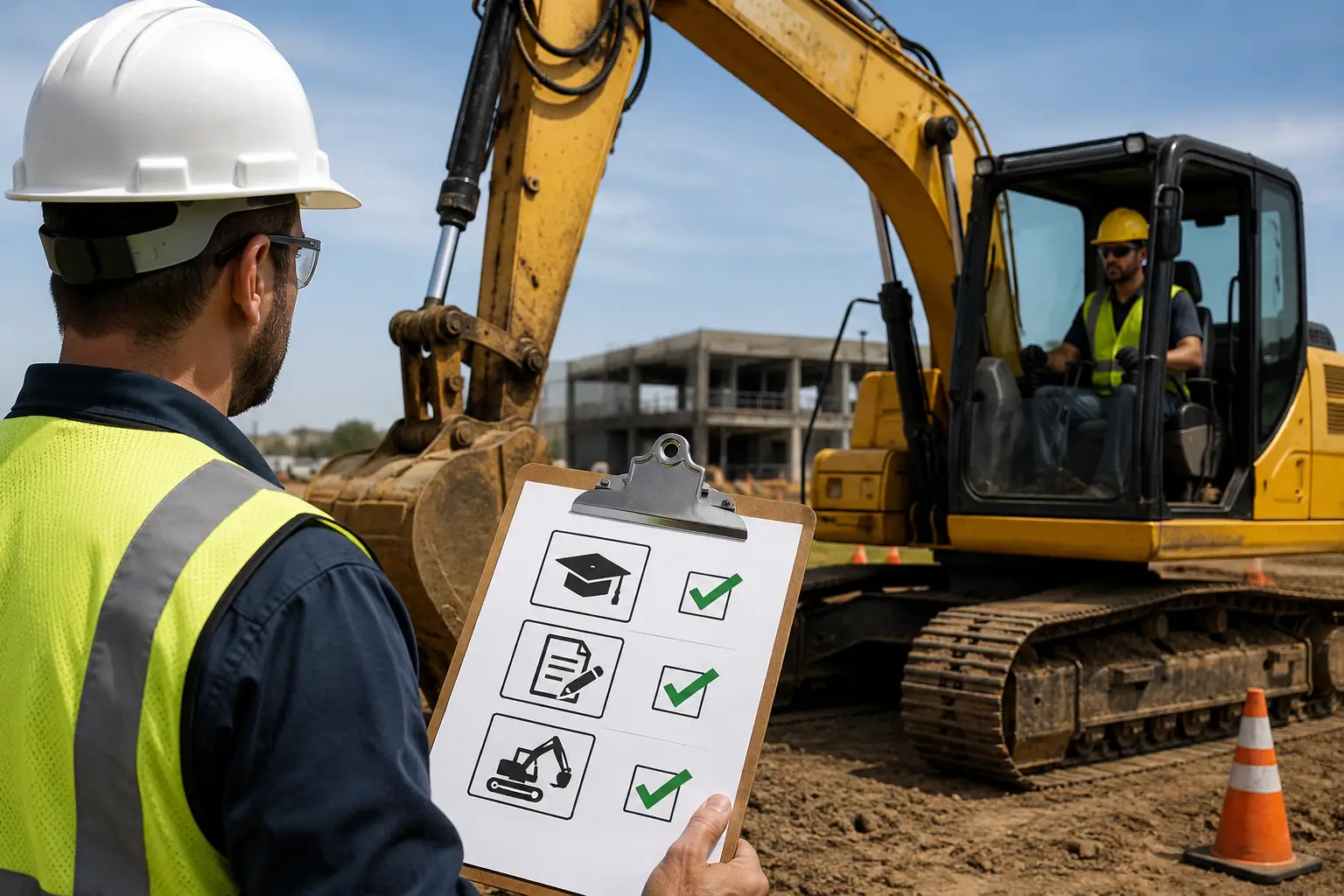
For a heavy equipment training program to meet OSHA standards, it needs three components. The first is classroom or theory instruction covering equipment operation, hazards, and safe procedures. The second is a written or verbal exam to verify comprehension. The third — and most important — is a hands-on practical evaluation conducted on actual equipment by a qualified evaluator, where the operator demonstrates real-world competency.
Without that practical evaluation, the training is not fully OSHA compliant.
Many online programs deliver the first two components and present themselves as OSHA compliant, which is technically accurate as far as it goes. But they can't provide a legitimate hands-on evaluation, which means operators who complete only the online portion aren't finished — they just don't always know that.
The consequences show up fast. I've seen training records submitted, reviewed by safety managers, and flagged immediately — resulting in work stoppages, retraining costs, and project delays. Beyond the direct costs, there's a credibility problem. Showing up to a job site with incomplete training sends a signal to general contractors that your company doesn't have its compliance house in order, and that perception can follow you.
Start with one direct question: Does this training include both a written exam and a hands-on practical evaluation? If you don't get a clear yes, the program is incomplete.
From there, push a little further. Ask who conducts the practical evaluation and what qualifies them to do it. Ask whether the program has been used by contractors working on active job sites and whether those operators have been accepted without issue. A reputable provider will answer these questions without hesitation. If you can't get someone on the phone, or if the answers are vague, that's worth paying attention to.
It's also worth separating marketing language from substance. "OSHA compliant" is a phrase that gets applied loosely, and what reads as compliant on a website doesn't always hold up in the field. The only way to know for certain is to verify what's actually included — not just what the program claims.
Before booking any training, talk to someone who actually conducts operator evaluations and works with contractors in the field. Not a sales rep — someone who understands what OSHA requires in practice and can tell you whether a specific program will satisfy those requirements for your equipment and work context. Ask other companies in your industry what they've used and whether it's been accepted on job sites without problems.
The cost of doing this homework upfront is zero. The cost of getting it wrong — retraining, delays, work stoppages — can run well into the thousands.