Crane Operator Certification & Training in Waterloo, IA
Waterloo is a manufacturing city. Plants account for about one job in six across the metro, and expansions like a new heat-treat furnace line keep heavy rigging in demand.
This page covers who to call before a crane goes into a Waterloo street, what the city requires for barricades, and what plant work means for how your lifting crews are qualified.

Training Services Offered in Waterloo
Based in Albuquerque, our instructors travel to you. Train at your own facility, or we'll arrange a rented site nearby. Either way, your crew trains on the crane they actually run.
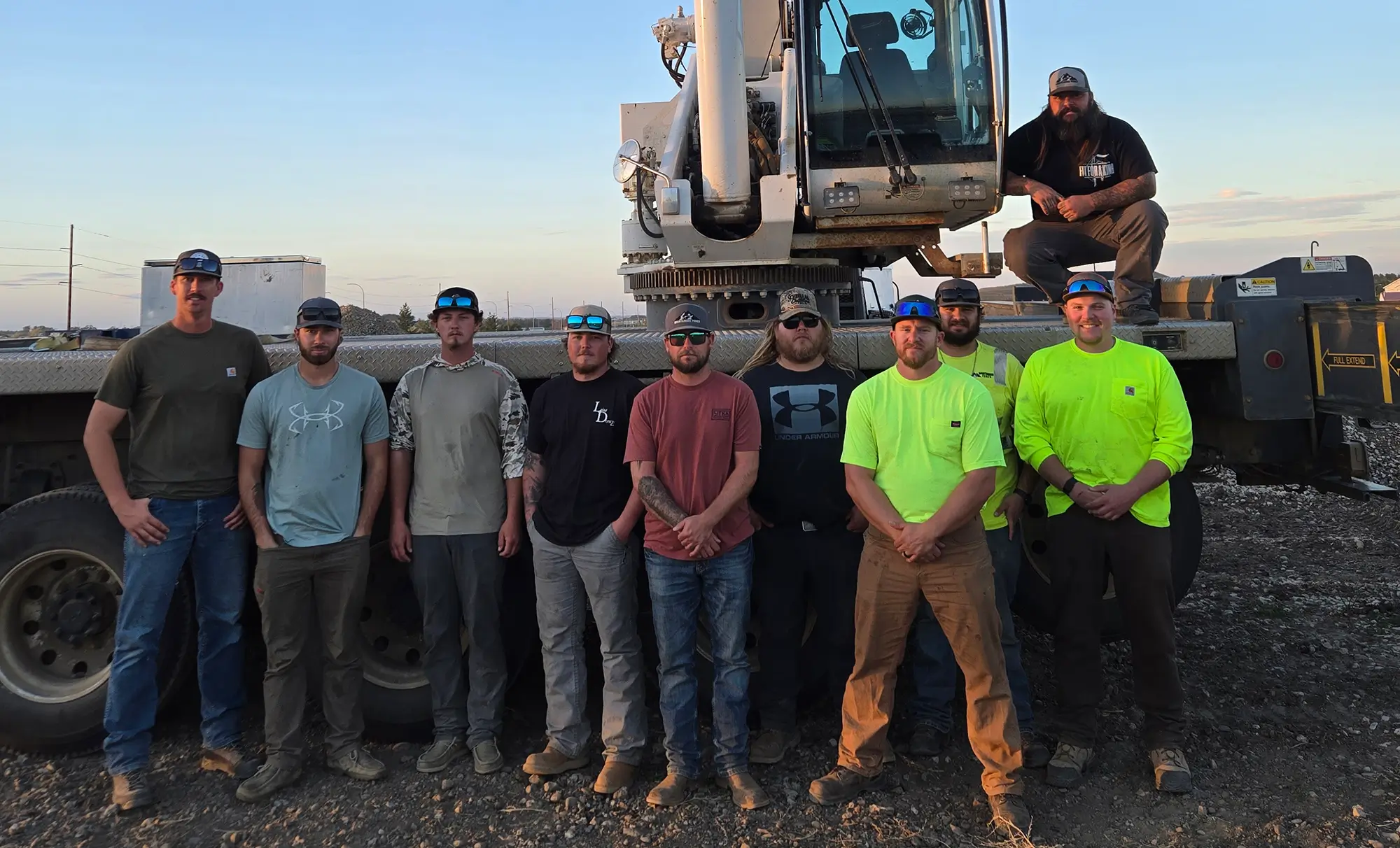
On-Site Training
On‑site training is designed for companies that have the facilities and equipment available at their own location and prefer to keep their employees onsite for logistical or operational reasons. All on‑site training requires the company to provide the crane or equipment that will be used during the training and evaluations.
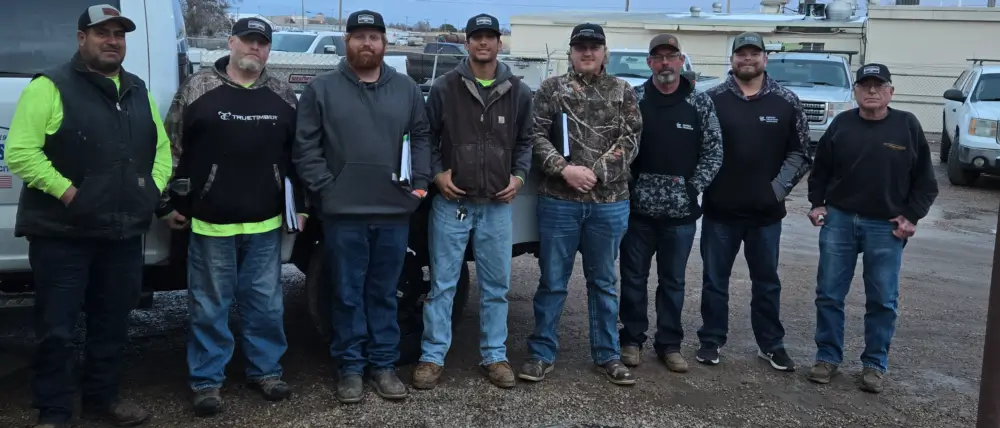
Off-Site Training
Off‑site training is intended for customers who do not have the facilities or space to conduct training at their own location. Paradise Crane Consultants will arrange a suitable rented facility; however, the company must still provide the crane or equipment needed for the training and evaluations.
Local permitting and municipal requirements
Waterloo does not publish a contractor permit for obstructing a street. Its code requires a city engineer permit for sidewalk work and makes the contractor responsible for proper warning lights and barricades around materials and equipment. Street closures are made by the city, by council resolution.
Before you set up a crane in a street or right-of-way, confirm requirements with Waterloo Engineering, City Hall, 715 Mulberry St., 319-291-4312, city.engineer@waterloo-ia.org.
Black Hawk County permits cover county roads only. On state highways, confirm with the Iowa DOT.
Local industry and employment
Black Hawk County carries 69,420 covered jobs across 3,941 establishments, with an average weekly wage of $1,167 in the first quarter of 2026.
Manufacturing is about one job in six across the Waterloo-Cedar Falls metro. In April 2026 the Iowa Economic Development Authority backed Advanced Heat Treat Corp.'s 18,000-square-foot expansion on Burton Avenue, a $5 million project adding a new furnace line for heavier, larger parts.
Furnace lines and heavy-part handling mean rigging inside working plants, often under overhead cranes.
If your crews work in manufacturing plants, qualify every role on the lift, not just the operator.
Who enforces crane rules in Iowa, and where does Iowa OSHA's authority stop?
Contractors in Iowa tend to assume one regulator covers every job site in the state. Iowa runs an OSHA-approved State Plan covering private-sector employers alongside state and local government, enforced by Iowa OSHA within the Division of Labor Services of the Iowa Department of Inspections, Appeals, and Licensing. Federal OSHA keeps jurisdiction over a short list of settings, and one of them lands directly on crane work: bridge construction projects spanning the Mississippi and Missouri Rivers between Iowa and other states. A lift on one of those bridges answers to federal OSHA. The same lift a mile inland answers to Iowa OSHA.
Iowa did not write its own crane standard. Rule 481—211.1(88) adopts the federal construction regulations beginning at 29 CFR 1926.16 by reference, 29 CFR 1926 Subpart CC among them, and makes them enforceable by the Iowa labor commissioner rather than the U.S. Secretary of Labor. The chapter adds no crane-specific requirement of its own; its only Iowa-specific substantive rule is a beryllium exposure limit.
That adoption is itemized rather than open-ended, which is useful when you need to prove what actually applies. The rule names the specific Federal Register notices Iowa has taken in, among them 75 FR 48130 (the August 9, 2010 cranes and derricks rule), 83 FR 56244 (the November 9, 2018 operator certification and evaluation amendments) and 85 FR 57122 (September 15, 2020). If you cite Iowa's rules in a safety plan or a subcontract, use the current number: the chapter moved from 875 IAC Chapter 26 to 481 IAC Chapter 211 in the Iowa Administrative Code supplement of July 9, 2025.
481 IAC 211.1(88), adopting 29 CFR 1926 Subpart CC
Is NCCER certification enough on its own?
NCCER certification is the right foundation for crane work in Iowa, and it satisfies the certification element outright, because Iowa issues no crane operator license of its own.
What Iowa enforces is the federal rule, as state law. Under 29 CFR 1926.1427, adopted through 481—211.1(88), an operator of covered equipment must be certified for the type of equipment being operated, either by an accredited crane operator testing organization or through an audited employer program. Certification from an accredited testing organization is valid for five years and travels with the operator between employers; certification through an audited employer program does not. Subsection (c)(3) requires the employer to provide it at no cost to the employee.
Certification is not the last step, and this is where crews get caught. Iowa's adoption list includes 83 FR 56244, the November 9, 2018 amendments, so the employer's duty to evaluate each operator on the specific equipment they will run is enforceable here as Iowa law. The evaluation must be documented with the operator's name, the evaluator's name and signature, the date, and the make, model and configuration of the equipment, and that record must be available at the worksite. A current certificate does not by itself make an operator qualified under the rule Iowa adopted.
What does the workplace safety data show?
Iowa recorded 83 fatal work injuries in 2024, down 8.8 percent from 91 the year before, according to the U.S. Bureau of Labor Statistics Census of Fatal Occupational Injuries. The state's fatal injury rate was 5.2 per 100,000 full-time-equivalent workers, down from 5.9 in 2023.
Private-industry construction accounted for 15 of those deaths, measured against a statewide total that covers all ownerships. Transportation incidents were the most frequent fatal event in Iowa, causing 33 deaths, 40 percent of the state total and the largest single category by a wide margin.
These are statewide figures covering all industries, not crane-specific data. They describe the conditions your crews are working in, and they are the numbers a compliance officer has in mind when deciding where to inspect.
What should you verify before your next lift?
Before your next covered lift in Iowa, work through these in order:
- Settle jurisdiction first. If the work is on a bridge spanning the Mississippi or Missouri River between Iowa and another state, federal OSHA inspects and cites. Everywhere else in the state, Iowa OSHA does. The standard is the same text either way; the agency is not.
- Confirm each operator holds a current certification for the type of equipment being operated, within its five-year validity, from an accredited testing organization or an audited employer program.
- Confirm the employer's documented evaluation for that operator on that specific equipment is available at the worksite, naming the make, model and configuration.
- Confirm the annual inspection by a qualified person is current within twelve months and documented, and that monthly inspection records cover at least the last three months. Equipment idle three months or more needs inspection before use.
- Update any safety plan, subcontract or bid document that still cites 875 IAC Chapter 26. The current citation is 481 IAC Chapter 211.
Upcoming certification and training sessions dates
Questions
Does Waterloo have a permit for a crane in the street?
The city does not publish a contractor street-obstruction permit. Street closures are made by the city by council resolution. Confirm requirements with Waterloo Engineering at 319-291-4312 before you mobilize.
Who is responsible for barricades in Waterloo?
The contractor. City code requires proper warning lights and barricades to protect people from materials and equipment.
Ready to schedule training in Waterloo?
Request on-site crane training in Waterloo, built around your crew, your equipment and your site.