Crane Operator Certification & Training in Topeka, KS
Topeka sits in Shawnee County, where manufacturing employs 8,518 people, 8.3% of all covered jobs (BLS QCEW 2025 annual average). Plant crews need qualified rigging and signaling on every lift.
This page covers the right-of-way permits Topeka uses for work in the street, the traffic-control and work-hour rules that shape a lift, and what the county's job mix means for how your crews are qualified.

Training Services Offered in Topeka
Based in Albuquerque, our instructors travel to you. Train at your own facility, or we'll arrange a rented site nearby. Either way, your crew trains on the crane they actually run.
On-Site Training
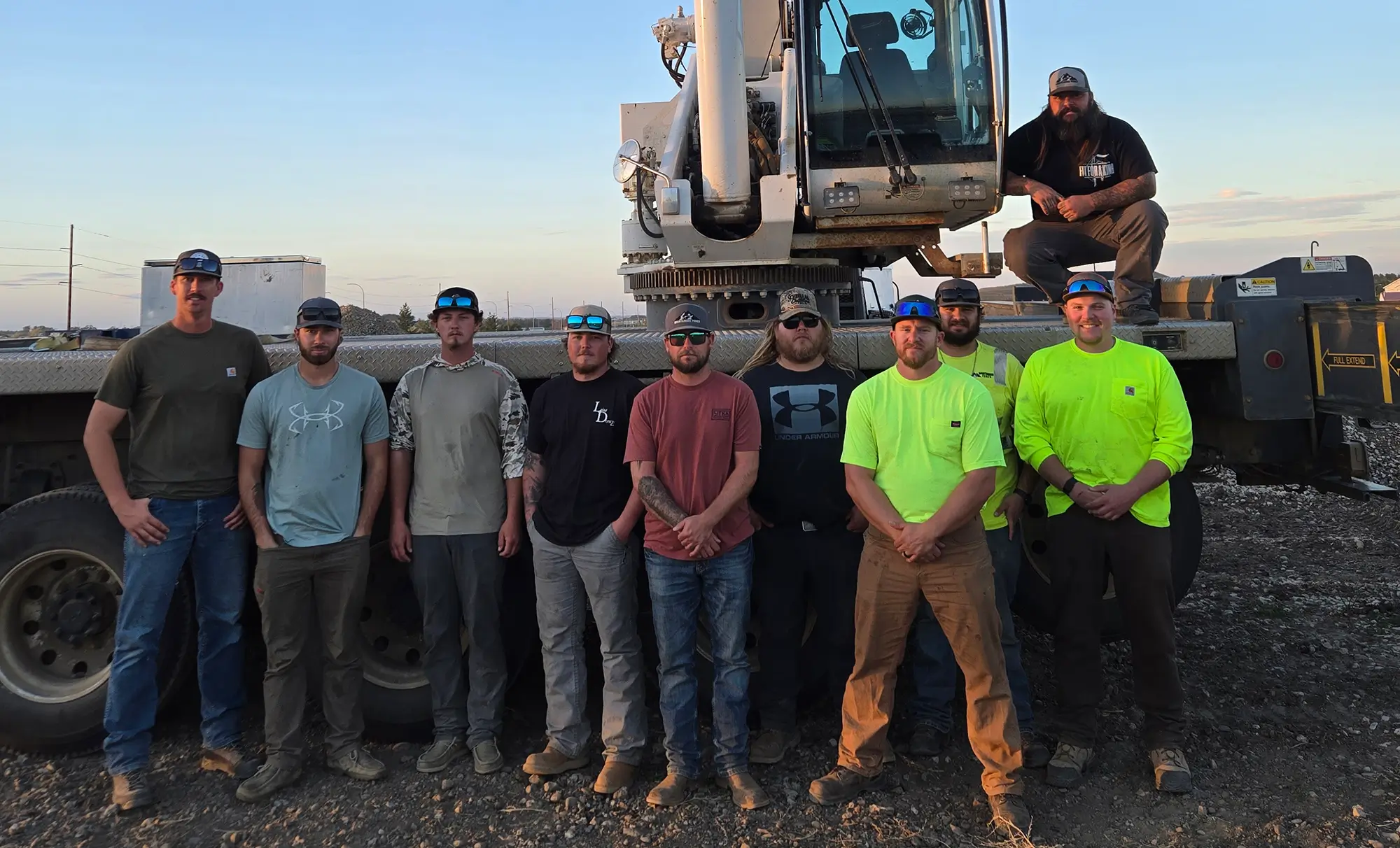
On‑site training is designed for companies that have the facilities and equipment available at their own location and prefer to keep their employees onsite for logistical or operational reasons. All on‑site training requires the company to provide the crane or equipment that will be used during the training and evaluations.
Off-Site Training
Off‑site training is intended for customers who do not have the facilities or space to conduct training at their own location. Paradise Crane Consultants will arrange a suitable rented facility; however, the company must still provide the crane or equipment needed for the training and evaluations.
Local permitting and municipal requirements
Topeka requires permits for any work or inspection inside City right-of-way. The 2026 Standard Technical Specification Manual names Temporary Use of Street or Sidewalk Right-of-Way for a single item and Right-of-Way Construction Permit for larger projects with multiple improvements. Development Services manages permits. The Engineering Division of Public Works reviews, approves, and inspects. A right-of-way permit is distinct from permission to operate a crane.
Traffic control must separate pedestrians from the work site and from vehicle traffic. The Engineer may require additional devices or flaggers. Major changes to roadway or sidewalk access need 72 hours' notice, excluding Saturdays, Sundays, and holidays. Work is performed in daylight unless otherwise specified or approved. Minimum vehicle lane width is 11 feet unless the Engineer determines otherwise. Where practical, park and store equipment off the right-of-way.
Permit fees are set by the City Fee Schedule. Confirm current fees with the city. Also confirm crane operation requirements, crane placement, and meter or parking arrangements with Development Services before you mobilize.
Local industry and employment
Shawnee County carried 102,421 covered jobs in the 2025 annual average, with average annual pay of $63,443 (BLS QCEW, county level).
Manufacturing accounts for 8,518 jobs, or 8.3% of the total, at $72,747 average annual pay. Transportation and warehousing adds 3,776 jobs (3.7%) at $58,752. Utilities employs 469 people (0.5%) at $113,161, the highest average pay of the three. All figures are 2025 annual averages for the county.
Plants, warehouses and utility operations all put lifting crews to work. Each lift depends on more than the operator. Riggers and signal persons carry the same responsibility for a safe pick.
If your crews work in these sectors, qualify every role on the lift. Paradise Crane delivers NCCER crane and rigging operator training at your site in Topeka.
Does Kansas have its own crane rules, or does federal OSHA apply directly?
Kansas runs on the federal crane standard itself. The governing construction crane rule is 29 CFR Part 1926, Subpart CC, Cranes and Derricks in Construction, with its construction scope set out at 29 CFR 1926.1400. It is a federal rule applied directly in Kansas, not a Kansas adoption-by-reference rule, because Kansas has no OSHA-approved State Plan.
For private-sector employers and workers, the listed enforcement contact is the federal OSHA Wichita Area Office. The Kansas Department of Labor Industrial Safety and Health Division offers free, confidential safety consultations, but it is not the federal OSHA enforcement office. Federal OSHA does not cover state and local government workers in Kansas, and hazards regulated by other federal agencies, such as MSHA and the Coast Guard, may fall outside OSHA's jurisdiction.
29 CFR Part 1926, Subpart CC; 29 CFR 1926.1400; 29 CFR 1926.1427; 29 CFR 1975.4(b)(3)
Is NCCER certification enough on its own?
Kansas operators are held to the federal certification baseline. For certification under 29 CFR 1926.1427, the rule calls for an accredited crane operator testing organization, with accreditation by a nationally recognized accrediting agency and both written and practical tests. The federal rule does not name a particular certifier, so confirm with the OSHA Wichita Area Office which certifications it accepts for your operators and equipment. Confirm with your local authorities whether any local requirement applies to your site.
Under the federal baseline, certification is valid for five years, and the employer pays for it. Certification does not finish the job. Before an operator runs a crane unsupervised, the employer must evaluate that operator on the assigned equipment and document the evaluation.
What does the workplace safety data show?
The U.S. Bureau of Labor Statistics Census of Fatal Occupational Injuries (CFOI) reports 56 fatal work injuries in Kansas in 2024, up from 53 in 2023. The state's fatal work injury rate was 4.1 per 100,000 full-time-equivalent workers, up from 3.8.
Transportation incidents were the most frequent fatal event, with 20 deaths.
These figures cover all industries, not cranes specifically.
What should you verify before your next lift?
Before your next covered lift in Kansas, work through these checks:
- Confirm jurisdiction first. Federal OSHA does not cover state and local government employees in Kansas, and hazards regulated by other federal agencies, including MSHA and the Coast Guard, may be outside OSHA's jurisdiction. Tribal status or reservation location alone is not an automatic exclusion under 29 CFR 1975.4(b)(3).
- Confirm with the OSHA Wichita Area Office and your local authorities whether any requirement applies beyond Subpart CC for your site.
- Confirm each operator's certification is current, issued by an accredited testing organization with written and practical tests, and accepted for the equipment type.
- Confirm the documented employer evaluation for each operator on the specific assigned equipment is available at the worksite.
- Use the Kansas Department of Labor's free, confidential consultation service for compliance questions, and remember it is not the enforcement office.
Upcoming certification and training sessions dates
Questions
Which Topeka permit covers a crane in the street?
The City's 2026 Standard Technical Specification Manual names Temporary Use of Street or Sidewalk Right-of-Way for a single item and Right-of-Way Construction Permit for larger projects. Development Services manages them. Both cover work in the right-of-way. Neither is permission to operate a crane, so confirm crane requirements with the city.
What traffic-control notice does Topeka require?
For major traffic-control changes that affect roadway or sidewalk access, the contractor must notify the owner, the engineer, and affected businesses, schools, and residents at least 72 hours ahead. That period excludes Saturdays, Sundays, and holidays. The Engineer may also require extra devices or flaggers.
Ready to schedule training in Topeka?
Request on-site crane training in Topeka, built around your crew, your equipment and your site.