Crane Operator Certification & Training in Tacoma, WA
Tacoma is a port city first, and that shapes the lifting work here. Pierce County moves freight at a scale out of proportion to its size, and a large share of the crane and materials-handling equipment in this market lives on fixed industrial sites rather than rotating between construction jobs.
It also means the city's right-of-way rules matter to you in a specific way: Tacoma runs two different permit tracks depending on how long your equipment stays put, and the insurance thresholds on the commercial track are higher than most contractors expect.

Training Services Offered in Tacoma
Based in Albuquerque, our instructors travel to you. Train at your own facility, or we'll arrange a rented site nearby. Either way, your crew trains on the crane they actually run.
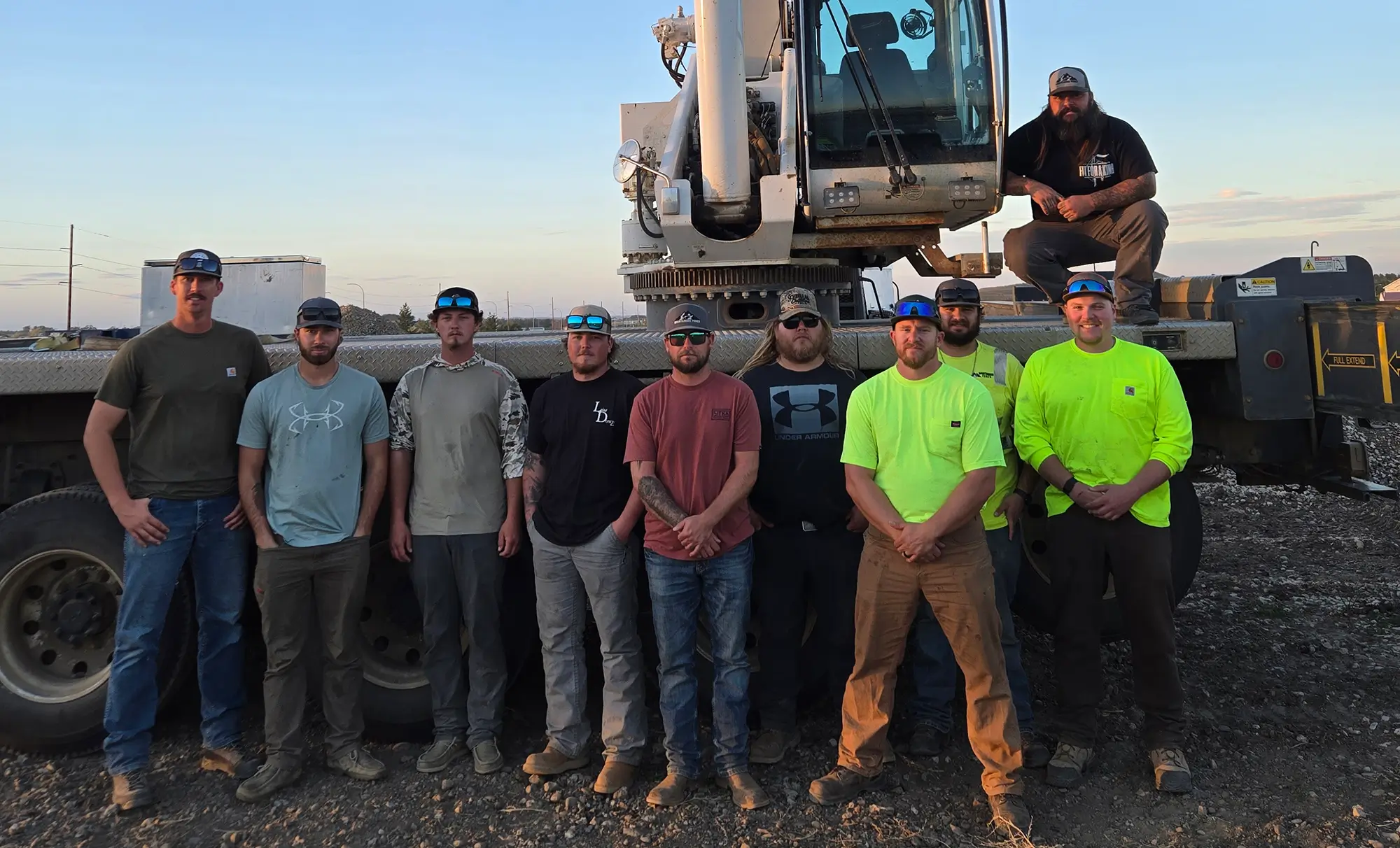
On-Site Training
On‑site training is designed for companies that have the facilities and equipment available at their own location and prefer to keep their employees onsite for logistical or operational reasons. All on‑site training requires the company to provide the crane or equipment that will be used during the training and evaluations.
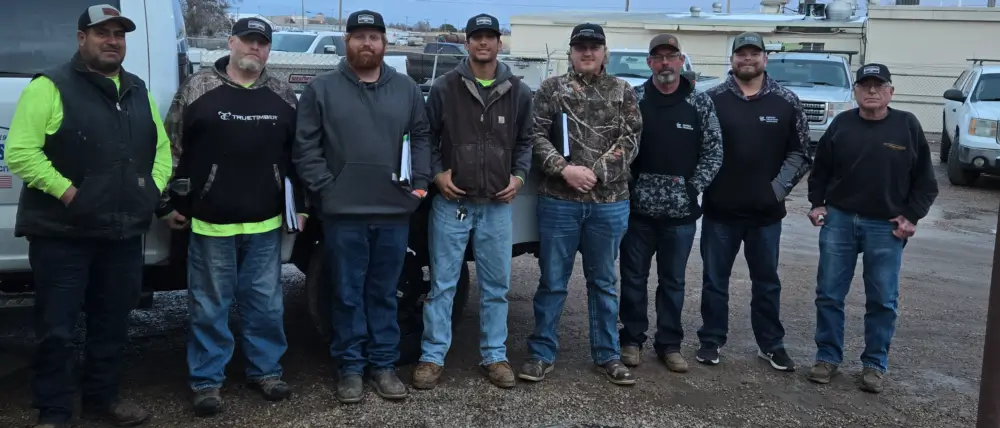
Off-Site Training
Off‑site training is intended for customers who do not have the facilities or space to conduct training at their own location. Paradise Crane Consultants will arrange a suitable rented facility; however, the company must still provide the crane or equipment needed for the training and evaluations.
Local permitting and municipal requirements
Tacoma does not license crane operators. Its municipal layer governs how long your equipment occupies the public right of way — and it splits into two tracks under Tacoma Municipal Code 9.08, Street Occupancies, administered by Planning and Development Services.
Short-term work runs under a Right-of-Way Use and Barricading (RUSE) permit, which carries a 90-day duration limit. Most crane set-ups fall here. Anything that needs to extend beyond 90 days moves to a Right-of-Way Occupancy (ROCC) permit, formerly the Street Occupancy Permit — a heavier process that includes a recorded Notice on Title, and a formal release with site inspection once the occupancy ends.
The commercial insurance thresholds are the detail worth checking before you bid. A commercial ROCC requires $1 million each occurrence and $2 million aggregate, with the City of Tacoma named as an additional insured, the policy written as primary regardless of any City coverage, a cross-liability clause, and 30 days' notice before cancellation. The permit number has to appear on the certificate itself.
Right of way in Tacoma includes sidewalks, planting strips, traffic circles and medians — not just the traveled roadway.
Local industry and employment
Pierce County carries 21,396 business establishments and roughly 339,165 employed workers, but the headline number understates what makes this market different.
Transportation, warehousing and utilities accounts for 72,200 jobs — about 21% of the county's 349,400 total. In King County the same sector is roughly 4%. That is a fivefold concentration difference, and it has a single main cause: the Port of Tacoma is the sixth busiest container port in North America and among the 25 busiest in the world. Mining, logging and construction adds another 26,200 jobs, and Joint Base Lewis-McChord is the largest employer in the county's government sector.
For lifting work, that shifts the center of gravity. More of the crane and materials-handling equipment in this market sits on fixed terminal, warehouse and industrial sites than moves between construction jobs. Operator qualification in that setting is a standing employment question rather than a per-project one — the same people run the same equipment continuously, which makes currency of certification easier to lose track of than on a job that ends.
Roughly a quarter to a third of Pierce County residents also commute into King County for work, so crews are frequently shared across both markets.
What does Washington State require for crane operator certification?
Workplace safety enforcement in Washington runs through the state Department of Labor & Industries, Division of Occupational Safety and Health, known as DOSH. Washington has operated an OSHA-approved State Plan since 1973, covering private-sector employers alongside state and local government. Federal OSHA retains enforcement in a narrow set of settings — maritime employment, military reservations and national parks, tribal establishments, certain Hanford Reservation contract work, and USPS contract operations.
What matters most for crane work is that Washington did not adopt the federal crane standard by reference. Chapter 296-155 WAC, Part L is a distinct Washington construction standard, and it carries obligations that go beyond 29 CFR 1926 Subpart CC.
The clearest example applies to your equipment rather than your people. Every crane covered by Part L must be certified annually by an accredited certifier recognized by the department, and the crane owner must ensure a current annual certificate of operation is in place before the crane performs construction work. Tower cranes require this again after each reconfiguration. There is no federal counterpart to this requirement, and a crane brought into Washington from another state does not arrive with it satisfied.
Chapter 296-155 WAC, Part L
Is NCCER certification enough on its own?
NCCER certification is the right foundation for operating in Washington, but it is one of several things the state expects you to be able to produce.
Washington requires a valid operator certificate for the specific type of crane being operated, issued by a testing organization accredited by a nationally recognized accrediting agency. Those certificates are valid for a maximum of five years. Beyond that, Part L adds two requirements with no federal equivalent: operators must document minimum hours of experience by crane type and capacity, and they must pass a substance abuse test at a recognized laboratory. Washington also requires the employer to provide certification and recertification at no cost to the employee — matching 29 CFR 1926.1427(c)(3) rather than exceeding it.
The experience thresholds are specific. A crane of 5 tons or under calls for 8 hours of operating experience; a lattice boom crane of 300 tons or above calls for 1,000 hours of operating experience plus 1,000 hours of crane-related experience. Your records need to separate those two categories by crane type and capacity.
What does the workplace safety data show?
Washington recorded 102 fatal work injuries in 2024, up 5.2 percent from 97 the year before, according to the U.S. Bureau of Labor Statistics Census of Fatal Occupational Injuries. The state's fatal injury rate was 2.8 per 100,000 full-time-equivalent workers, against a national count of 5,070 fatalities that fell 4.0 percent over the same period.
Construction accounted for 16 of those 102 deaths. Falls, slips or trips caused 8 of the 16, and specialty trade contractors accounted for 9 — meaning the majority of construction fatalities in the state occurred among subcontracted trades rather than general contractors.
These are statewide figures covering all industries, not crane-specific data. They describe the conditions your crews are working in, and they are the numbers an inspector has in mind when arriving on your site.
What should you verify before your next lift?
Before your next covered lift in Washington, work through these in order:
- Confirm the crane holds a current annual certificate of operation from a department-recognized accredited certifier — and for tower cranes, that it was re-certified after the most recent reconfiguration.
- Confirm each operator holds a current certificate for the specific crane type and capacity being operated, and that it is within its five-year validity.
- Confirm your documented experience hours meet the threshold for that crane type and capacity, with operating hours and crane-related hours recorded separately.
- Confirm the substance abuse test and your own operator evaluation are on file and available at the job site.
Upcoming certification and training sessions dates
Questions
Which Tacoma permit applies to crane staging?
Short-term set-ups fall under a Right-of-Way Use and Barricading (RUSE) permit, capped at 90 days. Occupancy beyond that requires a Right-of-Way Occupancy (ROCC) permit under TMC 9.08, which adds a recorded Notice on Title and a formal release process once the occupancy ends.
What insurance does Tacoma require for commercial right-of-way work?
Commercial permits require $1 million each occurrence and $2 million aggregate, with the City of Tacoma named as an additional insured, primary coverage regardless of City insurance, a cross-liability clause, and 30 days' cancellation notice. The permit number must appear on the certificate.
Ready to schedule training in Tacoma?
Request on-site crane training in Tacoma, built around your crew, your equipment and your site.