
Crane Operator Certification & Training in St. Joseph, MO
St. Joseph keeps its closure rule simple: closing any part of a street or sidewalk takes a $25 permit from Public Works, and dispatch hears from you when it closes and again when it reopens.
This page covers the St. Joseph closure permit, its signage and notification rules, and what food-plant expansion means for how your lifting crews are qualified.

Training Services Offered in St. Joseph
Based in Albuquerque, our instructors travel to you. Train at your own facility, or we'll arrange a rented site nearby. Either way, your crew trains on the crane they actually run.
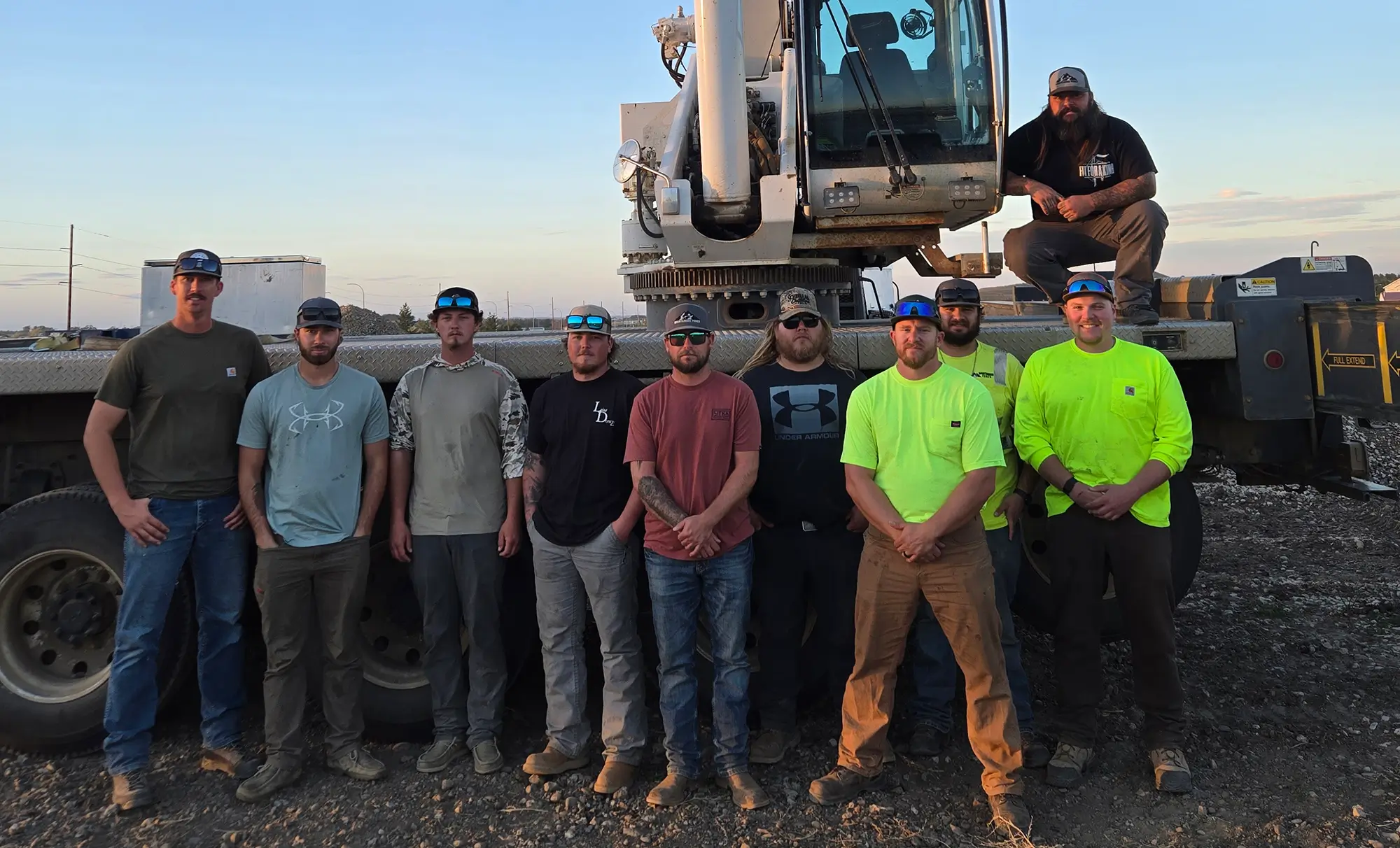
On-Site Training
On‑site training is designed for companies that have the facilities and equipment available at their own location and prefer to keep their employees onsite for logistical or operational reasons. All on‑site training requires the company to provide the crane or equipment that will be used during the training and evaluations.
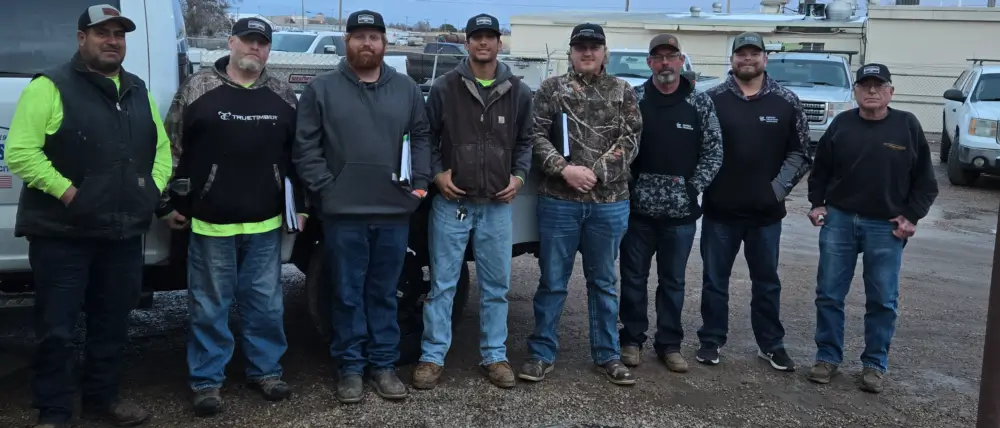
Off-Site Training
Off‑site training is intended for customers who do not have the facilities or space to conduct training at their own location. Paradise Crane Consultants will arrange a suitable rented facility; however, the company must still provide the crane or equipment needed for the training and evaluations.
Local permitting and municipal requirements
St. Joseph does not license crane operators. Under City Code Sec. 25-4, no one may close any street or sidewalk, or any part of one, without a permit. The fee is $25, nonrefundable, and the Director of Public Works and Transportation issues all construction closing permits and notifies the fire and police chiefs.
Apply on the city's Miscellaneous Permit Application with Street Closure selected. Signs must meet the latest MUTCD and NCHRP Report 350, and the permittee must notify the Police, Fire and Communication Center and Streets dispatch when the street closes and when it reopens.
Code also requires barriers at least 3 feet high and lights from sunset to sunrise around any obstruction. Excavation is a separate permit with its own bond.
Local industry and employment
Buchanan County carries 46,365 covered jobs across 2,881 establishments, with an average weekly wage of $1,225 in the first quarter of 2026.
Food processing runs at plant scale here. The Saint Joseph Economic Development Partnership's 2025 list puts Triumph Foods at 2,400 employees and Tyson Foods at 670, alongside Mosaic Life Care at 2,922 and Boehringer Ingelheim at 1,070.
The plants keep growing. Daily's Premium Meats, part of Seaboard Foods, broke ground on May 12, 2025 on a $95 million, 111,000-square-foot expansion of its St. Joseph plant, with completion expected in summer 2026.
Plant expansions bring process-line installs and equipment setting next to operating lines. If your crews work in food plants, train every role on the lift for the space it happens in.
Does Missouri require safety training beyond federal crane certification?
Missouri is a federal-OSHA state with no crane standard of its own, which leads contractors to assume federal certification is the whole requirement. On a public works project it is not. Under RSMo 292.675, every contractor and subcontractor must provide a ten-hour OSHA construction safety program to its on-site employees, and the statute names equipment operators among them. Workers who have not already completed it have sixty days from the day they start on the project. An employee found on site without documentation has twenty days to produce it before being removed. Once those windows close, the contractor forfeits $2,500 to the public body plus $100 for each untrained employee for each calendar day worked, and the public body may withhold it from money otherwise owed.
Everything else runs through federal OSHA. Missouri operates no OSHA-approved State Plan, so federal OSHA enforces 29 CFR 1926 Subpart CC directly for private-sector employers through its Kansas City and St. Louis Area Offices, which divide the state by county. Federal OSHA does not cover state and local government employers, and with no State Plan to fill that gap, public-sector crane crews fall outside OSHA coverage entirely.
The second state law to plan around is the Overhead Power Line Safety Act, RSMo 319.075 to 319.090, in force since August 28, 1991. Its clearance rule, ten feet from any conductor above 600 volts, is the part people quote. Its consequences are what make it a project risk. A violation is a class B misdemeanor. If it leads to contact that causes injury, loss or damage, the violator is presumed negligent, and the utility gains a right of contribution against them. The Act also puts the cost and the calendar on you: the party requesting temporary clearances pays the utility's costs, the utility must give a written estimate on request, it need not begin until it is paid, and it then has seven working days to start. That is a line item and a schedule dependency, not a tailgate talk.
RSMo 292.675; RSMo 319.075–319.090; 29 CFR 1926 Subpart CC
Is NCCER certification enough on its own?
NCCER certification is the foundation for crane work in Missouri, and because the state issues no crane operator license, there is no second state credential to stack on top of it.
The federal standard asks for more than a certificate. Under 29 CFR 1926.1427, an operator must be certified for the type of equipment being operated, that certification is valid for no more than five years, and subsection (c)(3) requires the employer to provide it at no cost to the employee. The employer must then evaluate the operator on the specific equipment and keep that evaluation document available at the worksite. A current certificate alone does not satisfy the evaluation requirement, and on site it is the evaluation document, not the certificate, that an inspector asks for.
Missouri's own requirement sits alongside this rather than replacing any of it. The ten-hour OSHA construction program under RSMo 292.675 is general construction safety training, not crane training, and completing it does nothing to satisfy 1926.1427. On a public works project a crane operator needs both: federal certification and evaluation for the equipment, and OSHA 10 documentation within sixty days of starting.
What does the workplace safety data show?
Missouri recorded 118 fatal work injuries in 2024, according to the Census of Fatal Occupational Injuries compiled by the Missouri Department of Labor and Industrial Relations with the U.S. Bureau of Labor Statistics. Private-industry construction accounted for 22 of them.
Transportation incidents were the largest single cause statewide at 45 deaths, and 28 of those happened on roadways. For crane crews that figure describes the drive as much as the lift, since mobilizing equipment and operators between sites is its own exposure. Contact with objects and equipment caused 22 deaths.
Another 13 fatalities were government workers, a group federal OSHA does not cover in Missouri and that no State Plan covers either.
These are statewide figures across all industries, not crane-specific data.
What should you verify before your next lift?
Before your next covered lift in Missouri, work through these in order:
- On a public works contract, confirm OSHA 10 documentation for every on-site employee including equipment operators, and track the sixty-day clock from each worker's start date on that project. The penalty accrues per employee per day.
- Confirm each operator is certified for the type of equipment being operated, within the five-year validity, and that your documented evaluation on that specific equipment is available at the worksite.
- Identify every overhead line the equipment could come within twenty feet of, then set clearance by federal Table A: ten feet only up to 50 kV, fifteen feet up to 200 kV, twenty feet up to 350 kV. Missouri's ten-foot statute is a floor, not the federal distance.
- If any work will come within ten feet of a conductor above 600 volts, notify the utility, request a written cost estimate, and build the seven-working-day start window into the schedule. Budget the cost as yours.
- Confirm the annual inspection by a qualified person is less than twelve months old and that monthly inspection records cover the last three months. Equipment idle three months or more needs inspection before use.
- Confirm which Area Office covers the county you are working in, Kansas City or St. Louis.
Upcoming certification and training sessions dates
Questions
What permit does a crane closure need in St. Joseph?
A street or sidewalk closing permit under City Code Sec. 25-4, issued by the Director of Public Works and Transportation. The fee is $25, nonrefundable.
Who do I notify when I close a St. Joseph street?
The Police, Fire and Communication Center and Streets dispatch, both when the street closes and when it reopens. Signs must meet the latest MUTCD.
Ready to schedule training in St. Joseph?
Request on-site crane training in St. Joseph, built around your crew, your equipment and your site.