Crane Operator Certification & Training in Sioux Falls, SD
In Sioux Falls, health care is the industry that builds. About one metro job in five is in health care, and the region's two big systems are adding towers and campuses around buildings that stay open.
This page covers the permit Sioux Falls requires before a crane goes into the right-of-way, the bond and insurance behind it, and what hospital work means for how your lifting crews are qualified.

Training Services Offered in Sioux Falls
Based in Albuquerque, our instructors travel to you. Train at your own facility, or we'll arrange a rented site nearby. Either way, your crew trains on the crane they actually run.
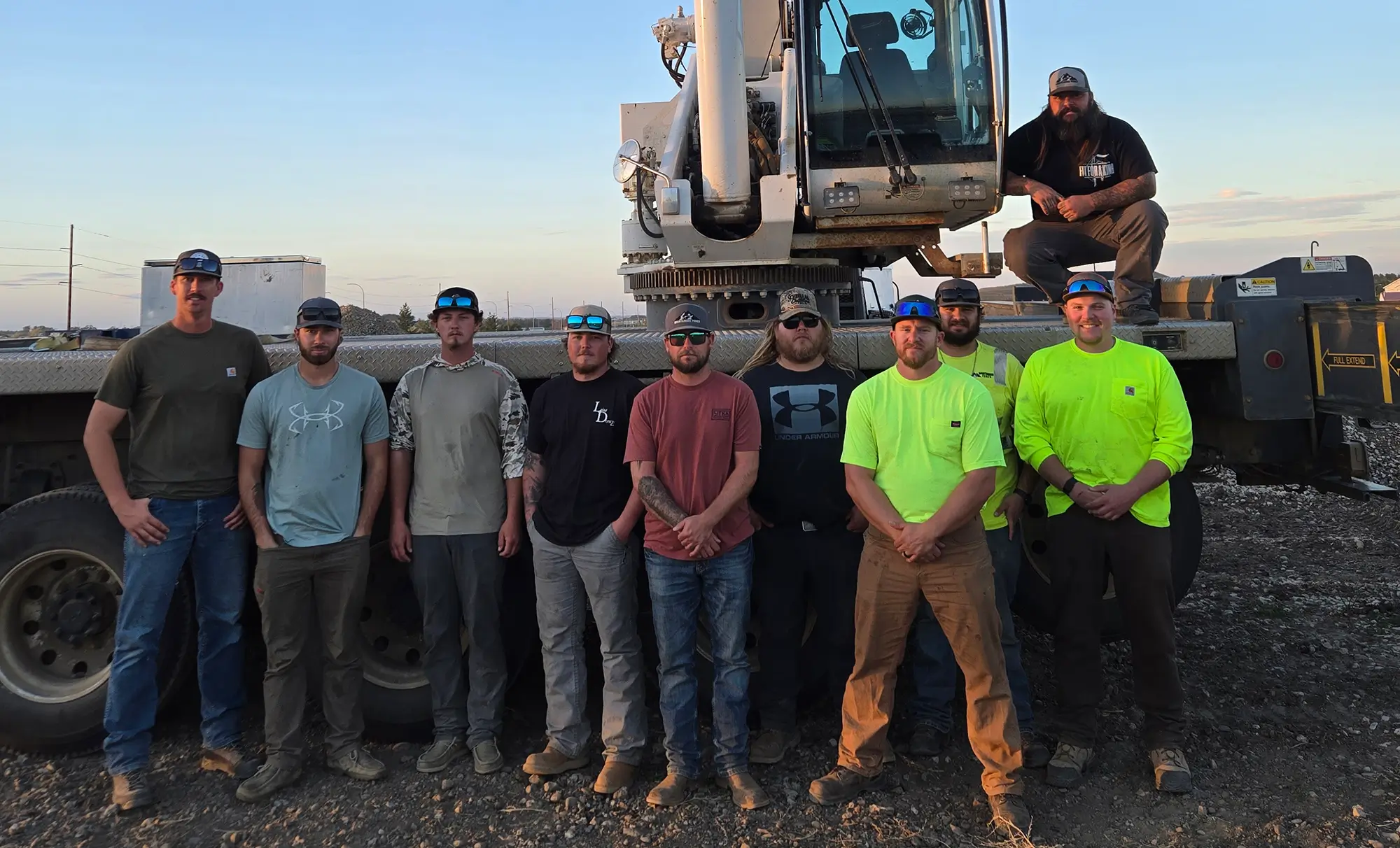
On-Site Training
On‑site training is designed for companies that have the facilities and equipment available at their own location and prefer to keep their employees onsite for logistical or operational reasons. All on‑site training requires the company to provide the crane or equipment that will be used during the training and evaluations.
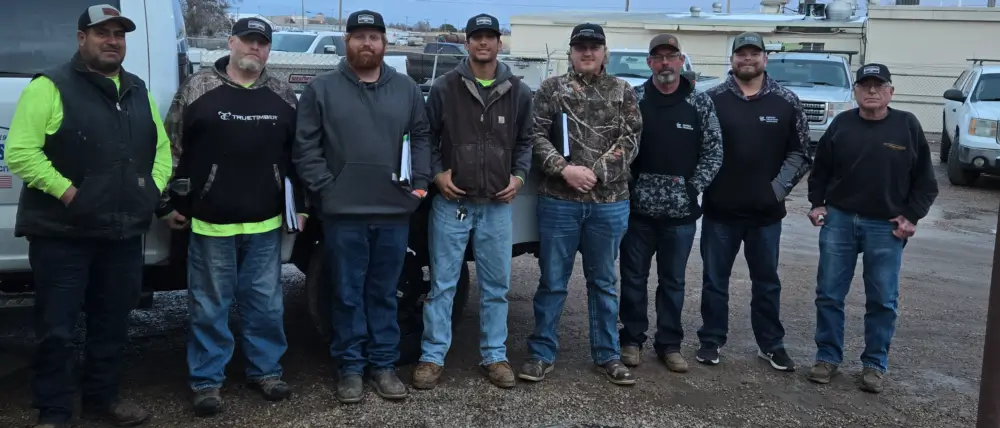
Off-Site Training
Off‑site training is intended for customers who do not have the facilities or space to conduct training at their own location. Paradise Crane Consultants will arrange a suitable rented facility; however, the company must still provide the crane or equipment needed for the training and evaluations.
Local permitting and municipal requirements
Sioux Falls does not license crane operators. Its right-of-way code requires a Construction Permit from City Engineering before anyone may excavate, obstruct or construct in the right-of-way, and "obstruct" means placing any object that hinders free passage. That puts a crane setup squarely under the permit, even with no digging. The permit is $50 on the city's 2026 fee schedule; a pavement street cut is a separate $30 permit.
The applicant must be a registrant with the city, and Engineering keeps an approved list of right-of-way contractors. That approval requires a $10,000 bond covering work such as barricades and material storage, plus general liability of $1 million per occurrence and $2 million aggregate, $1 million auto liability and workers' compensation, with the city named as additional insured.
Traffic control follows the city's 2026 Engineering Design Standards. Devices must meet the latest MUTCD, at least a 10-foot lane must stay open, and normally only one side of a local street may be blocked. Closing a local street takes 48 hours' notice, and a full closure of an arterial or collector needs an approved detour plan before the permit is issued.
Leaving a crane parked in the street for more than 24 hours takes a separate $15 permit from the city engineer. The city's Street Closure Permit is for events and parades, not construction.
Local industry and employment
Minnehaha County carries 138,476 covered jobs across 10,147 establishments, with an average weekly wage of $1,369 in the first quarter of 2026. Employment rose 1.0 percent over the year and wages rose 5.1 percent.
Health care sets this metro apart. In 2025, health care and social assistance employed 34,900 of the Sioux Falls metro's 178,000 covered workers, about one in five, at an average of $77,896 a year against $66,768 for the metro as a whole. The Sioux Falls Development Foundation lists Sanford Health at 11,000 to 11,500 employees and Avera at 9,500 to 10,000.
That workforce is still building. Avera McKennan's $245 million project is centered on a six-story, 220,000-square-foot Women's and Children's tower. Avera says construction is underway, with completion expected in early 2027.
Hospital work puts heavy picks next to buildings that never close. If your crews work on medical campuses, qualify the riggers and signal persons, not just the operator.
Does South Dakota license crane operators, or is federal OSHA the whole rulebook?
The mistake contractors make in South Dakota is trusting the sign. State law requires every crane, derrick and similar swinging-boom machine to carry a durable warning sign, legible at 12 feet and in plain view of the operator, that reads: "Unlawful to operate this equipment within six feet of high voltage lines." Six feet is not your working clearance, and the reason is a gap the legislature left behind.
South Dakota's overhead line law originally set six feet across the board. In 2002 the legislature raised the activity clearance to ten feet — 2002 Session Laws chapter 215 amended SDCL 49-32-11 from six feet to ten — but amended neither the equipment-proximity section nor the sign requirement. The sign still says six. The rule says ten. And the federal crane standard sets a 10-foot minimum for lines up to 50 kV, with planning required whenever equipment could get within 20 feet, so on higher-voltage lines even ten is not enough.
Enforcement for private-sector construction runs through federal OSHA's Sioux Falls Area Office. South Dakota has no OSHA-approved State Plan and issues no crane operator license, so 29 CFR 1926 Subpart CC governs operator certification and equipment inspection as written.
What South Dakota adds sits outside OSHA entirely: SDCL 49-32-10 to 49-32-17, which treats any line over 750 volts as high voltage. It applies to any "person," not only employers, so an operator can personally commit a Class 2 misdemeanor. A missing sign is a separate violation each day. Work inside the clearances requires notifying the line operator and arranging barriers, de-energizing and grounding, or raising the conductors first. And if a violation results in contact with the line, the violator is liable to the utility for all resulting damage.
29 CFR 1926 Subpart CC; SDCL 49-32-10 to 49-32-17
Is NCCER certification enough on its own?
NCCER certification is the right foundation for operating in South Dakota, and because the state issues no crane operator license, federal rules decide what else you need. Under 29 CFR 1926.1427, each operator must hold a certification valid for five years, and the employer must separately evaluate the operator on the equipment being run. That evaluation must be documented with the operator's name, the evaluator's name and signature, the date, and the make, model and configuration of the equipment, and the document must be available at the worksite. The employer provides certification at no cost to the employee.
South Dakota then adds power-line duties that no certificate satisfies on its own: the posted warning sign, the 10-foot activity clearance in SDCL 49-32-11, the 6-foot limit on operating or storing equipment near a conductor in SDCL 49-32-12, and the duty to notify the line operator before working closer. Federal rules also bar an uncertified operator-in-training from running equipment that could get within 20 feet of a power line up to 350 kV. Training that covers federal Table A clearances but never mentions the state statute leaves your operators personally exposed.
What does the workplace safety data show?
South Dakota recorded 29 fatal work injuries in 2024, up 45.0 percent from 20 in 2023, according to the U.S. Bureau of Labor Statistics Census of Fatal Occupational Injuries. The state's fatal injury rate rose to 5.8 per 100,000 full-time-equivalent workers, from 4.3 the year before, while the national count fell 4.0 percent to 5,070.
BLS reports construction had more fatalities than any other sector: 9 of the 29 deaths, or 31 percent, up from 4 in 2023. Specialty trade contractors accounted for 5 of those 9.
These are statewide figures covering all industries, not crane-specific data. They describe the conditions your crews work in, and they are the numbers a compliance officer has in mind on arrival at your site.
What should you verify before your next lift?
Before your next covered lift in South Dakota, work through these in order:
- Confirm the required sign, reading "Unlawful to operate this equipment within six feet of high voltage lines," is posted, durable and legible at 12 feet from the operator's position on every crane, derrick or hoist capable of lateral or swinging motion.
- Identify every overhead line the boom, load line or load could reach. Treat any line over 750 volts as high voltage under SDCL 49-32-10, and treat every line as energized unless the utility confirms otherwise.
- Plan to the stricter number: at least 10 feet under SDCL 49-32-11 and federal Table A for lines up to 50 kV, more for higher voltages, with a planning meeting and encroachment controls whenever equipment could get within 20 feet.
- If the lift requires working closer, notify the line operator first and have barriers, de-energization and grounding, or raised conductors in place before work begins, as SDCL 49-32-14 requires.
- Confirm each operator's certification is current within its five-year term, the employer evaluation document is on site, and no operator-in-training is assigned where the equipment could get within 20 feet of a line.
- Confirm the monthly inspection record is on file (kept at least three months) and a qualified person completed the annual inspection within the last 12 months.
Upcoming certification and training sessions dates
Questions
Does a crane that isn't digging need a permit in Sioux Falls?
Yes. The city's right-of-way Construction Permit is required to excavate, obstruct or construct in the right-of-way, and placing equipment that hinders free passage counts as obstructing. The permit is $50 on the 2026 fee schedule.
What bond and insurance does Sioux Falls require for right-of-way work?
Approved right-of-way contractors carry a $10,000 bond, general liability of $1 million per occurrence and $2 million aggregate, $1 million auto liability and workers' compensation, with the city named as additional insured.
Ready to schedule training in Sioux Falls?
Request on-site crane training in Sioux Falls, built around your crew, your equipment and your site.