Crane Operator Certification & Training in Seattle, WA
If you run lifts in Seattle, you are working under two layers at once: the state rules that govern who may operate your equipment, and a set of city requirements that govern where and how that equipment can be staged. The second layer catches contractors out more often, because it is administered by a different department, on a different timeline, and in some cases it is not even your company that files it.
This page covers the Seattle-specific half. Your crews, your equipment, your documentation — and what the city expects before a crane goes up.

Training Services Offered in Seattle
Based in Albuquerque, our instructors travel to you. Train at your own facility, or we'll arrange a rented site nearby. Either way, your crew trains on the crane they actually run.
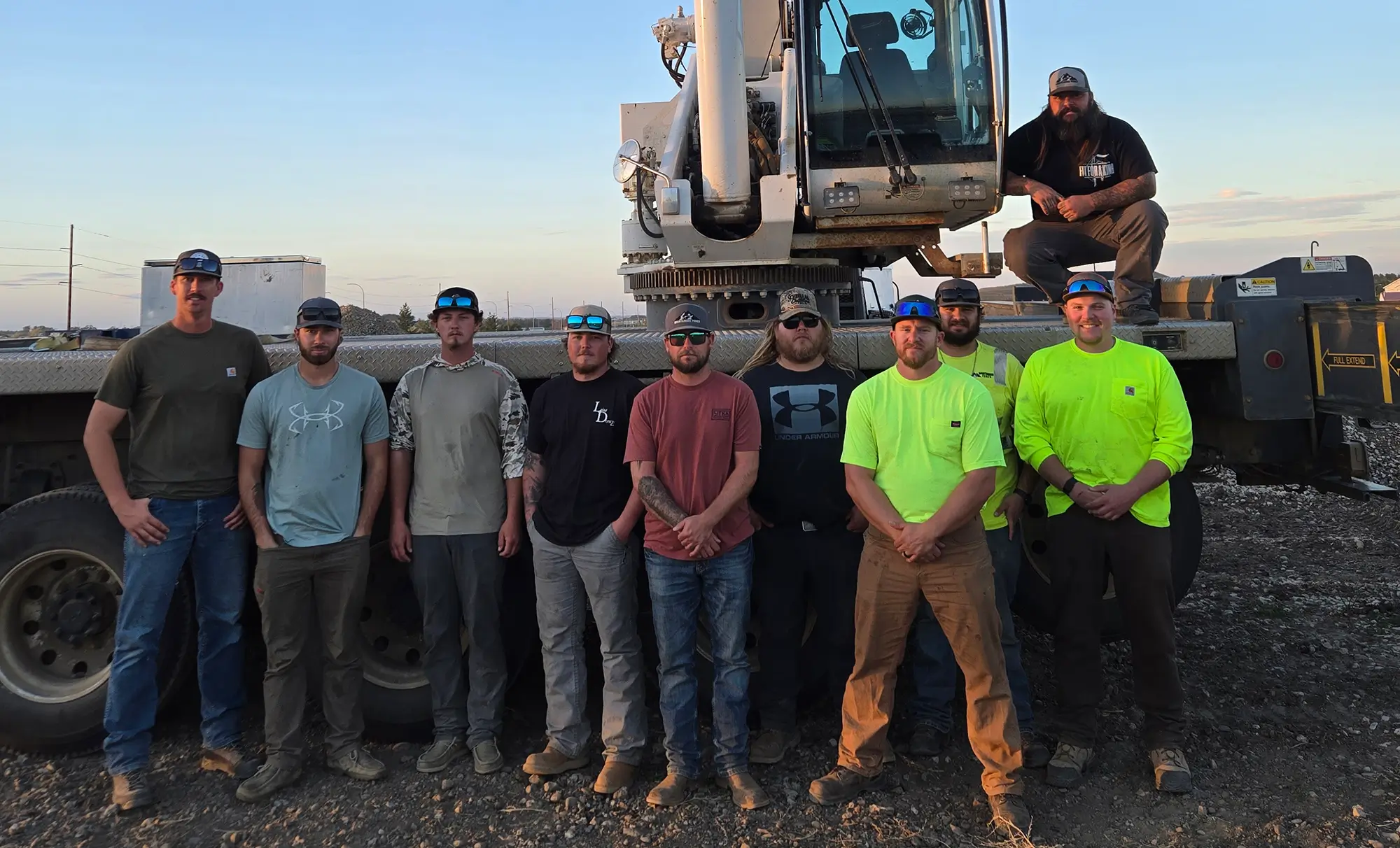
On-Site Training
On‑site training is designed for companies that have the facilities and equipment available at their own location and prefer to keep their employees onsite for logistical or operational reasons. All on‑site training requires the company to provide the crane or equipment that will be used during the training and evaluations.
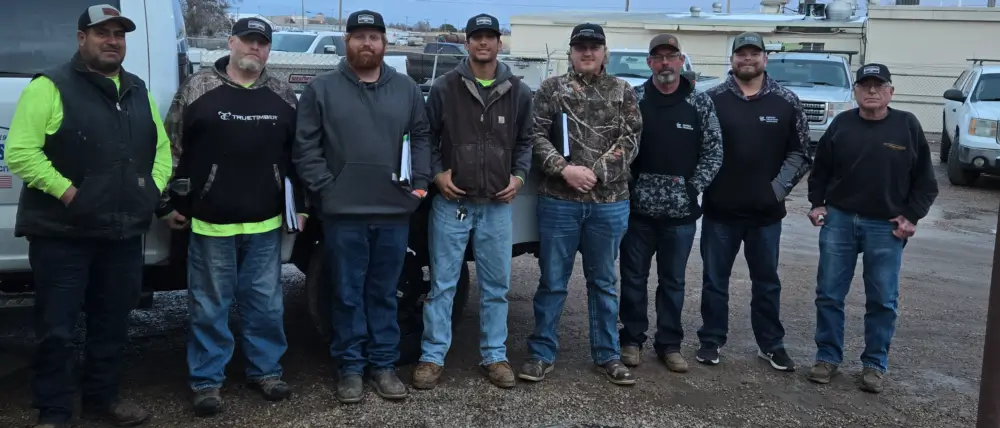
Off-Site Training
Off‑site training is intended for customers who do not have the facilities or space to conduct training at their own location. Paradise Crane Consultants will arrange a suitable rented facility; however, the company must still provide the crane or equipment needed for the training and evaluations.
Local permitting and municipal requirements
Seattle does not license crane operators. What it does operate is a dedicated permit for the equipment itself.
The Seattle Department of Transportation issues a Heavy Crane permit, record type SUCRANE, under Seattle Municipal Code 15.04.010. It is required for staging any crane rated over 100 tons in the public right of way, and for the installation and removal of temporary cranes.
One detail is worth reading twice: the crane company applies for the permit, not the general contractor. If you are the GC and you assumed this sat with your paperwork, it does not — and if you are the crane company, it does. The applicant must also carry insurance meeting SDOT's requirements.
The application needs a Right of Way Impact Plan covering staging and equipment footprint, and a Traffic Control Plan where you are affecting mobility in the right of way. Filing runs through the Seattle Services portal, and a job start notification has to be scheduled before work begins.
This is a permitting requirement, not an operator qualification requirement. Holding the permit says nothing about whether the person in the seat is properly credentialed.
Local industry and employment
Seattle sits in the largest employment market in the state — King County carries 82,950 business establishments and roughly 1.44 million employed workers, with the sixth-highest average weekly wage of any county in the United States.
The more useful number for lifting work is the split beneath that total. King County employs 92,200 people in manufacturing against 71,300 in construction, an inversion of the pattern in most metros. The Boeing Company maintains major production facilities in the Seattle area and elsewhere in the county, and transportation, warehousing and utilities add another 61,800.
That mix means a large share of crane work here happens on plant floors, in fabrication bays, and at port and warehouse facilities rather than on open construction sites — and that changes who owns the paperwork. In-plant lifting is frequently supervised by production or facilities management rather than a dedicated site safety team. The operator records end up in a different system from the job-site documentation, maintained by people whose primary job is throughput rather than compliance. When an auditor arrives, that gap is usually where the delay comes from.
On-site training lets us build the program around the equipment your crews actually run and the setting they run it in.
What does Washington State require for crane operator certification?
Workplace safety enforcement in Washington runs through the state Department of Labor & Industries, Division of Occupational Safety and Health, known as DOSH. Washington has operated an OSHA-approved State Plan since 1973, covering private-sector employers alongside state and local government. Federal OSHA retains enforcement in a narrow set of settings — maritime employment, military reservations and national parks, tribal establishments, certain Hanford Reservation contract work, and USPS contract operations.
What matters most for crane work is that Washington did not adopt the federal crane standard by reference. Chapter 296-155 WAC, Part L is a distinct Washington construction standard, and it carries obligations that go beyond 29 CFR 1926 Subpart CC.
The clearest example applies to your equipment rather than your people. Every crane covered by Part L must be certified annually by an accredited certifier recognized by the department, and the crane owner must ensure a current annual certificate of operation is in place before the crane performs construction work. Tower cranes require this again after each reconfiguration. There is no federal counterpart to this requirement, and a crane brought into Washington from another state does not arrive with it satisfied.
Chapter 296-155 WAC, Part L
Is NCCER certification enough on its own?
NCCER certification is the right foundation for operating in Washington, but it is one of several things the state expects you to be able to produce.
Washington requires a valid operator certificate for the specific type of crane being operated, issued by a testing organization accredited by a nationally recognized accrediting agency. Those certificates are valid for a maximum of five years. Beyond that, Part L adds two requirements with no federal equivalent: operators must document minimum hours of experience by crane type and capacity, and they must pass a substance abuse test at a recognized laboratory. Washington also requires the employer to provide certification and recertification at no cost to the employee — matching 29 CFR 1926.1427(c)(3) rather than exceeding it.
The experience thresholds are specific. A crane of 5 tons or under calls for 8 hours of operating experience; a lattice boom crane of 300 tons or above calls for 1,000 hours of operating experience plus 1,000 hours of crane-related experience. Your records need to separate those two categories by crane type and capacity.
What does the workplace safety data show?
Washington recorded 102 fatal work injuries in 2024, up 5.2 percent from 97 the year before, according to the U.S. Bureau of Labor Statistics Census of Fatal Occupational Injuries. The state's fatal injury rate was 2.8 per 100,000 full-time-equivalent workers, against a national count of 5,070 fatalities that fell 4.0 percent over the same period.
Construction accounted for 16 of those 102 deaths. Falls, slips or trips caused 8 of the 16, and specialty trade contractors accounted for 9 — meaning the majority of construction fatalities in the state occurred among subcontracted trades rather than general contractors.
These are statewide figures covering all industries, not crane-specific data. They describe the conditions your crews are working in, and they are the numbers an inspector has in mind when arriving on your site.
What should you verify before your next lift?
Before your next covered lift in Washington, work through these in order:
- Confirm the crane holds a current annual certificate of operation from a department-recognized accredited certifier — and for tower cranes, that it was re-certified after the most recent reconfiguration.
- Confirm each operator holds a current certificate for the specific crane type and capacity being operated, and that it is within its five-year validity.
- Confirm your documented experience hours meet the threshold for that crane type and capacity, with operating hours and crane-related hours recorded separately.
- Confirm the substance abuse test and your own operator evaluation are on file and available at the job site.
Upcoming certification and training sessions dates
Questions
Does Seattle require its own crane operator license?
No. Seattle does not license operators — that sits with the state. What Seattle requires is an SDOT Heavy Crane permit for staging cranes over 100 tons in the public right of way and for installing or removing temporary cranes. Permitting and operator qualification are separate obligations.
Who is responsible for filing the Heavy Crane permit?
The crane company, not the general contractor. This surprises contractors who expect right-of-way permits to sit with their own filings. The applying crane company must also carry insurance meeting SDOT's requirements.
Ready to schedule training in Seattle?
Request on-site crane training in Seattle, built around your crew, your equipment and your site.