Crane Operator Certification & Training in Sacramento, CA
Sacramento's right-of-way rules name cranes directly. The city's Street Use permit lists temporary crane placement among the work it covers, which takes the guesswork out of which form to file.
This page covers that permit, how it is priced, what to confirm before you apply, and what a government-anchored economy means for how your lifting crews are qualified.

Training Services Offered in Sacramento
Based in Albuquerque, our instructors travel to you. Train at your own facility, or we'll arrange a rented site nearby. Either way, your crew trains on the crane they actually run.
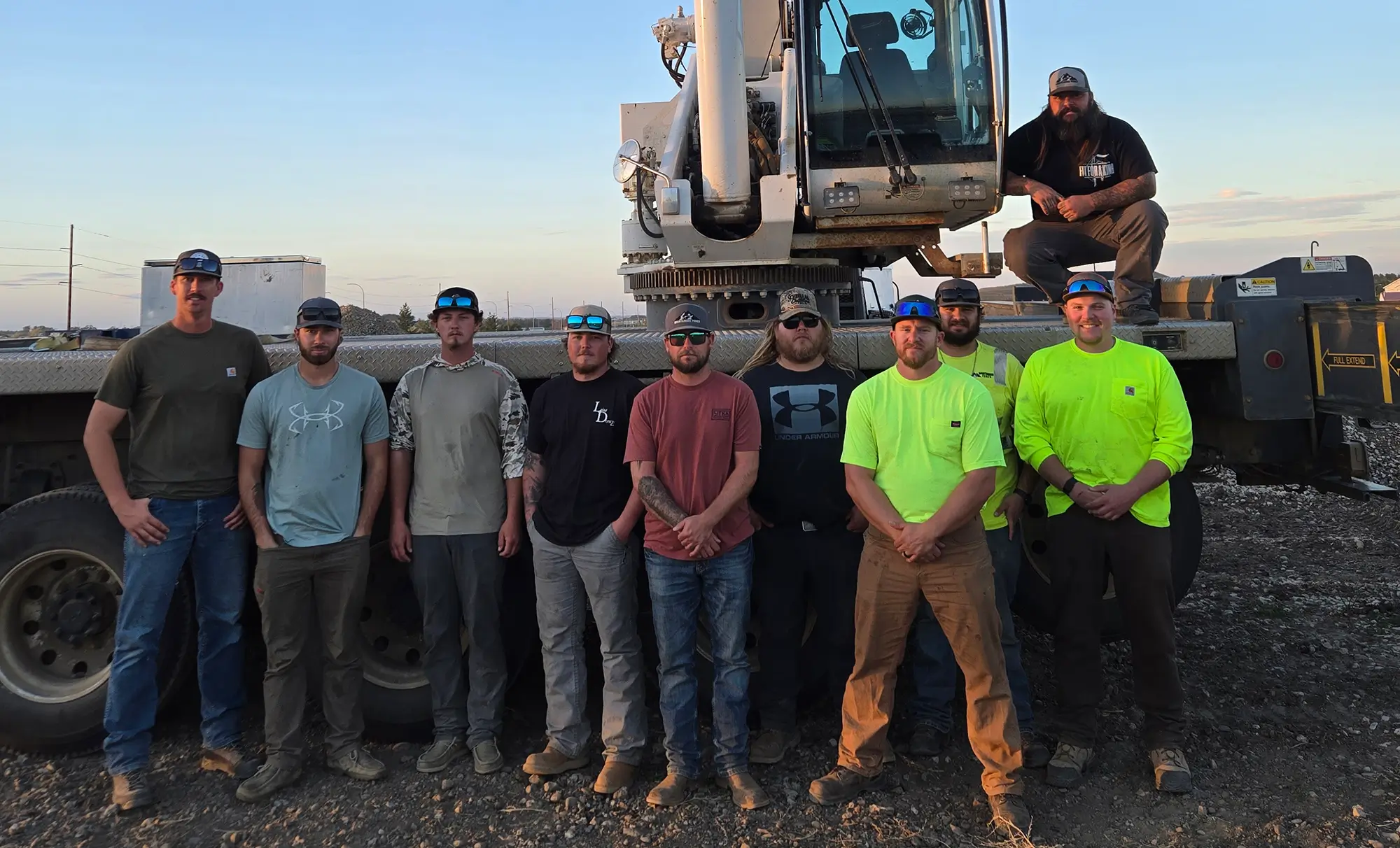
On-Site Training
On‑site training is designed for companies that have the facilities and equipment available at their own location and prefer to keep their employees onsite for logistical or operational reasons. All on‑site training requires the company to provide the crane or equipment that will be used during the training and evaluations.
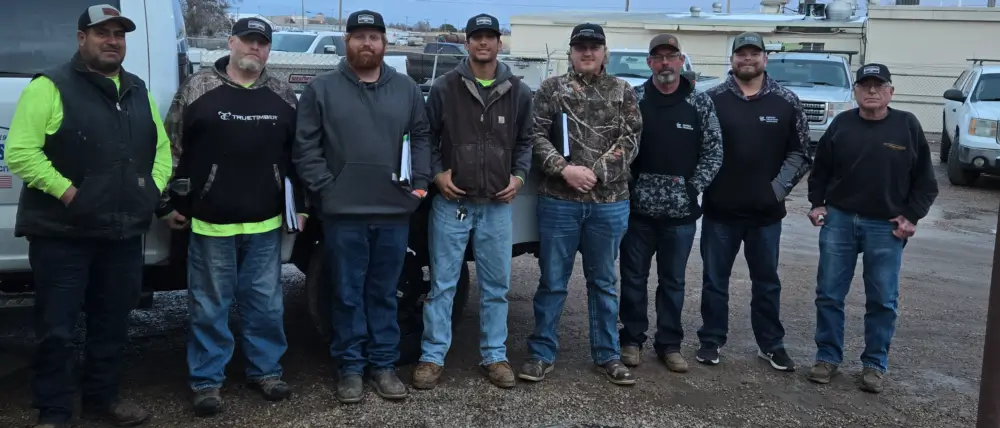
Off-Site Training
Off‑site training is intended for customers who do not have the facilities or space to conduct training at their own location. Paradise Crane Consultants will arrange a suitable rented facility; however, the company must still provide the crane or equipment needed for the training and evaluations.
Local permitting and municipal requirements
Sacramento does not license crane operators. What it has is a permit that names the equipment.
The Minor Encroachment Permit, Street Use, often called a "no dig" permit, expressly covers the temporary placement of cranes, along with dumpsters, scaffolding over the sidewalk and storage pods. It is administered by Public Works, Development Engineering and filed through the city's Accela portal. City Code Chapter 12.12 defines encroachment to include placing or storing construction equipment in the right-of-way.
There is no flat crane fee. The permit deposit is calculated from the estimated review and inspection hours for your scope and is invoiced after intake staff review the application.
Confirm two items before you file. The city's instructions list liability insurance of $500,000 combined single limit, with a separate additional insured endorsement, and a traffic control plan meeting the California MUTCD and the city's Sidewalk Closure Policy as requirements for its Construction permit, and note that some items may be required for other permit types. Ask Development Engineering which apply to your Street Use permit. If a traffic control plan is required, it goes on 11-by-17-inch sheets, and for work lasting five days or more it must show pedestrian, bicycle and vehicle traffic control separately.
Local industry and employment
Sacramento County carried 735,990 covered jobs at 79,699 establishments in the first quarter of 2026, with an average weekly wage of $1,635.
The four-county metro area around it is built on government. In August 2026, government accounted for 262,600 of 1,109,300 nonfarm jobs, nearly one in four and more than any other sector. Construction employed 74,600, down 3.1 percent from a year earlier.
When the owner is a public agency, qualifications can be checked at every step: in bid documents, at preconstruction meetings, in audits after the work is done. If your clients are state, county, school or utility agencies, assume someone will ask to see who is qualified on what equipment, and have the records ready before they do.
What does Cal/OSHA require of crane operators that federal OSHA doesn't?
California's workplace safety program is enforced by the Department of Industrial Relations, Division of Occupational Safety and Health, known as Cal/OSHA. It operates under an OSHA-approved State Plan covering private employers alongside state and local government. Federal OSHA keeps a short list of settings:
- maritime work on navigable waters
- secured military installations
- tribal lands
- designated federal enclaves such as Yosemite and the Golden Gate National Recreation Area
- USPS contract operations
- federal employers
California wrote its own crane rules. Construction Safety Orders §1610 routes construction cranes into General Industry Safety Orders Group 13, and operator qualification lives in 8 CCR §5006.2, not 29 CFR 1926 Subpart CC.
The mistake out-of-state contractors make is assuming a federally valid certificate carries over. California recognizes only two routes: certification by an accredited certifying entity, or a qualifying government license, which is valid only inside that government's jurisdiction.
There is no audited-employer option, so an in-house certification that satisfies federal OSHA does not satisfy Cal/OSHA. The certificate is also conditioned on two things the federal rule never requires: a physical examination meeting ASME B30.5 or DOT criteria, and a substance abuse test through a recognized laboratory.
8 CCR §5006.2 (via §1610 and GISO Group 13)
Is NCCER certification enough on its own?
NCCER certification is the right foundation for California crane work. It is an accredited, portable certificate that meets §5006.2's Option 1 for the crane types within its accredited scope. California then layers on requirements no other part of the federal framework asks for:
- Medical and substance abuse conditions. A certificate qualifies only if the operator passed a physical exam (ASME B30.5-2000 or 49 CFR §§391.41–391.49) and a substance abuse test at a recognized laboratory.
- California-specific written content. The written exam must cover Group 13 itself, in addition to Subpart CC Appendix C.
- Trainer credentials. Anyone supervising a trainee must hold a valid certificate for that crane type and have no other duties while supervising.
- Recertification. Required every five years. Operators with 1,000 documented hours on the specific crane type during the prior period may skip the hands-on exam. The physical, substance abuse and written requirements still apply.
- General industry, too. Under §5006.1, California requires certification for mobile and tower crane operators outside construction, including plant and facility cranes.
What does the workplace safety data show?
California recorded 419 fatal work injuries in 2024, down from 439 in 2023, according to the U.S. Bureau of Labor Statistics Census of Fatal Occupational Injuries. The statewide rate was 2.4 per 100,000 full-time-equivalent workers.
Construction had more fatalities than any other private-industry sector: 81, or 19 percent of the state total, up from 78 the year before. Falls, slips and trips accounted for 43 of those 81 deaths. Specialty trade contractors accounted for 44.
These figures cover all work in the state, not cranes alone. They set the context for every Cal/OSHA inspection on a California job site.
What should you verify before your next lift?
Before your next covered lift in California, confirm:
- Equipment certificate. For any crane over three tons, there is a current annual certificate from a Cal/OSHA-licensed certificating agency, and a copy is with the crane or at the project site.
- Proof-load test. The test is within four years. If the crane sat out of service six months or more past a certification due date, it was re-examined with a proof-load test before returning to work.
- Periodic inspection. The latest periodic inspection is on file, is no more than a quarter old, and no more than 750 operating hours have run since it.
- Tower crane permit. For a tower crane, the Cal/OSHA District Office operating permit was issued before operation.
- Operator certificate. Each operator's certificate covers the crane type, is under five years old, and came from an accredited entity, not an in-house program. Documentation shows the physical exam and substance abuse test were part of it.
- Employer evaluation. Your evaluation is documented with the operator's name, the evaluator's signature, the date, and the equipment make, model and configuration, and it is available at the worksite.
- Trainees. Any trainee's trainer holds a certificate for that crane type and is doing nothing else.
Upcoming certification and training sessions dates
Questions
Which Sacramento permit covers a crane in the street?
The Minor Encroachment Permit, Street Use. The city's instructions list temporary placement of cranes among the work it covers. Questions go to Encroachments@cityofsacramento.org.
What does the Street Use permit cost?
The city calculates a deposit from the estimated review and inspection hours for your scope and invoices it after intake review. There is no published flat rate for a crane, so get the deposit figure before you lock your schedule.
Ready to schedule training in Sacramento?
Request on-site crane training in Sacramento, built around your crew, your equipment and your site.