Crane Operator Certification & Training in Pueblo, CO
Pueblo is a steel town again. A new long rail mill shipped its first 100-meter rail to Union Pacific in July 2026.
This page covers how Pueblo reviews traffic control for a crane setup, the notice it needs, when an excavation permit also applies, and what mill work means for how your lifting crews are qualified.

Training Services Offered in Pueblo
Based in Albuquerque, our instructors travel to you. Train at your own facility, or we'll arrange a rented site nearby. Either way, your crew trains on the crane they actually run.
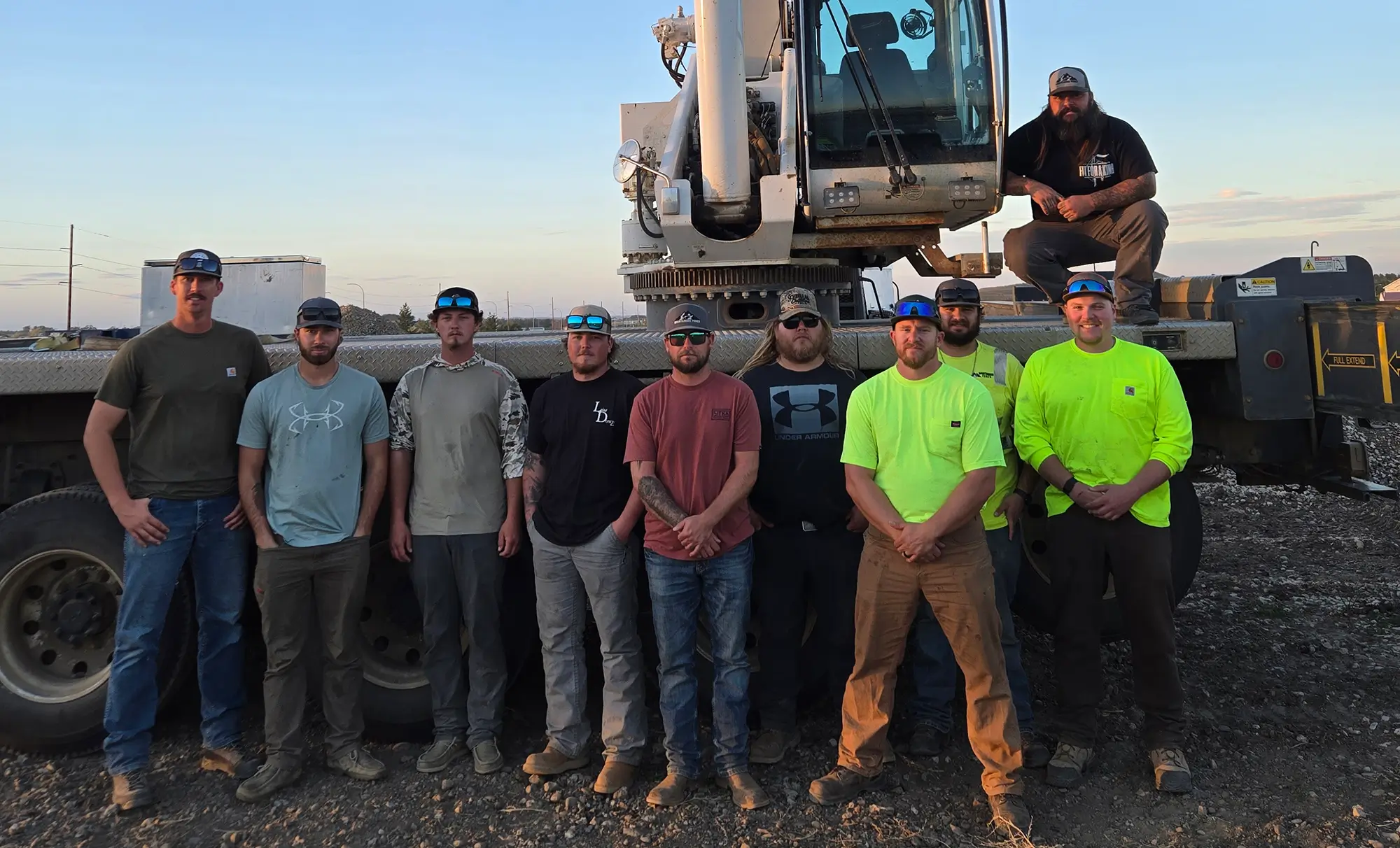
On-Site Training
On‑site training is designed for companies that have the facilities and equipment available at their own location and prefer to keep their employees onsite for logistical or operational reasons. All on‑site training requires the company to provide the crane or equipment that will be used during the training and evaluations.
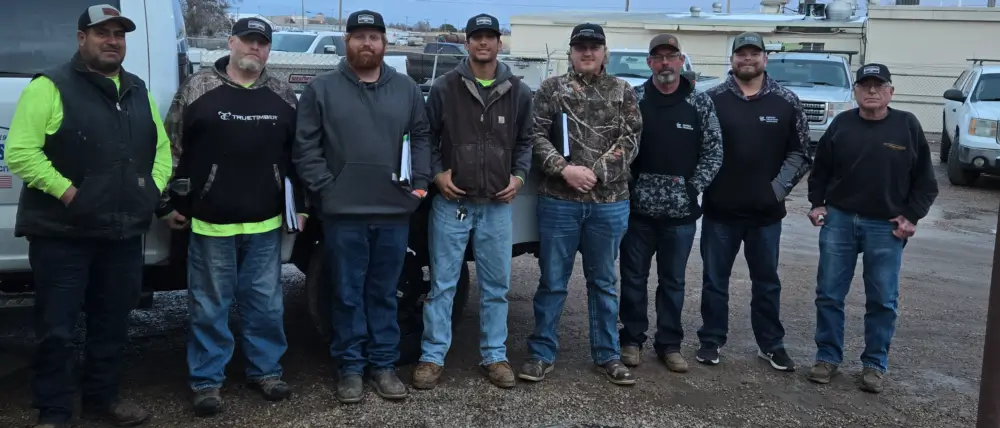
Off-Site Training
Off‑site training is intended for customers who do not have the facilities or space to conduct training at their own location. Paradise Crane Consultants will arrange a suitable rented facility; however, the company must still provide the crane or equipment needed for the training and evaluations.
Local permitting and municipal requirements
Pueblo does not license crane operators. Work that needs traffic control on city streets goes through a Traffic Control Review Request in the city's PLACE permit portal, reviewed by the Department of Transportation (719-553-2722). Plans must follow the MUTCD and the City of Pueblo MUTCD Supplement and show device spacing, taper dimensions, lanes and a certification stamp.
The city's traffic control standard asks for plans at least 10 calendar days ahead for street closures or major detours, and at least 72 hours (three City business days) ahead otherwise. Plans must state working hours and dates, and the Traffic Control Supervisor must hold a current ATSSA or CCA worksite certification. The city publishes no fee or insurance requirement for this review; confirm both with Transportation.
If the job involves digging, a separate excavation permit from Public Works is required under Municipal Code Sec. 12-6-1: a $50 permit fee plus an asphalt impact fee of at least $100, pulled by a licensed, bonded and insured contractor. Pueblo County rules apply only to unincorporated county roads, and state highways fall under CDOT.
Local industry and employment
Pueblo County carries 60,303 covered jobs across 3,985 establishments, with an average weekly wage of $1,120 in the first quarter of 2026. In the Pueblo metro, manufacturing (5,000 jobs) still edges out mining, logging and construction (4,100), and education and health is the largest sector at 14,100 (September 2026, preliminary).
Pueblo makes steel and rail. On July 16, 2026, Union Pacific announced it had received the first rail from Rocky Mountain Steel Mills' new long rail mill in Pueblo. Union Pacific puts the mill at about $1.2 billion, with capacity for 1.1 million tons of electric-arc-furnace steel a year. It rolls rail in 100-meter lengths that need 80 percent fewer welds, and about 750,000 solar panels supply up to 95 percent of its power.
A steel mill runs on overhead bridge cranes, and rail that long needs multi-point lifting and careful load control. The riggers and signal persons on those lifts need to be as qualified as the operator.
With no state plan and no license, who holds crane crews to the standard in Colorado?
Federal OSHA, and your own records. Colorado has no OSHA-approved State Plan, for private employers or for public ones. Private-sector crane work is enforced directly by federal OSHA under 29 CFR 1926 Subpart CC, from its Denver and Englewood area offices. Colorado has never issued a crane operator license: the one bill to create one, SB04-199, was postponed indefinitely in committee in 2004. And the state's conveyance inspection law, C.R.S. 9-5.5-104(2)(f), expressly excludes cranes, derricks and hoists, so no state inspector looks at your crane either.
That leaves no state backstop behind the federal rule. In 2026, a bill that would have let Colorado write its own safety standards if federal ones were weakened, HB26-1054, failed on the Senate floor 17 to 18. The employer's federal duties carry the whole load: certification from an accredited body, and since February 7, 2019, a documented evaluation of each operator on the equipment they will run.
There is one gap to know about. Federal OSHA does not cover state and local government employers, and with no State Plan to fill in, Colorado's city, county and state crane crews sit outside OSHA entirely. Colorado's 2026 extreme-temperature law, HB26-1272, starts with data collection and a model plan due in 2028; it does not yet set rules for construction crews.
29 CFR 1926 Subpart CC; C.R.S. 9-5.5-104(2)(f)
Is NCCER certification enough on its own?
NCCER certification is the right foundation for operating in Colorado. The state issues no crane operator license, so there is no second state credential to stack on top of it, and no state program checking that you have one.
The federal standard asks for more than a certificate. The employer must train each operator, ensure certification for the type of equipment, and evaluate the operator on the specific equipment before assigning work, with that evaluation documented. Accredited certification is valid for no more than five years, and under 29 CFR 1926.1427 the employer must provide it at no cost to the employee.
Riggers and signal persons need their own qualification under Subpart CC. With no state agency behind the federal rule, those records are what you will show a federal compliance officer.
What does the workplace safety data show?
Colorado recorded 92 fatal work injuries in 2024, up 10.8 percent from 83 the year before, according to the U.S. Bureau of Labor Statistics Census of Fatal Occupational Injuries. The state's fatal injury rate rose to 3.2 per 100,000 full-time-equivalent workers, from 2.8. Nationally, work deaths fell 4.0 percent.
Construction accounted for 22 deaths, up from 15 in 2023, with specialty trade contractors doubling from 6 to 12. Falls to a lower level caused 17 deaths across all industries, and contact with objects and equipment caused 15, including 8 workers struck by a falling, propelled or suspended object.
These are statewide figures covering all industries, not crane-specific data.
What should you verify before your next lift?
Before your next covered lift in Colorado, work through these in order:
- Confirm who covers your crew. Private employers fall under federal OSHA. City, county and state agency crews are not covered by OSHA at all, so their internal program is the only safety standard in place.
- Get the street permit in place. Colorado cities set their own right-of-way rules, several require a licensed right-of-way contractor, and state highways need a CDOT permit.
- Confirm each operator holds a current certification for the type of crane, within its five-year validity, and that your documented evaluation on the specific equipment is on file.
- Confirm your riggers and signal persons are qualified for the lift, not just the operator.
- On a leased or rented crane, get the most recent monthly and annual inspection records before operating. No state inspection program stands behind the equipment.
Upcoming certification and training sessions dates
Questions
Which Pueblo permit covers a crane in the street?
A Traffic Control Review Request through the city's PLACE permit portal, reviewed by the Department of Transportation. An excavation permit from Public Works is needed only if the job involves digging in the street.
How much notice does Pueblo need for a crane street closure?
The city's traffic control standard asks for plans at least 10 calendar days ahead for street closures or major detours, and at least 72 hours (three City business days) ahead for work without a closure.
Ready to schedule training in Pueblo?
Request on-site crane training in Pueblo, built around your crew, your equipment and your site.