Crane Operator Certification & Training in Omaha, NE
Omaha's street permit lists cranes by name, and its insurance terms are written into the city code. Downtown, a 677-foot tower has put tower-crane jumps and FAA notice on the local agenda.
This page covers the permit that applies when a crane goes into an Omaha street, the coverage it requires, and what high-rise work means for how your lifting crews are qualified.

Training Services Offered in Omaha
Based in Albuquerque, our instructors travel to you. Train at your own facility, or we'll arrange a rented site nearby. Either way, your crew trains on the crane they actually run.
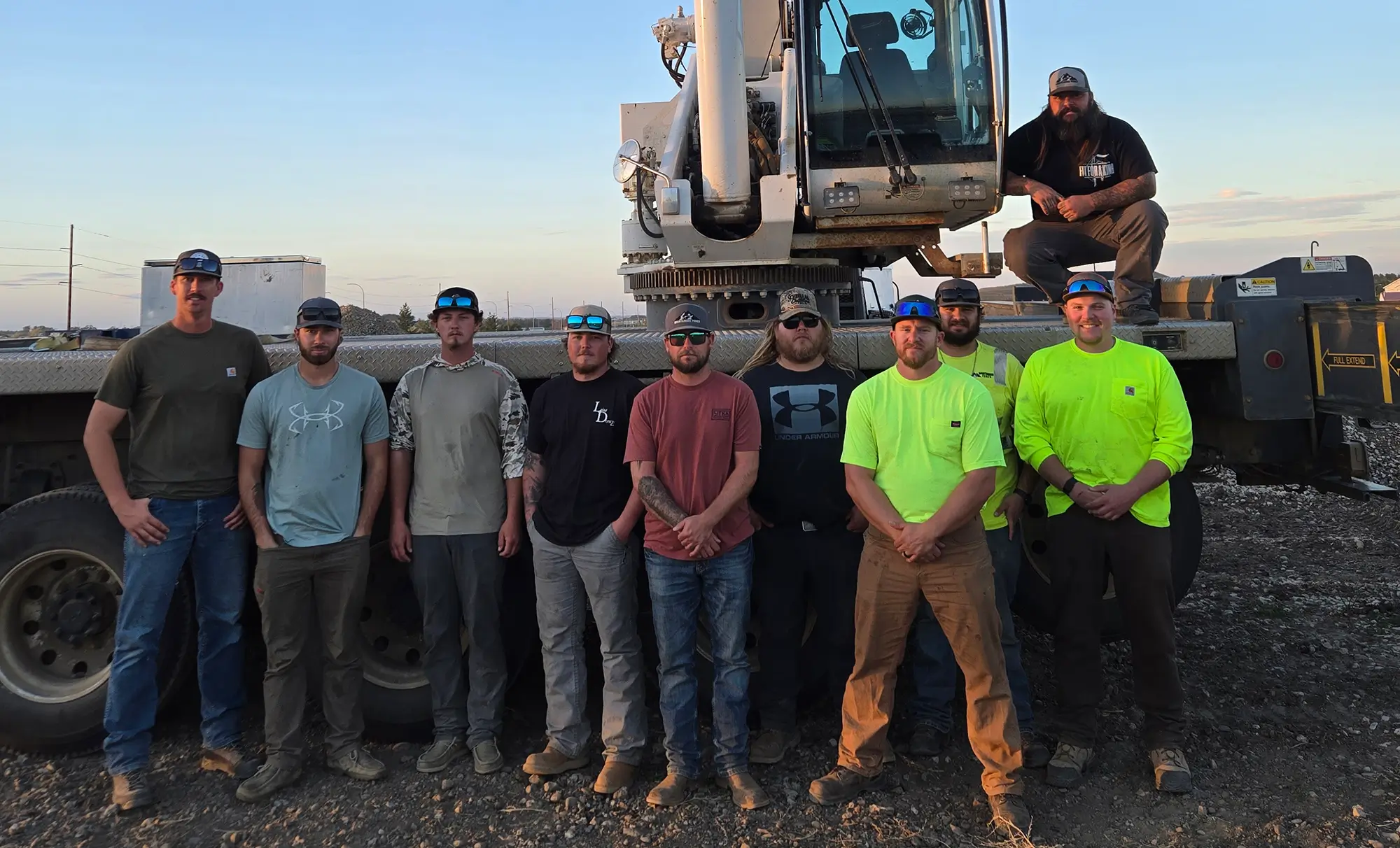
On-Site Training
On‑site training is designed for companies that have the facilities and equipment available at their own location and prefer to keep their employees onsite for logistical or operational reasons. All on‑site training requires the company to provide the crane or equipment that will be used during the training and evaluations.
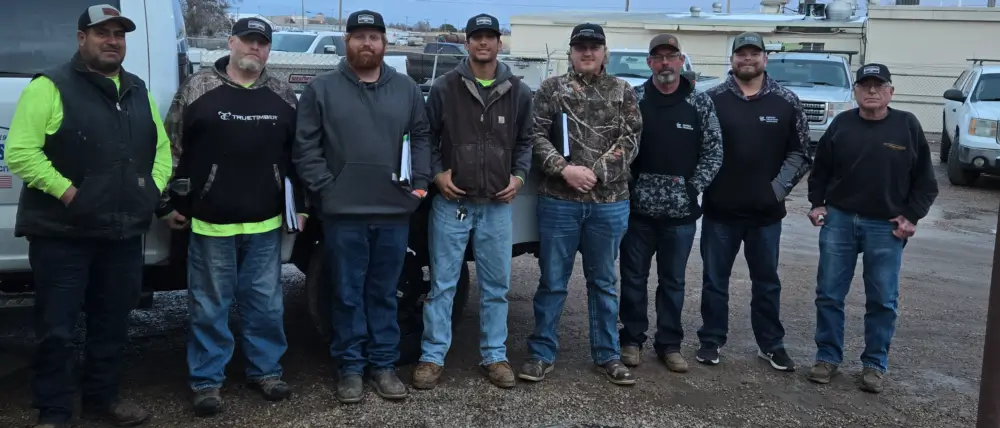
Off-Site Training
Off‑site training is intended for customers who do not have the facilities or space to conduct training at their own location. Paradise Crane Consultants will arrange a suitable rented facility; however, the company must still provide the crane or equipment needed for the training and evaluations.
Local permitting and municipal requirements
Omaha does not license crane operators. It does require a permit before a crane goes into the street. The Public Works Street Obstruction Permit covers temporary use of City right-of-way for man lifts, cranes, construction and material storage. Breaking, drilling or replacing concrete is a separate Street Excavation Permit through the Street Department.
Insurance is set by Sec. 43-153: commercial general liability, including contractual liability, of at least $500,000 per occurrence and $1,000,000 aggregate, plus $1,000,000 automobile liability per accident. The policies must name the City of Omaha as additional insured and give the City 30 days' written notice of cancellation or nonrenewal. You also submit a copy of the policy exclusions and a signed indemnity agreement.
The application needs a site plan showing the obstruction, dimensioned to the nearest property line, curb and street corner. Fees under Sec. 43-155 combine a registration fee with a daily charge per travel lane that rises with street class and the length you occupy. Confirm current rates with Public Works before you budget.
For tall picks, the permit page also flags the FAA. Construction or alterations above 200 feet above ground level, or within set distances of a public-use airport or heliport, require notice on FAA Form 7460-1 under 14 CFR Part 77.9. That review is separate from the city permit, so file it early.
Local industry and employment
Douglas County carries 337,733 covered jobs across 19,221 establishments, with an average weekly wage of $1,441 in the first quarter of 2026. That is the highest of Nebraska's three large counties and still below the national average of $1,654.
The lifting story is on the skyline. The Mutual of Omaha Tower downtown rises 677 feet and 44 floors, which the company calls the tallest building in Nebraska. Its tower crane made its sixth and final jump in late August 2025, reaching 780 feet, and the company has scheduled the building to open in fall 2026.
Work at that height changes the job. Crane jumps and dismantling, picks over streets that stay open below, and lifts tall enough to require FAA notice all depend on the whole lifting team: the rigging, the signals and the coordination between the crane and the ground.
If your crews work downtown or near Eppley Airfield, train the signalperson and rigger roles to the same standard as the seat.
With no state crane license, what does Nebraska law add to federal OSHA?
The common mistake in Nebraska is assuming that a federal-OSHA state has no crane rules of its own. Nebraska's High Voltage Law, Neb. Rev. Stat. 48-436 to 48-442, is a separate state statute with criminal penalties. It prohibits operating a crane or other boom equipment anywhere a part of it could come within 10 feet of an overhead conductor carrying more than 600 volts, unless the line has been guarded by barriers, de-energized and grounded, or temporarily relocated. Those measures must be performed by the line's owner or operator unless you hold written authorization. Cranes in transit with no load and the boom lowered may close to 4 feet. Each violation is a Class V misdemeanor, and each day of noncompliance counts separately.
The trap is treating the state's 10 feet as federal compliance. Under 29 CFR 1926.1408, you must first determine whether the equipment could come within 20 feet of a power line, then de-energize, hold 20 feet, or apply Table A. Table A permits 10 feet only for lines up to 50 kV; it requires 15 feet up to 200 kV and 20 feet up to 350 kV. A crew working to the Nebraska number near a transmission line can be in violation of the federal rule. Work to whichever distance is greater: meeting Table A satisfies the state statute, but meeting the state's 10 feet does not satisfy OSHA.
Everything else runs through federal OSHA. Nebraska has no OSHA-approved State Plan and issues no crane operator license; the Omaha Area Office enforces 29 CFR 1926 Subpart CC for private-sector employers statewide. Federal OSHA does not cover state and local government employers, and with no State Plan to fill the gap, public-sector crews, including those at the state's public power districts, fall outside OSHA entirely. The High Voltage Law still reaches them.
Neb. Rev. Stat. 48-436 to 48-442; 29 CFR 1926 Subpart CC
Is NCCER certification enough on its own?
NCCER certification is the right foundation for operating in Nebraska, and because the state issues no crane operator license, there is no second state credential to stack on top of it.
The federal standard still asks for more than a certificate. The employer must train each operator, ensure certification for the type of equipment being operated, and evaluate the operator on the specific equipment before assigning work, with the evaluation documented. Certification from an accredited testing organization is valid for no more than five years, and under 29 CFR 1926.1427(c)(3) the employer must provide it at no cost to the employee.
What Nebraska adds is operational, not credential-based. Operators and signal persons need to know the state's 10-foot rule and its limits: it is a floor for lines up to 50 kV, not a substitute for the federal 20-foot assessment and Table A distances. Public employers covered by the Nebraska Workers' Compensation Act, which sit outside federal OSHA, must also maintain a safety committee and written injury prevention program under amended Neb. Rev. Stat. 48-443.
What does the workplace safety data show?
Nebraska recorded 25 fatal work injuries in 2024, down 45.7 percent from 46 the year before, according to the U.S. Bureau of Labor Statistics Census of Fatal Occupational Injuries. The state's fatal injury rate fell to 2.6 per 100,000 full-time-equivalent workers, from 4.8 in 2023, against a national count of 5,070 fatalities that fell 4.0 percent.
Transportation incidents caused 17 of the 25 deaths, or 68 percent, compared with 38 percent nationally. Construction accounted for 4 fatalities in both 2023 and 2024. Small state totals swing sharply from year to year: Nebraska recorded 57 work fatalities in 2022.
These are statewide figures covering all industries, not crane-specific data. They describe the conditions your crews are working in, and they are the numbers an inspector has in mind when arriving on your site.
What should you verify before your next lift?
Before your next covered lift in Nebraska, work through these in order:
- Confirm every crane carries the state-required weather-resistant warning sign in plain view of the operator, legible at 12 feet, plus exterior signs visible to others in the work area. Equipment brought in from out of state rarely arrives with them.
- Identify every overhead line within 20 feet of the equipment's maximum working radius, get its voltage from the utility, and set the clearance by Table A, not by the state's 10 feet.
- If work must come closer, arrange barriers, de-energizing or relocation through the line owner, or hold written authorization to do it yourself.
- Confirm each operator holds a current certification for the type of crane being operated, within its five-year validity, and that your own documented evaluation on the specific equipment is on file.
- If you are a public employer, including a city, county, state agency or public power district, confirm your safety committee and written injury prevention program are current, since federal OSHA does not cover your crews.
Upcoming certification and training sessions dates
Questions
Do I need a permit to set up a crane on an Omaha street?
Yes. Omaha Public Works requires a Street Obstruction Permit for temporary use of City right-of-way by cranes and man lifts. Attach a site plan dimensioned to the nearest property line, curb and street corner. If you will cut or replace concrete, you also need a Street Excavation Permit.
What insurance does Omaha require for a street obstruction permit?
Under Sec. 43-153, at least $500,000 per occurrence and $1,000,000 aggregate in commercial general liability, and $1,000,000 automobile liability per accident. The City must be named as additional insured with 30 days' notice of cancellation, and you sign an indemnity agreement.
Ready to schedule training in Omaha?
Request on-site crane training in Omaha, built around your crew, your equipment and your site.