Crane Operator Certification & Training in Missoula, MT
Construction puts 4,196 people to work in Missoula County, 6.4% of covered jobs (BLS QCEW, 2025 annual average).
This page covers the right-of-way occupancy permit Missoula uses for temporary equipment, the details to confirm with the city before a lift, and what the local job mix means for how your lifting crews are qualified.

Training Services Offered in Missoula
Based in Albuquerque, our instructors travel to you. Train at your own facility, or we'll arrange a rented site nearby. Either way, your crew trains on the crane they actually run.
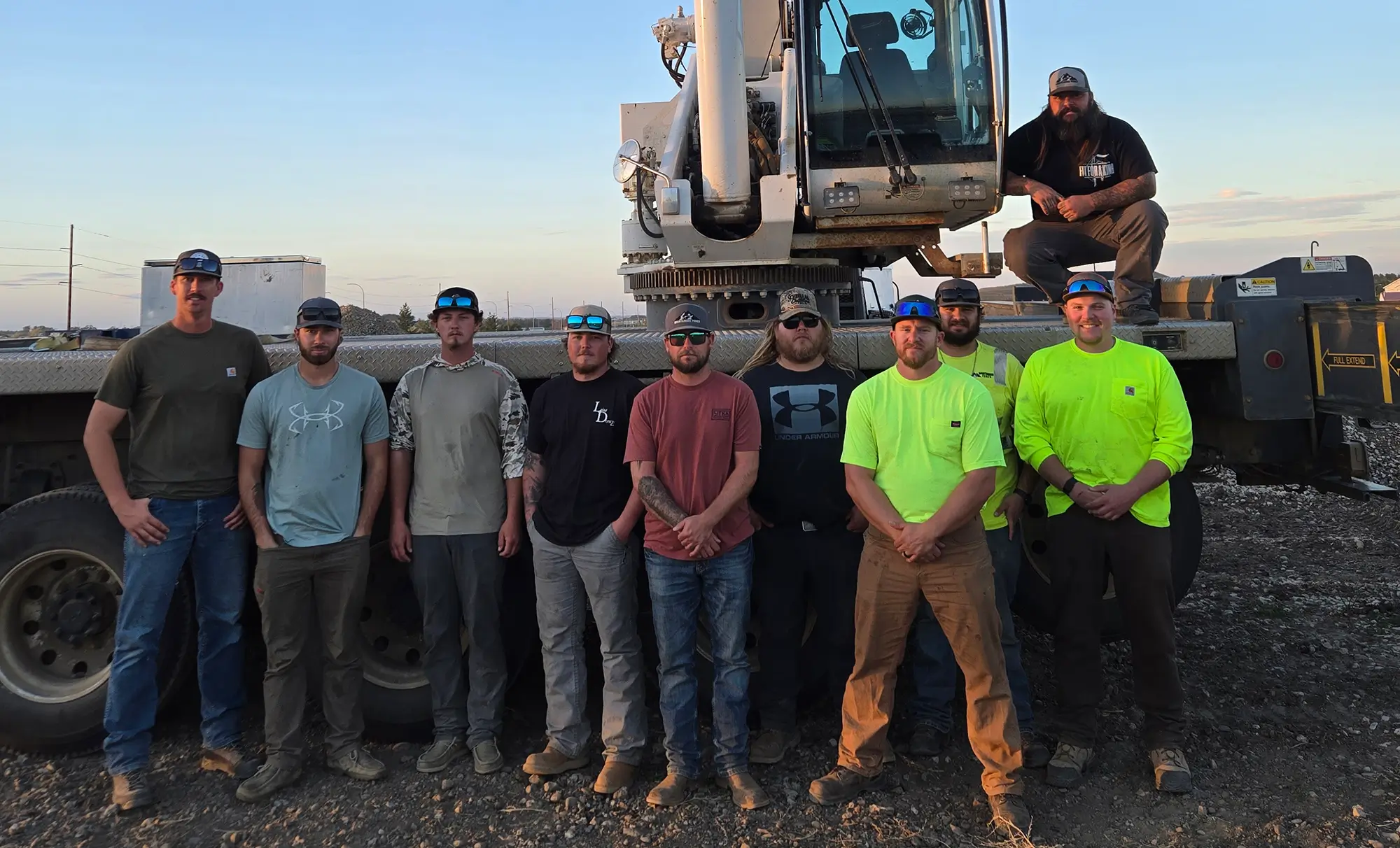
On-Site Training
On‑site training is designed for companies that have the facilities and equipment available at their own location and prefer to keep their employees onsite for logistical or operational reasons. All on‑site training requires the company to provide the crane or equipment that will be used during the training and evaluations.
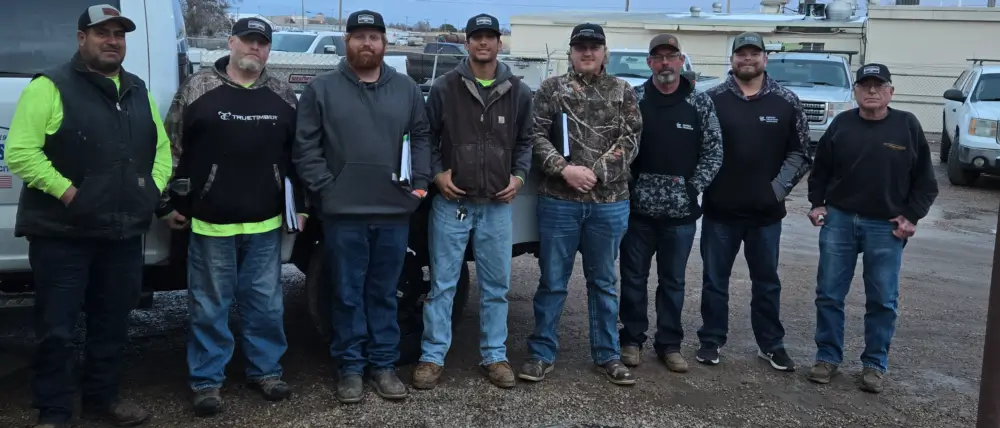
Off-Site Training
Off‑site training is intended for customers who do not have the facilities or space to conduct training at their own location. Paradise Crane Consultants will arrange a suitable rented facility; however, the company must still provide the crane or equipment needed for the training and evaluations.
Local industry and employment
Missoula County carried 65,880 covered jobs in the 2025 annual average (BLS QCEW, county level), with average annual pay of $63,053.
Private construction accounted for 4,196 jobs, 6.4% of the total, at $76,139 average annual pay. Manufacturing held 2,340 jobs (3.6%) at $56,836. Transportation and warehousing held 1,561 jobs (2.4%) at $56,300. Utilities held 185 jobs at $110,114. Mining, quarrying, and oil and gas extraction held 58.
These sectors move loads: materials on job sites, components in plants, freight in yards and equipment for utility work. Each lift depends on more than the person at the controls.
If your crews work in these sectors in Missoula County, qualify every role on the lift, including the operator, the rigger and the signal person.
Does Montana require a state crane operator license on top of federal OSHA rules?
Montana is not an OSHA-approved State Plan, so federal OSHA covers most private-sector workers in the state. State and local government workers are not covered by federal OSHA in Montana; Montana DLI describes a separate state public-sector workplace safety inspection program.
The governing construction crane standard is 29 CFR Part 1926, Subpart CC, including 29 CFR 1926.1400 et seq. Section 1926.1400 sets the scope as power-operated equipment used in construction that can hoist, lower, and horizontally move a suspended load. That citation is specific to construction. General-industry crane and hoist use is governed by separate standards, including 29 CFR 1910.179.
What sets Montana apart is licensing. Montana DLI states that a person operating crane or hoist equipment used to hoist or lower personnel or material, with a manufacturer's rating of more than 6 tons, must first obtain a Department of Labor license. The Crane / Hoisting Operator Program administers it.
29 CFR Part 1926 Subpart CC; 29 CFR 1926.1400; 29 CFR 1926.1427; 29 CFR 1910.179
Is NCCER certification enough on its own?
Montana's license is class-based. The third-class crane oiler pathway lists age 18 or older and a written examination, with no experience or physical examination. The second- and first-class operator pathways describe experience, a written examination, a practical examination where applicable, and a current physical examination.
Montana's official application instructions list NCCER certification or card among the documentation for the national-certification reciprocity pathway. That describes state licensing reciprocity. It does not establish that any listed credential alone satisfies every federal OSHA requirement, so confirm current acceptance with the DLI Crane / Hoisting Operator Program.
The federal baseline still applies. Under 29 CFR 1926.1427, operators must be certified by an accredited testing organization or an audited employer program. Certification is valid for five years, and the employer pays for it. Before an operator runs covered equipment unsupervised, the employer must evaluate the operator on the assigned equipment and document it. Montana's license is an additional requirement and does not replace these.
What does the workplace safety data show?
The U.S. Bureau of Labor Statistics Census of Fatal Occupational Injuries (CFOI) puts Montana's fatal work injury rate at 5.8 per 100,000 full-time-equivalent workers in 2024, down from 7.1 in 2023.
These figures cover all industries, not cranes specifically.
What should you verify before your next lift?
Before your next covered lift in Montana, work through these checks:
- Confirm jurisdiction. Federal OSHA covers most private-sector workers, while state and local government workers fall under Montana DLI's separate public-sector program.
- Confirm the work is construction use under 29 CFR 1926 Subpart CC. General-industry crane use is governed by separate standards, including 29 CFR 1910.179.
- Confirm whether the equipment needs a Montana license: crane or hoist equipment rated at more than 6 tons. Overhead trolley and gantry cranes are included only when used in construction, and equipment with excavation attachments or log-loading equipment is excluded when in use.
- Verify each operator's license through the DLI Crane / Hoisting Operator Program and its Professional and Occupational Licenses public portal.
- Confirm each operator's federal certification is current for the equipment type.
- Keep the documented employer evaluation for that specific equipment available at the worksite.
Upcoming certification and training sessions dates
Questions
When do I need Missoula's RWU occupancy permit?
Before you occupy the right-of-way. Missoula's code requires you to obtain the permit before occupation. Confirm the minimum filing lead time with the city, because the filing steps do not state a number of days.
What must a Missoula RWU application state?
Dates and hours, subject to City approval. Confirm permitted work hours and any lane-closure hours with the city before you schedule a lift.
Ready to schedule training in Missoula?
Request on-site crane training in Missoula, built around your crew, your equipment and your site.