
Crane Operator Certification & Training in Mesa, AZ
Mesa is building an aerospace and defense manufacturing base. Hadrian's Factory 3, a 290,000-square-foot plant, opened here in January 2026.
This page covers Mesa's temporary traffic control permit, what a crane setup in the street costs by the day, the hours and holiday window when you can't restrict major roads, and what plant work means for your lifting crews.

Training Services Offered in Mesa
Based in Albuquerque, our instructors travel to you. Train at your own facility, or we'll arrange a rented site nearby. Either way, your crew trains on the crane they actually run.
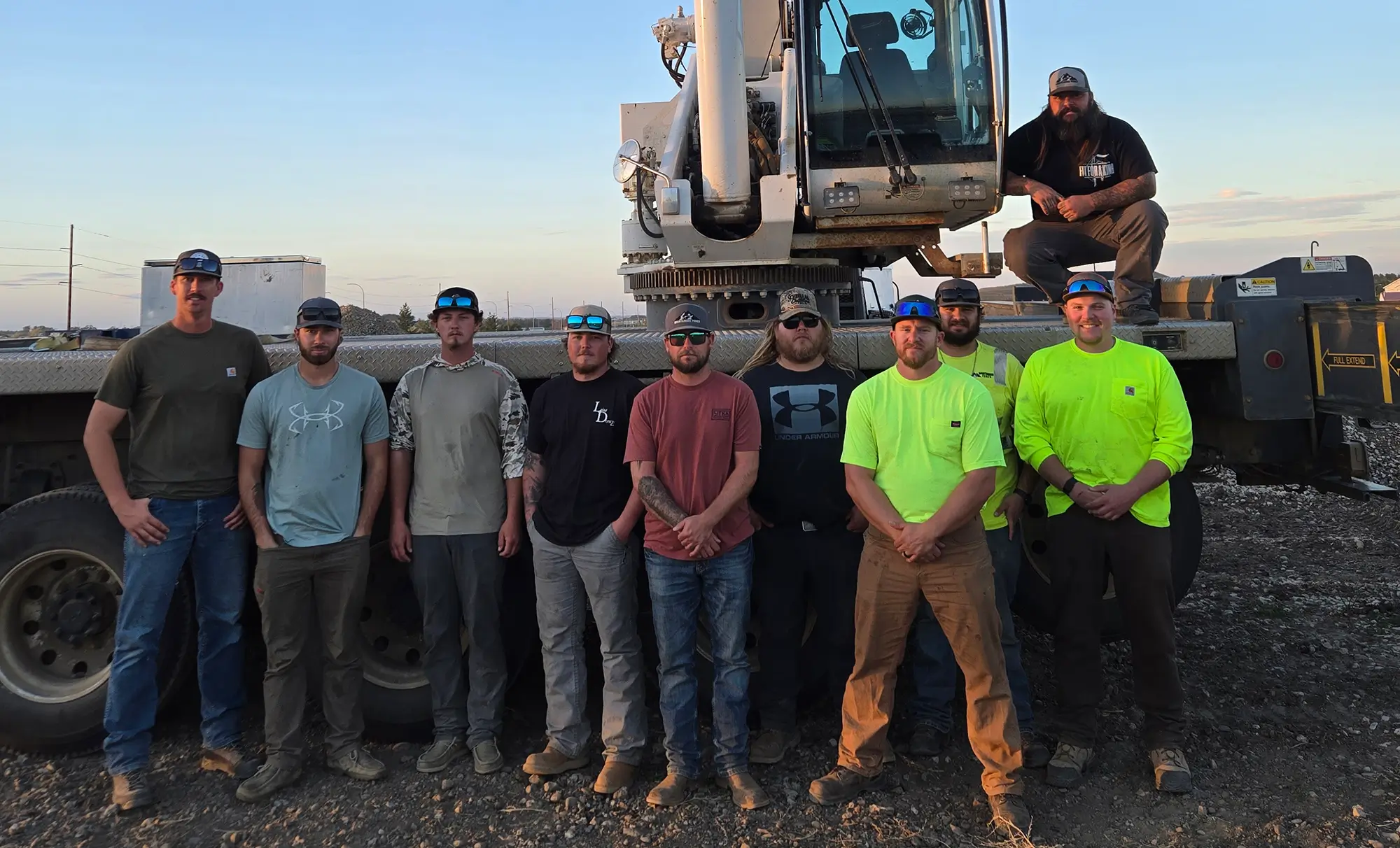
On-Site Training
On‑site training is designed for companies that have the facilities and equipment available at their own location and prefer to keep their employees onsite for logistical or operational reasons. All on‑site training requires the company to provide the crane or equipment that will be used during the training and evaluations.
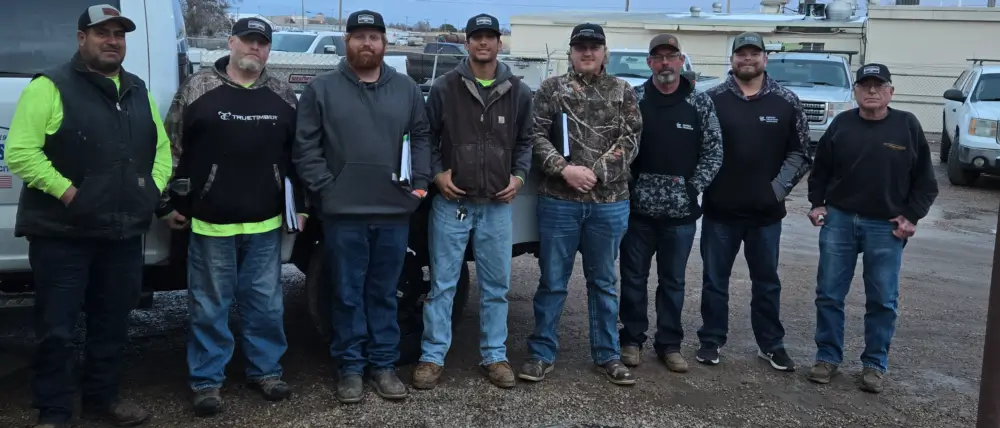
Off-Site Training
Off‑site training is intended for customers who do not have the facilities or space to conduct training at their own location. Paradise Crane Consultants will arrange a suitable rented facility; however, the company must still provide the crane or equipment needed for the training and evaluations.
Local permitting and municipal requirements
Mesa does not license crane operators. Almost any traffic restriction in a Mesa street needs a Temporary Traffic Control (TTC) permit under Mesa City Code Title 10, Chapter 10, following the city's TTC Manual (Second Edition, effective July 2026). Closing a sidewalk always needs one. Contact barricade@mesaaz.gov or 480-644-4882.
Fees are charged by the day. Under the schedule updated July 2026, a roadway or alley restriction is $75 per day and direction, and closures run higher: $100 a day for an arterial sidewalk and $1,000 to $4,000 a day for a full collector or arterial road closure. Review takes four business days; full arterial or intersection closures and half-street closures need at least 30 calendar days.
Restrictions on arterial and collector streets are not allowed weekdays from 6:30 to 8:30 a.m. and 4:00 to 6:00 p.m. without TTC staff approval, and a holiday moratorium runs November 15 to January 1 near downtown, the Gateway Airport area, major shopping centers and freeways. The city does not publish insurance limits for the TTC permit; confirm them before you mobilize. State routes need an ADOT permit.
Local industry and employment
Mesa sits in Maricopa County, where the Phoenix-Mesa-Glendale metro counted 147,500 manufacturing jobs in September 2026 (preliminary), alongside 183,900 in construction.
Mesa's side of that manufacturing base is aerospace and defense. On January 29, 2026, Hadrian cut the ribbon on Factory 3 in Mesa: a 290,000-square-foot, $200 million plant that is already producing aerospace and defense parts and is expected to create more than 350 jobs, according to the Arizona Commerce Authority.
A plant like that is built twice: first the shell, then the machine tools set inside it. Heavy equipment moving through a finished building calls for careful rigging, load control and clear signaling, and the riggers and signal persons on those lifts need to be as qualified as the operator.
Does Arizona add its own rules to the federal crane standard?
No. Arizona runs its own occupational safety program, but on cranes it follows the federal rule. Workplace safety here is enforced by the Arizona Division of Occupational Safety and Health (ADOSH), part of the Industrial Commission of Arizona, under a State Plan first approved on November 5, 1974 and given final approval on June 20, 1985. The plan covers private employers along with state and local government. Arizona adopts all of 29 CFR 1926, including the cranes and derricks standard in Subpart CC, by reference at A.A.C. R20-5-601, with no crane-specific changes of its own.
That has not always been a given. In 2012 Arizona passed a law setting a 15-foot fall protection trigger for residential construction. Federal OSHA found it less protective than the federal standard, and it was repealed in February 2015. ADOSH has enforced the federal fall protection rules since. In 2022 federal OSHA proposed revoking the plan's final approval; it withdrew that proposal on February 15, 2023, after Arizona adopted the standards it had been missing.
Where Arizona does stand apart is heat. ADOSH has run a Heat State Emphasis Program since July 17, 2023, which makes heat hazards an inspection priority, and it cites them under the General Duty Clause. On December 31, 2025, a state task force delivered Heat Guidelines for Employers covering water, shade, rest, acclimatization and written heat plans. Those guidelines are guidance, not a rule. Separately, Phoenix requires contractors on City contracts to keep a written heat safety plan and working air conditioning in enclosed-cab vehicles. For a crane crew, that puts the cab, the ground crew and the summer schedule inside the heat plan.
A.A.C. R20-5-601; 29 CFR 1926 Subpart CC; 29 CFR 1952.19
Is NCCER certification enough on its own?
NCCER certification is the right foundation for operating in Arizona. ADOSH adopts the federal operator qualification and certification rule, and we found no separate state crane operator license. Employers rely on certification from a nationally accredited testing organization such as NCCER, or on an audited employer program.
Accredited certification is portable and valid for five years, and under 29 CFR 1926.1427 the employer must provide it at no cost to the employee. Certification does not finish the job. Before an operator runs a crane unsupervised, the employer must evaluate them on the assigned equipment and document it: the operator's name, the evaluator's name and signature, the date, and the make, model and configuration. That record must be available at the worksite.
Riggers and signal persons need their own qualification under Subpart CC. On Arizona job sites, the people around the crane face the same summer heat as the operator, so their training should cover heat illness alongside rigging and signals.
What does the workplace safety data show?
Arizona recorded 94 fatal work injuries in 2024, down from 103 the year before, according to the U.S. Bureau of Labor Statistics Census of Fatal Occupational Injuries. The state's fatal injury rate was 2.8 per 100,000 full-time-equivalent workers, down from 3.1 in 2023.
The construction industry accounted for 24 of those deaths, about 26 percent of the state total. Falls to a lower level caused 13 deaths across all industries.
One category stands out in a desert state: exposure to harmful substances or environments caused 19 deaths, about 20 percent of the total. BLS does not break out heat on its own, but that is the category heat illness falls into.
These are statewide figures covering all industries, not crane-specific data.
What should you verify before your next lift?
Before your next covered lift in Arizona, work through these in order:
- Confirm jurisdiction first. The Arizona State Plan excludes Indian reservations, contractors on federal establishments where the federal government has exclusive jurisdiction, copper smelters, and concrete and asphalt batch plants tied to a mine. Those fall under federal OSHA, not ADOSH.
- Get the street permit in place. Every Arizona city sets its own right-of-way rules, and freeways and state routes need an ADOT encroachment permit.
- Put a heat plan in writing for summer work: water, shade, rest breaks, acclimatization for new or returning workers, and a plan for heat illness. If you work on a City of Phoenix contract, confirm the enclosed-cab air conditioning works.
- Confirm each operator's certification is current for the equipment type, and that the documented employer evaluation for that specific equipment is available at the worksite.
- Confirm your riggers and signal persons are qualified for the lift, not just the operator.
- On a leased or rented crane, get the most recent monthly and annual inspection records before operating.
Upcoming certification and training sessions dates
Questions
Do I need a permit to set up a crane in a Mesa street?
Almost always. Mesa requires a Temporary Traffic Control permit for nearly every restriction of a public street, and always for a sidewalk closure. The only exemption is narrow: under an hour, one lane in one direction on a multilane street, off-peak, in daylight and nowhere near a signal.
When can't I restrict traffic in Mesa?
On arterial and collector streets, not on weekdays from 6:30 to 8:30 a.m. or 4:00 to 6:00 p.m. without TTC staff approval. A holiday moratorium also runs from November 15 to January 1 near downtown, the Gateway Airport area, major shopping centers and freeways.
Ready to schedule training in Mesa?
Request on-site crane training in Mesa, built around your crew, your equipment and your site.