
Crane Operator Certification & Training in Logan, UT
Logan is where Utah State University put up two 213-foot construction cranes in April 2024 for three South Campus structures.
This page covers the right-of-way permit Logan City uses for work in the public way, what to submit, how long review can take, and what campus, manufacturing and infrastructure work means for how your lifting crews are qualified.

Training Services Offered in Logan
Based in Albuquerque, our instructors travel to you. Train at your own facility, or we'll arrange a rented site nearby. Either way, your crew trains on the crane they actually run.
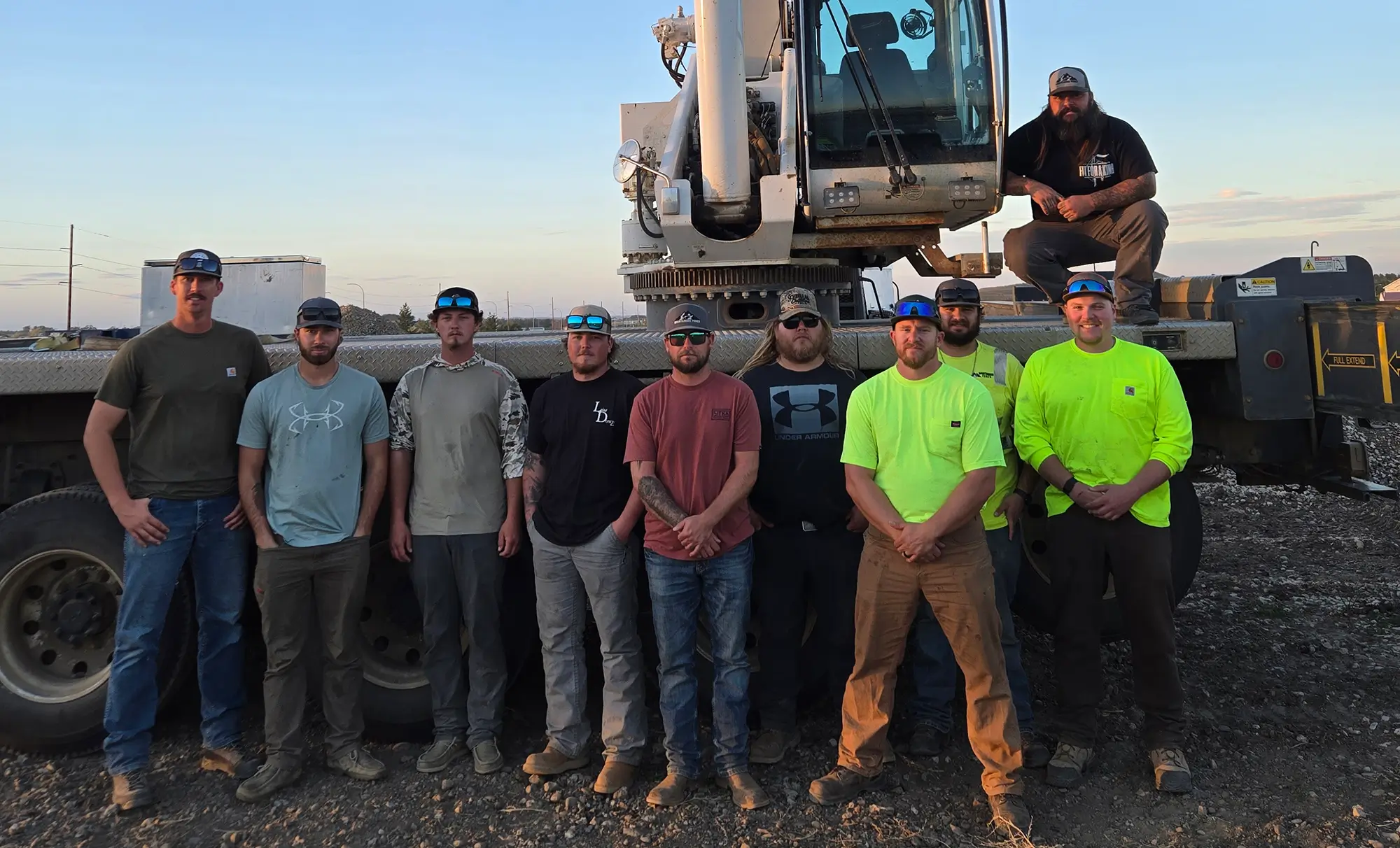
On-Site Training
On‑site training is designed for companies that have the facilities and equipment available at their own location and prefer to keep their employees onsite for logistical or operational reasons. All on‑site training requires the company to provide the crane or equipment that will be used during the training and evaluations.
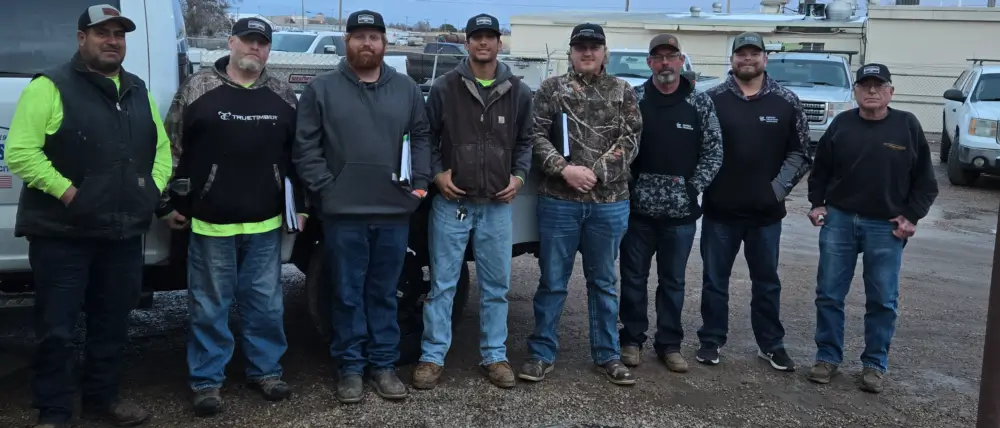
Off-Site Training
Off‑site training is intended for customers who do not have the facilities or space to conduct training at their own location. Paradise Crane Consultants will arrange a suitable rented facility; however, the company must still provide the crane or equipment needed for the training and evaluations.
Local permitting and municipal requirements
Logan's work-in-right-of-way permit, the WROW permit, runs through City Public Works. A complete application includes a MUTCD-compliant traffic-control plan for affected vehicle, bicycle and pedestrian traffic, and a certificate of insurance. The insurance gets its own review.
Allow 3–4 business days for review after the city has all required documents. A failed review can add another 3–4 days after you send the requested information. That is process guidance, not a code deadline. The permittee pays fees at issuance under a schedule held in the office of the Public Works Director. Confirm current fees with the city.
Confirm the insurance limits and policy terms for the WROW permit, flagger requirements, and whether your crane setup needs any site-specific approval beyond the right-of-way permit. Work in state highway right-of-way is a separate matter. City Public Works design standards list UDOT encroachment, excavation and grading permits as possibly required, so check with UDOT.
Local industry and employment
Cache County carries 63,788 covered jobs (BLS QCEW, 2025 annual average, county level), with average annual pay of $55,327. Private manufacturing accounts for 12,136 jobs, or 19.0%, and private construction for 3,820 jobs, or 6.0%.
Logan's dated lift-work record is public. Utah State University reported that two 213-foot construction cranes were assembled in April 2024 for three South Campus structures. A crane was dismantled and removed in mid-November 2024. The university published the story December 19, 2024.
Other projects are on the books. The EPA announced a $4 million award on September 13, 2023 to help build the Logan Regional Green Waste Facility beside the city wastewater treatment plant. City council material dated January 3, 2023 described an $11 million transportation investment that includes a new Logan River bridge at 100 West and 600 South.
If your crews work on campus, in manufacturing or on public infrastructure, qualify every role on the lift, not just the operator.
Does Utah require crane certification beyond federal OSHA's?
Utah operates an OSHA-approved State Plan, so workplace safety here is enforced by the Utah Occupational Safety and Health Division (UOSH), part of the Utah Labor Commission, not by federal OSHA in most cases. The plan covers most private-sector workplaces and state and local government workplaces, subject to listed exclusions. 29 CFR 1926 Subpart CC is the federal construction crane standard. Confirm with UOSH how it applies to your worksite.
What sets Utah apart is a state certification requirement that sits outside the safety agency. Utah Code § 58-55-504 sets crane certification requirements for specified commercial construction projects. The Utah Division of Professional Licensing, within the Department of Commerce, administers them through Utah Admin. Code R156-55a-504, part of the Construction Trades Licensing Act rule, effective August 7, 2026.
The Division's rule is the official state source for the listed crane certification issuers. The Division is also the authority that determines whether another organization offers an equivalent program.
Utah Code § 58-55-504; Utah Admin. Code R156-55a-504; Utah Admin. Code R156-55a; 29 CFR 1926 Subpart CC
Is NCCER certification enough on its own?
On top of the federal baseline, Utah Code § 58-55-504 sets a state certification requirement for specified commercial construction projects, administered by the Utah Division of Professional Licensing under Utah Admin. Code R156-55a-504. The rule identifies the certification issuers it lists. Confirm with the Division whether your operators' certifications are listed or accepted, and whether an equivalent program has been approved. Do not assume that any one certification satisfies the state rule.
The official Utah sources identify no state-specific minimum experience duration beyond the federal baseline. Confirm with the Division and UOSH whether any additional operator-qualification requirement applies to your project or locality.
The federal baseline still applies. Under 29 CFR 1926.1427, operators must be certified by an accredited testing organization or an audited employer program. Certification is valid for five years, and the employer pays for it. Before an operator runs a crane unsupervised, the employer must evaluate that operator on the assigned equipment and document the evaluation.
What does the workplace safety data show?
The U.S. Bureau of Labor Statistics Census of Fatal Occupational Injuries (CFOI) puts Utah's fatal work injury rate at 3.7 per 100,000 full-time-equivalent workers in 2024, down from 4.1 in 2023.
These figures cover all industries, not cranes specifically.
What should you verify before your next lift?
Before your next covered lift in Utah, work through these checks:
- Confirm jurisdiction first. The UOSH State Plan excludes federal employers (including USPS), private-sector maritime employment, USPS mail-operation contractors, employment on U.S. military bases and facilities, and certain other workplaces. OSHA's Utah materials also identify tribal-enterprise and Indian-owned-enterprise employees on reservations or trust lands as under federal OSHA jurisdiction. UOSH reviews jurisdictional questions case by case.
- Confirm whether your project is a specified commercial construction project under Utah Code § 58-55-504.
- Check Utah Admin. Code R156-55a for the listed certification issuers, and ask the Division of Professional Licensing whether your operators' certifications are listed or accepted as equivalent.
- Confirm each operator's certification is current. Federal certification is valid for five years.
- Keep the documented employer evaluation for each operator on the assigned equipment available at the worksite.
Upcoming certification and training sessions dates
Questions
How long does Logan take to review a WROW permit?
Logan's process guide says to allow 3–4 business days for engineering and insurance review after the city receives all required documents. A failed review can add another 3–4 days after you send the requested information. This is guidance, not a code deadline.
What traffic control does Logan expect for crane work in the right-of-way?
A complete WROW application includes a traffic-control plan that meets MUTCD standards for affected vehicle, bicycle and pedestrian traffic. Confirm flagger requirements for your site with City Public Works.
Ready to schedule training in Logan?
Request on-site crane training in Logan, built around your crew, your equipment and your site.