
Crane Operator Certification & Training in Houston, TX
Houston is where Port Houston offloaded four new fully electric ship-to-shore cranes in January 2026. Its Bayport Container Terminal also has a new wharf approved for construction.
This page covers the City permit rules that touch lane closures and metered parking, what the port's dated crane projects mean for your lifting crews, and what to confirm with Houston before a crane goes in.

Training Services Offered in Houston
Based in Albuquerque, our instructors travel to you. Train at your own facility, or we'll arrange a rented site nearby. Either way, your crew trains on the crane they actually run.
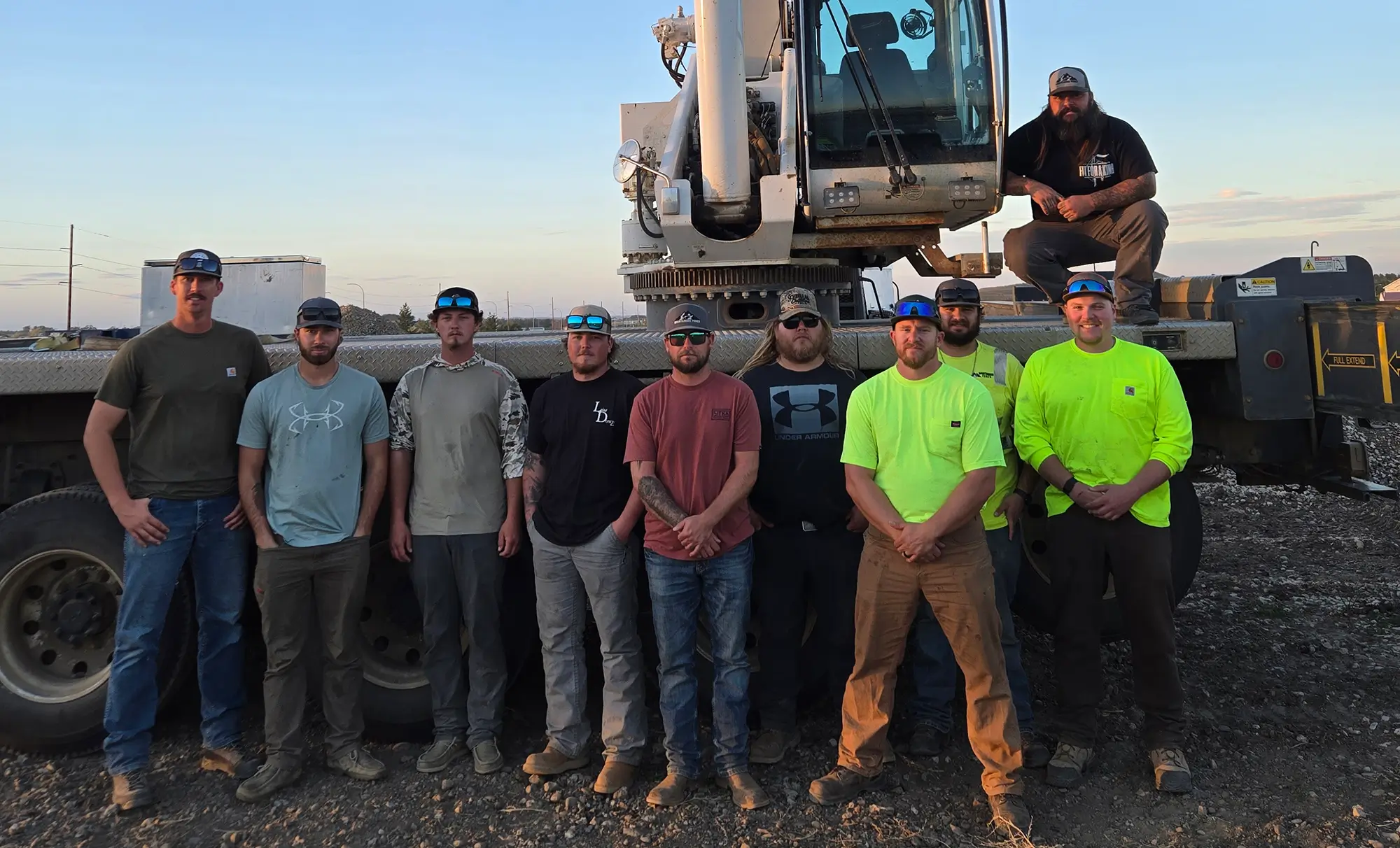
On-Site Training
On‑site training is designed for companies that have the facilities and equipment available at their own location and prefer to keep their employees onsite for logistical or operational reasons. All on‑site training requires the company to provide the crane or equipment that will be used during the training and evaluations.
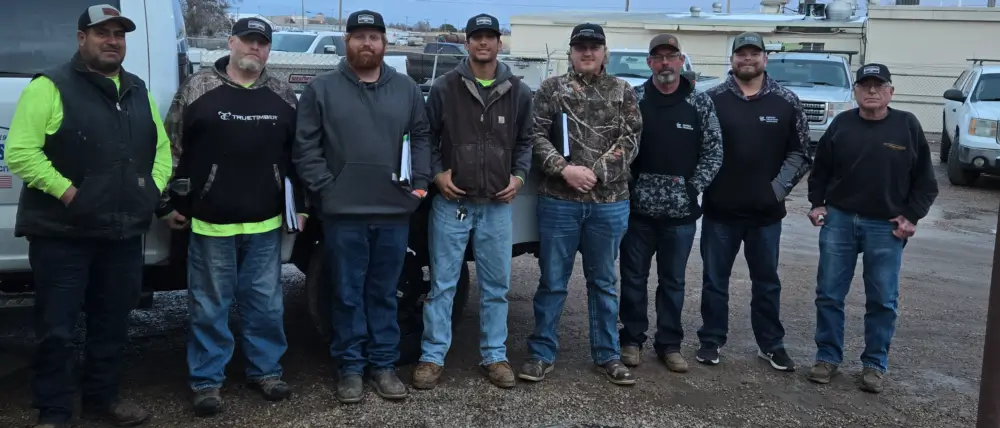
Off-Site Training
Off‑site training is intended for customers who do not have the facilities or space to conduct training at their own location. Paradise Crane Consultants will arrange a suitable rented facility; however, the company must still provide the crane or equipment needed for the training and evaluations.
Local permitting and municipal requirements
Houston's mobility-permit process covers lane closures and roadway obstruction work in City streets. The City's roadway-obstruction permit guidance does not explicitly name cranes or establish a crane-operation permit. That does not mean no separate requirement applies to your project. Confirm with Houston Public Works.
A project with a lane-closure permit also needs a meter-bagging permit if it blocks a parking meter. ParkHouston says the City requires 48 hours' notice.
A City presentation dated October 7, 2021 lists major-thoroughfare closure times of 9 a.m.–4 p.m. or 6 p.m.–6 a.m., with peak restrictions of 7–9 a.m. and 4–6 p.m. unless the City authorizes an exception. It also says flaggers must carry a certification certificate and only law enforcement may control a signalized intersection. That is 2021 guidance. Confirm current hours, flagging, insurance, fees and lead times with the City.
Local industry and employment
Harris County carries 2,458,604 covered jobs, with average annual pay of $91,491 (BLS QCEW 2025 annual average, county level). Construction accounts for 180,772 of them, or 7.4%. Manufacturing adds 177,304. Mining and oil and gas extraction adds 60,325 at an average annual pay of $249,888.
Port Houston supplies the dated lift-work story. In January 2026, it offloaded four new fully electric ship-to-shore cranes at its Bayport and Barbours Cut container terminals. In its March 2, 2026 report, Port Houston said its Commission had approved Wharf 1 at Bayport Container Terminal: approximately 1,300 linear feet of new wharf, scheduled for completion in 2028 and planned to be fitted with what Port Houston calls its largest cranes to date.
Its third-quarter 2026 upcoming-projects report also lists annual wharf-crane and RTG-crane painting at Bayport and Barbours Cut, with construction from first quarter through second quarter 2027.
Crews working around port cranes should qualify every role on the lift, not just the operator.
Who enforces crane rules in Texas if the state has no OSHA State Plan?
Texas is a federal OSHA state for crane work. No Texas State Plan agency enforces occupational-safety standards for private-sector construction. The Texas Department of Insurance, Division of Workers' Compensation (DWC) provides safety assistance, but it states that it lacks regulatory or legal authority to investigate private-sector employers or enforce OSHA regulations. Federal OSHA is the enforcement authority for covered private-sector workplaces.
The applicable construction crane rule is 29 CFR Part 1926, Subpart CC (§§ 1926.1400 et seq.), which applies when cranes and derricks are used in construction. Texas has no OSHA-approved State Plan, and no separate Texas construction-crane rule or adoption-by-reference rule has been identified. Confirm with your federal OSHA area office whether anything additional applies to your site.
Apply the standard that fits the activity. Subpart CC is a construction standard, not a general-industry rule. OSHA's example: merely moving delivered equipment on or off a transport trailer at an area adjacent to a construction site is addressed under the general-industry rule at 29 CFR 1910.180(b)(3).
29 CFR Part 1926, Subpart CC (§§ 1926.1400 et seq.); 29 CFR 1926.1427; 29 CFR 1910.180(b)(3)
Is NCCER certification enough on its own?
No Texas-specific operator certification, qualification or experience requirement beyond the federal baseline has been identified, and no statewide Texas crane operator license, registration or hoisting license has been identified. That is not proof that no local requirement exists, so confirm with the local jurisdiction and your federal OSHA area office. NCCER certification is the credential Paradise Crane trains operators toward.
The federal baseline is 29 CFR 1926.1427. Where no qualifying state or local license applies, operators must be certified by an accredited crane operator testing organization or an audited employer program. OSHA does not name a particular certifying organization in this requirement. Certification is valid for five years, and the employer pays for it.
Certification does not finish the job. Before an operator runs a crane unsupervised, the employer must evaluate the operator on the assigned equipment and document it. The evaluator must have the knowledge, training and experience necessary to assess equipment operators. The cited rule text states no minimum years of operator experience.
What does the workplace safety data show?
The U.S. Bureau of Labor Statistics Census of Fatal Occupational Injuries (CFOI) reports 557 fatal work injuries in Texas in 2024. Transportation incidents accounted for 242 of those deaths and falls, slips and trips for 77.
The state's fatal work injury rate was 3.9 per 100,000 full-time-equivalent workers in 2024.
These figures cover all industries, not cranes specifically.
What should you verify before your next lift?
Before your next covered lift in Texas, work through these checks:
- Confirm jurisdiction first. Texas state and local government workers are not covered by federal OSHA, and self-employed workers and workers whose hazards are regulated by another federal agency (for example, MSHA, the Department of Energy or the Coast Guard) are outside OSH Act coverage.
- Confirm the activity falls under the right standard. Subpart CC governs cranes and derricks used in construction, while some activities, such as moving delivered equipment on or off a trailer adjacent to a site, fall under 29 CFR 1910.180(b)(3).
- Identify the federal OSHA area office covering your county through OSHA's Texas offices page. Texas DWC's safety hotline is an assistance resource, not the enforcement authority.
- Confirm with the local jurisdiction whether any local crane operator requirement applies to your site.
- Confirm each operator's certification is current and issued by an accredited crane operator testing organization or an audited employer program.
- Confirm the documented employer evaluation for the specific equipment is available at the worksite.
Upcoming certification and training sessions dates
Questions
Do I need a meter-bagging permit for a lane closure in Houston?
If your project has a lane-closure permit and blocks access to a parking meter, you also need a separate meter-bagging permit. ParkHouston says the City requires 48 hours' notice for meter-bagging requests.
What lane-closure hours does Houston use on major thoroughfares?
A City mobility-permits presentation dated October 7, 2021 describes standard closure times of 9 a.m.–4 p.m. or 6 p.m.–6 a.m. overnight. It lists peak-hour restrictions of 7–9 a.m. and 4–6 p.m. unless the City authorizes an exception. Conditions vary by location and project, so confirm them with your current permit.
Ready to schedule training in Houston?
Request on-site crane training in Houston, built around your crew, your equipment and your site.