Crane Operator Certification & Training in Hermiston, OR
Hermiston sits at the center of one of the fastest shifts in eastern Oregon's economy. Data-center operations have grown Umatilla County's information sector about fivefold, and nearly all of the county's job growth has landed in the Hermiston area.
This page covers what Hermiston requires before a crane goes into the right-of-way, the plan and timing rules, and what data-center construction means for how your lifting crews are qualified.

Training Services Offered in Hermiston
Based in Albuquerque, our instructors travel to you. Train at your own facility, or we'll arrange a rented site nearby. Either way, your crew trains on the crane they actually run.
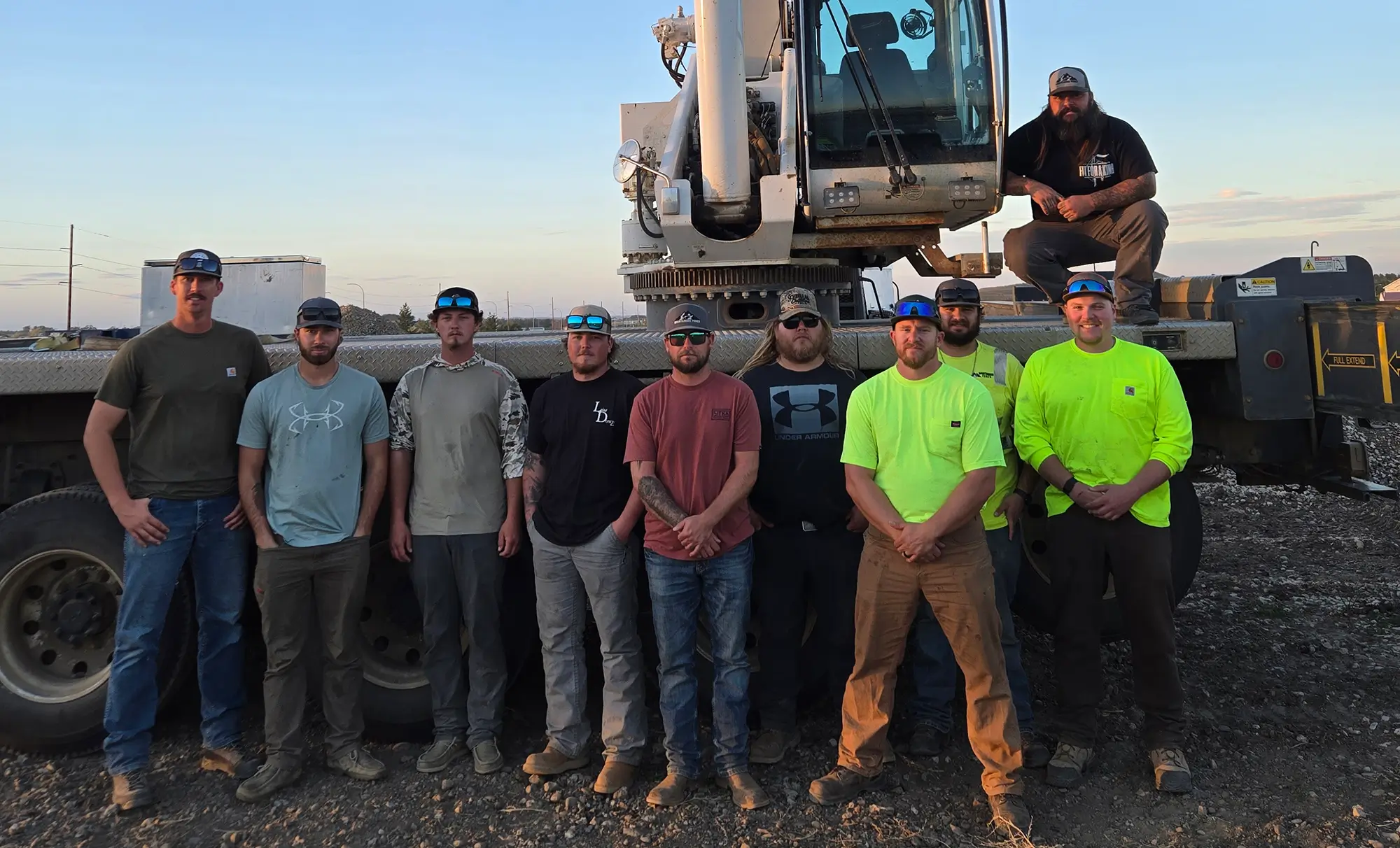
On-Site Training
On‑site training is designed for companies that have the facilities and equipment available at their own location and prefer to keep their employees onsite for logistical or operational reasons. All on‑site training requires the company to provide the crane or equipment that will be used during the training and evaluations.
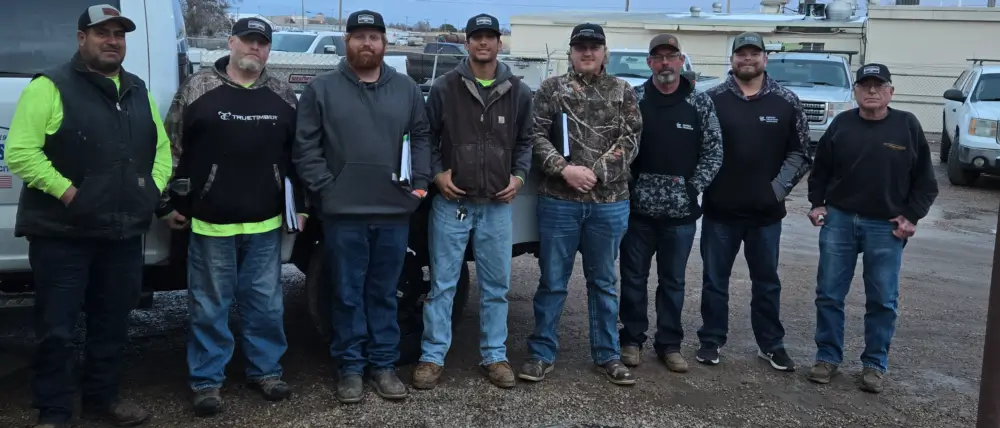
Off-Site Training
Off‑site training is intended for customers who do not have the facilities or space to conduct training at their own location. Paradise Crane Consultants will arrange a suitable rented facility; however, the company must still provide the crane or equipment needed for the training and evaluations.
Local permitting and municipal requirements
Hermiston does not license crane operators. Under Hermiston Code Chapter 94, no one may occupy or encroach on a public right-of-way without a franchise, license, permit or other City approval. The City requires a Right of Way Permit for any work in the road, along the sidewalk, on the shoulder or in the ditch, issued by the Street Department (180 NE 2nd St., 541-667-5025 ext. 2, rowpermits@hermiston.gov).
The application lists the contractor as the permittee responsible for the project. It must include a detailed drawing of the work and an aerial site plan with a traffic control plan showing 600 feet in all directions, with MUTCD signage noted. Non-utility contractors need an Oregon CCB license and must list their liability insurance carrier and policy number.
File at least 72 hours before work starts, and request inspections 24 hours ahead. Construction hours are 7 a.m. to 7 p.m. daily. The permit is void 60 days after it issues unless otherwise noted, and an extension must be requested at least 24 hours before it expires.
The fees printed on the application cover sidewalk, driveway and street-cut work. A crane occupying the right-of-way without a cut is not listed, so confirm the permit and fee with the Street Department.
Local industry and employment
Umatilla County carries 33,825 covered jobs across 2,371 establishments, with an average weekly wage of $1,143 (first quarter 2026).
The change underway is in the west end. According to an August 2025 letter from the City of Hermiston citing Oregon Employment Department data, the county's information sector, long limited to newspapers and radio, grew from 170 jobs in February 2018 to 880 in June 2025, driven by data-center operations. Those figures do not include the workers building the facilities. The City also reports that the Hermiston, Umatilla, Stanfield and Echo ZIP codes accounted for 91% of the county's net job gain from 2012 to 2022.
Data-center construction is heavy, repetitive and high-consequence lifting: structural and precast erection, rooftop mechanical, and generator and transformer setting. Loads are expensive, schedules are compressed, and the margin for a rigging or signaling error is small.
Why is Oregon's crane fall protection trigger stricter than federal OSHA's?
Oregon adopts the federal crane standard almost in full, then replaces the one section that governs your crew rather than your equipment. Workplace safety here is enforced by the Oregon Occupational Safety and Health Division — Oregon OSHA — within the Department of Consumer and Business Services, under a State Plan approved on December 28, 1972 that covers private employers alongside state and local government. 29 CFR 1926 Subpart CC is adopted by reference at OAR 437-003-0001(28), with one exception: Oregon wrote its own fall protection rule for cranes, OAR 437-003-1423.
That rule requires fall protection when anyone working on a crane's walking or working surface is exposed to an unprotected side or edge more than 10 feet above a lower level, and it applies the same trigger to erecting, climbing and dismantling tower cranes. Federal OSHA sets both of those at 15 feet. An assembly crew working to the federal number on an Oregon job site is unprotected across the five feet where Oregon requires protection, and that is the single most likely way to be cited here.
The rule's 10-foot figure cuts the other way for routine work, and the reason is historical. OAR 437-003-1423 was filed in 2011, when 10 feet was Oregon's general construction trigger. In 2016 Oregon OSHA lowered that general trigger to 6 feet, effective January 1, 2017 and made at federal OSHA's request, repealing the federal duty-to-have provision and substituting OAR 437-003-1501(1). The crane section was never conformed to that change. Federal OSHA requires 6 feet for non-assembly work on equipment, a State Plan cannot be less protective than the federal standard, and Oregon OSHA's own crane guide states 6 feet. So plan routine work on the crane to 6 feet and assembly, disassembly and tower crane work to 10.
OAR 437-003-0001(28); OAR 437-003-1423; 29 CFR 1926 Subpart CC
Is NCCER certification enough on its own?
NCCER certification is the right foundation for operating in Oregon, and it carries more weight here than in a state with its own licensing, because Oregon has none to fall back on. Oregon OSHA does not issue operator licenses for equipment covered by Subdivision CC. Employers rely on certification from a nationally accredited testing organization such as NCCER, or on an audited employer program.
Accredited certification is portable and valid for five years, and under 29 CFR 1926.1427(c)(3) the employer must provide it at no cost to the employee. It does not finish the job. Before an operator runs a crane unsupervised the employer must evaluate them on the assigned equipment and document it — the operator's name, the evaluator's name and signature, the date, and the make, model and configuration — and that record must be available at the worksite and kept for as long as the operator is employed. An operator moving to a crane type that requires additional certification returns to operator-in-training status until a new certification and evaluation are complete.
What Oregon adds sits beside certification rather than on top of it. Under OAR 437-003-1423(6), every employee who may be exposed to fall hazards while on, or hoisted by, covered equipment must be trained on Oregon's own construction fall protection rules, including the criteria at OAR 437-003-0502. Federal Subpart M training delivered in another state does not satisfy this, and your operators and signal persons need both Oregon trigger heights in hand: 6 feet for routine work on the equipment, 10 for assembly, disassembly and tower crane work.
What does the workplace safety data show?
Oregon recorded 52 fatal work injuries in 2024, down from 54 the year before, according to the U.S. Bureau of Labor Statistics Census of Fatal Occupational Injuries. The state's fatal injury rate was 2.6 per 100,000 full-time-equivalent workers, down from 2.8 in 2023.
Private-industry construction accounted for 8 of those deaths, 15 percent of the state total, up from 6 in 2023. Those eight split evenly: four in heavy and civil engineering construction and four among specialty trade contractors.
Two event categories are worth reading together on a crane site. Across all Oregon industries, being struck by a propelled, falling or suspended object caused 8 deaths, and falls to a lower level caused 7. Those are the two hazards a crane concentrates in one place — a suspended load and people working at height — which is why Oregon wrote its own rule about the second one.
These are statewide figures covering all industries, not crane-specific data.
What should you verify before your next lift?
Before your next covered lift in Oregon, work through these in order:
- Confirm jurisdiction first. The Oregon State Plan excludes employment on navigable waters, private establishments within established Indian reservation boundaries including Warm Springs and Umatilla, worksites on federal military reservations, and employment at Crater Lake National Park. Those are federal OSHA, and Oregon's fall protection rule does not apply there.
- Set your assembly, disassembly and tower crane erecting, climbing and dismantling plans to Oregon's 10-foot trigger, not the federal 15. This includes point-to-point movement on horizontal lattice booms where the fall distance is 10 feet or more.
- Set routine work on the equipment to 6 feet, matching Oregon's general construction trigger and Oregon OSHA's crane guide. The 10 feet in the crane rule predates the 2017 change and is not the number to plan to.
- If anyone will tie off to the hook or load line, confirm all four conditions in OAR 437-003-1423(5): a qualified person has determined the setup and rated capacity meet the 1926.502(d)(15) anchorage criteria, the operator is informed and is in view and no more than 25 feet from the operator station, no load is suspended, and the equipment is not moved while the system is in use.
- Confirm every employee who may be exposed on or hoisted by the equipment has been trained on Oregon's fall protection rules, not only on federal Subpart M.
- Confirm each operator's certification is current for the equipment type and that the documented employer evaluation for that specific equipment is available at the worksite.
- On a leased or rented crane, get the most recent monthly and annual inspection records before operating. Without them you cannot show the annual inspection is within twelve months or that monthly records cover the last three.
Upcoming certification and training sessions dates
Questions
How far ahead do I need a Hermiston right-of-way permit?
File at least 72 hours before work begins. The application needs an aerial site plan with a traffic control plan showing 600 feet in every direction, and the permit is void 60 days after it issues unless otherwise noted.
What does Hermiston charge for a crane in the right-of-way?
The application's listed fees cover sidewalk, driveway and street-cut work. A crane setup without a cut is not listed, so confirm the permit type and fee with the Street Department before you file.
Ready to schedule training in Hermiston?
Request on-site crane training in Hermiston, built around your crew, your equipment and your site.