
Crane Operator Certification & Training in Farmington, NM
Farmington sits in San Juan County, where mining, quarrying and oil and gas extraction employed 4,374 people in the 2025 annual average, 9.2% of covered jobs.
This page covers the TTC permit Farmington requires before a work zone goes up on a public street, the traffic control rules that come with it, and what the county's energy, construction and plant work means for how your lifting crews are qualified.

Training Services Offered in Farmington
Based in Albuquerque, our instructors travel to you. Train at your own facility, or we'll arrange a rented site nearby. Either way, your crew trains on the crane they actually run.
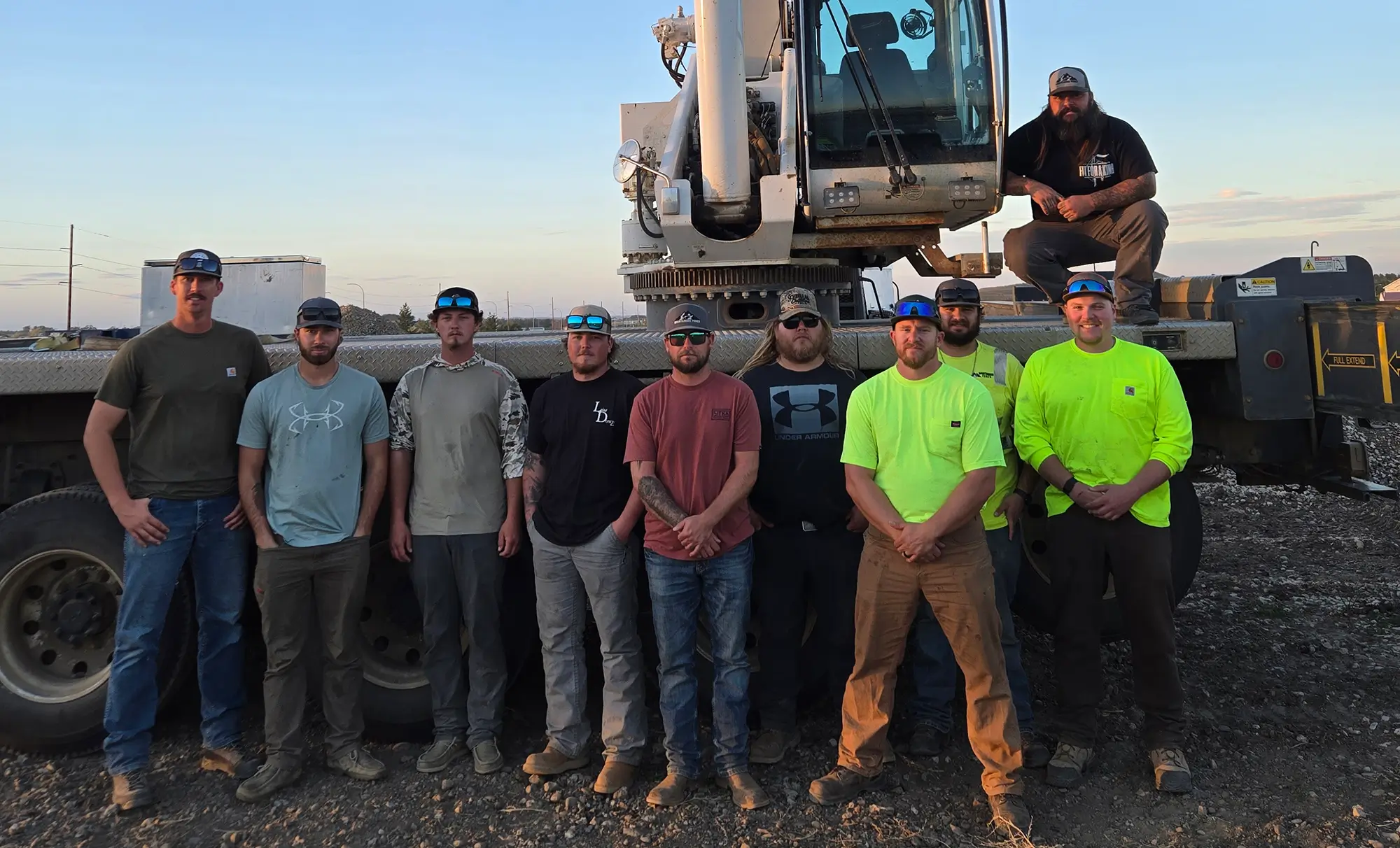
On-Site Training
On‑site training is designed for companies that have the facilities and equipment available at their own location and prefer to keep their employees onsite for logistical or operational reasons. All on‑site training requires the company to provide the crane or equipment that will be used during the training and evaluations.
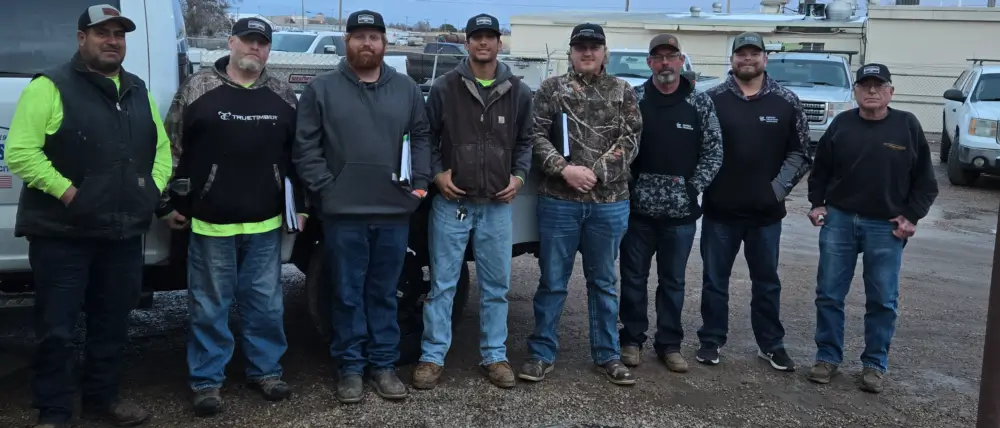
Off-Site Training
Off‑site training is intended for customers who do not have the facilities or space to conduct training at their own location. Paradise Crane Consultants will arrange a suitable rented facility; however, the company must still provide the crane or equipment needed for the training and evaluations.
Local permitting and municipal requirements
Farmington requires a TTC permit and an approved traffic control plan before you occupy a work zone on a public street, sidewalk or public parking lot where work affects traffic. It is a work-zone authorization, not a crane-operation permit. Under Municipal Code § 25-2-4, the City Traffic Engineer or designee reviews and prescribes work-zone traffic control and devices.
Submit the permit and plan at least five working days ahead. Emergency exceptions are case by case. Plans follow the latest MUTCD and list devices, date, start time and duration. Flaggers must be ATSSA certified when required. Construction or repair on collector or arterial streets is not allowed during peak hours, and the City gives no clock times. Give abutting occupants 24 hours' notice when access is limited. Coordinate with City signal technicians five days ahead near traffic signals. Work in NMDOT right-of-way needs a TTC plan from a New Mexico-licensed professional engineer, submitted to NMDOT District 5.
Confirm fees, insurance requirements and any other permit your lift needs with the city before you mobilize.
Local industry and employment
San Juan County had 47,793 covered jobs in the 2025 annual average (BLS QCEW), with average annual pay of $58,822. Mining, quarrying, and oil and gas extraction accounted for 4,374 jobs, or 9.2%, at $96,395. Private construction added 4,073 jobs, or 8.5%, at $78,513.
In May 2026, the City's monthly report described Water Treatment Plant Upgrade Phase 1 as approximately 90% complete, with the new backwash pump house completed and pumps commissioned.
That is a dated municipal project, not a documented crane lift. It does sit beside an energy and construction workforce that works around heavy equipment every day.
If your crews work in oil and gas, construction or plant settings, qualify every role on the lift: operator, rigger and signal person.
Does New Mexico require a state crane operator license on top of federal certification?
New Mexico does not rewrite the federal crane rules. It adds a license. Workplace safety is enforced by the New Mexico Environment Department's Occupational Health and Safety Bureau (NM OSHA/OHSB) under an OSHA-approved State Plan that covers most private-sector workers and all state and local government workers. The state construction rule, 11.5.3.9 NMAC, incorporates 29 CFR Part 1926, including Subpart CC, by reference. Its listed exceptions omit Subparts A and B and amend the hazard-communication provision. They do not list a crane-specific amendment to Subpart CC or to 29 CFR 1926.1427.
The difference is the state license. Under the Crane Operators Safety Act, NMSA 1978, §§ 60-15-1 to 60-15-15, crane operators performing construction, demolition, or excavation work need a current New Mexico crane-operator license unless an exemption under the Act applies. The New Mexico Regulation and Licensing Department (NMRLD) administers it through its Crane Operators Safety Program.
11.5.3.9 NMAC; NMSA 1978, §§ 60-15-1 to 60-15-15; 29 CFR 1926 Subpart CC; 29 CFR 1926.1427
Is NCCER certification enough on its own?
New Mexico licensing sits on top of federal certification. NMRLD states that applicants must provide documentation of an approved in-house training course and a nationally approved certification, pass an approved written general examination with a score of 75% or greater, and pass an approved Law & Safety Examination on the state program Act. The license also carries crane-type-specific experience and practical testing. For Class I and Class II, NMRLD describes experience as at least three years within the prior three years and at least 500 hours of seat time on the applicable crane type. Class III has no experience requirement and is described as supervised work.
NCCER national accreditation does not replace the New Mexico license; NMRLD states that nationally accredited operators must also obtain it. Confirm with NMRLD which certifications it accepts toward the license. The state criteria are licensing requirements, not a finding that any particular certification alone satisfies federal § 1926.1427.
The federal baseline still applies. 29 CFR 1926 Subpart CC is the federal construction crane standard. Under 29 CFR 1926.1427, operators must be certified by an accredited testing organization or an audited employer program. Certification is valid for five years, and the employer pays for it. Before an operator runs a crane unsupervised, the employer must evaluate the operator on the assigned equipment and document it.
What does the workplace safety data show?
The U.S. Bureau of Labor Statistics Census of Fatal Occupational Injuries (CFOI) reports 32 total fatal work injuries in New Mexico in 2024. BLS reported a fatal work injury rate of 3.6 fatalities per 100,000 full-time equivalent workers for the state that year.
BLS also published 4 fatal occupational injuries in the construction industry in New Mexico in 2024.
These figures cover all industries, not cranes specifically.
What should you verify before your next lift?
Before your next covered lift in New Mexico, work through these checks:
- Confirm jurisdiction first. The State Plan excludes maritime employment; USPS mail-operation contract workers and contractor-operated facilities; private-sector establishments on military facilities and bases; tribal or private-sector employment within Indian reservations and lands under tribal-government control to the extent permitted by law; work at the Western Area Power Administration site at Elephant Butte; and aircraft cabin crewmember working conditions. Federal OSHA covers those issues, and the plan does not cover federal-government employers.
- Confirm each operator holds a current New Mexico crane-operator license for construction, demolition, or excavation work, or that an exemption under the Crane Operators Safety Act applies. Verify with NMRLD's Crane Operators Safety Program.
- Confirm the license class matches the crane type and capacity being operated, and that the operator's experience and testing meet NMRLD's criteria for that class.
- Confirm the operator's certification is current for the equipment type, and confirm with NMRLD which certifications it accepts for licensing.
- Confirm the documented employer evaluation for the specific assigned equipment is available at the worksite.
- Confirm current safety rules with NM OSHA/OHSB and the state's published NMAC rule index.
Upcoming certification and training sessions dates
Questions
What does Farmington require before a crane occupies a street?
A TTC permit and an approved TTC plan, both submitted at least five working days before work. Confirm with the city whether any other permit applies to your lift.
Does Farmington have a street cut permit?
Yes. The City's Street Cut Permit applies to residential or commercial work involving curbs, sidewalks or streets. The application requires aerial photography and signatures from Planning, Water and Wastewater, and Building Inspection. Confirm current fees with the city.
Ready to schedule training in Farmington?
Request on-site crane training in Farmington, built around your crew, your equipment and your site.