
Crane Operator Certification & Training in Corpus Christi, TX
Corpus Christi's Ship Channel Improvement Project, announced complete by the Port on June 2, 2025, is a $625 million, four-phase channel deepening and widening project. On September 17, 2025, Cheniere reported full notice to proceed to Bechtel for two LNG trains adjacent to Corpus Christi Stage 3.
This page covers the right-of-way permit the city requires for work in City right-of-way, what it asks for, and what industrial and marine work means for how your lifting crews are qualified.

Training Services Offered in Corpus Christi
Based in Albuquerque, our instructors travel to you. Train at your own facility, or we'll arrange a rented site nearby. Either way, your crew trains on the crane they actually run.
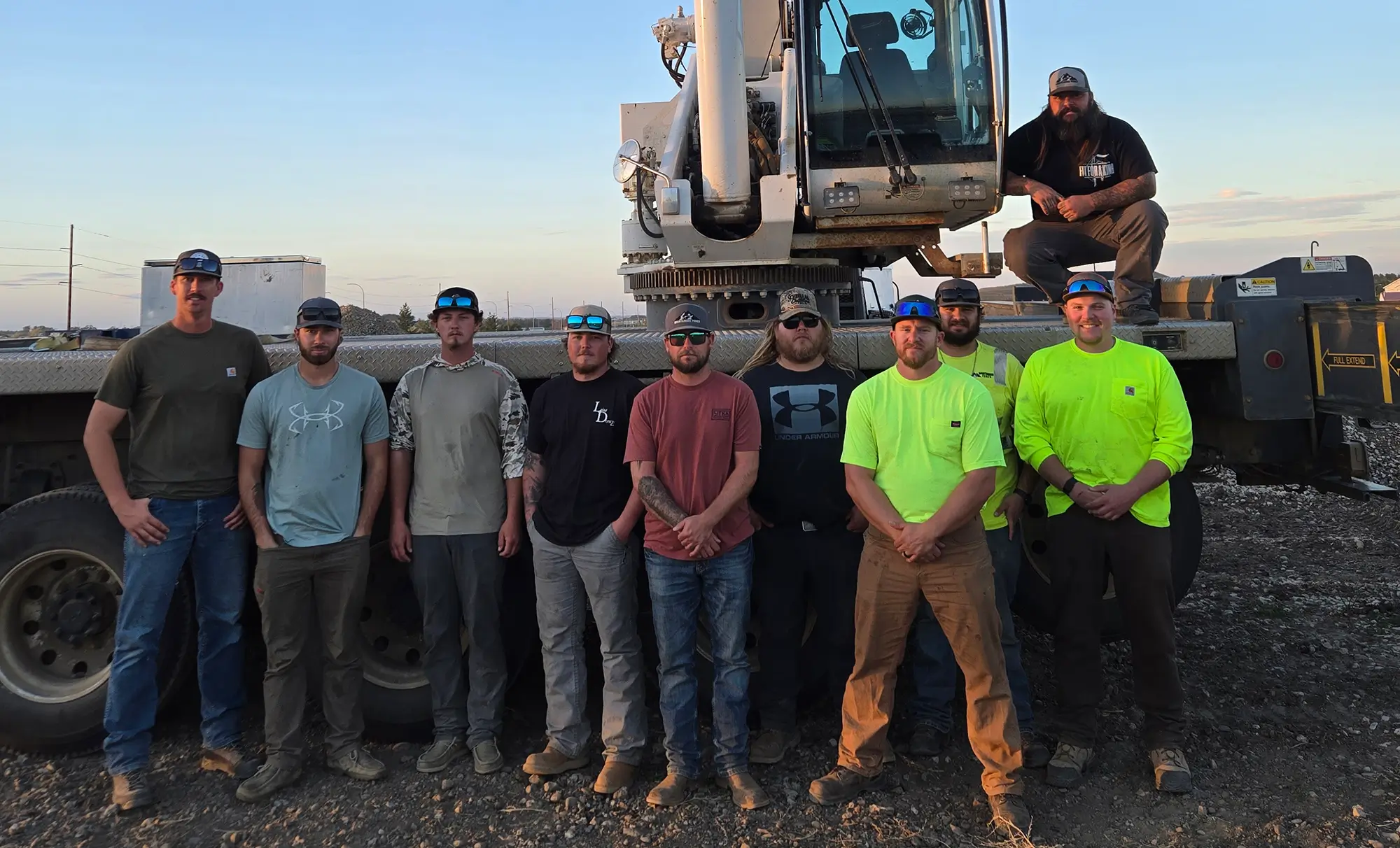
On-Site Training
On‑site training is designed for companies that have the facilities and equipment available at their own location and prefer to keep their employees onsite for logistical or operational reasons. All on‑site training requires the company to provide the crane or equipment that will be used during the training and evaluations.
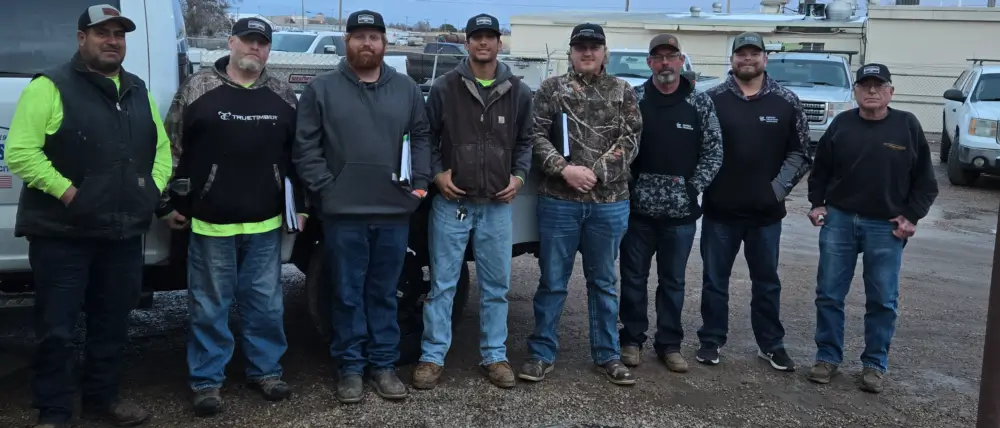
Off-Site Training
Off‑site training is intended for customers who do not have the facilities or space to conduct training at their own location. Paradise Crane Consultants will arrange a suitable rented facility; however, the company must still provide the crane or equipment needed for the training and evaluations.
Local permitting and municipal requirements
Corpus Christi requires a ROW Construction Permit for excavation, blockage or occupancy of City right-of-way. Code §49-2 covers obstructions, closures and encroachments; §49-3 sets the procedure for closing or partly blocking streets and sidewalks. The permit is not a permit to operate a crane as such, and the City lists mobile and tower cranes among typical ROW activities. Public Works, Traffic Operations—Right of Way Management Division administers it.
Review typically takes 7–21 business days. Emergency work requires the application within 24 hours after work begins. Closures need a traffic control plan from a Texas-licensed professional engineer, and work that sends signals dark or flashing requires police presence. For a permitted roadway blockage, the City requires $1,000,000 combined single limit general liability, or the Risk Manager's amount, with the City as additional insured.
Verify road ownership: TxDOT right-of-way is not City right-of-way, so obtain applicable state authorization. Confirm automobile and workers' compensation limits and any other approval your lift needs with the city. The application asks for blockage area in square feet to calculate the fee. Confirm current fees with the city.
Local industry and employment
Nueces County carries 165,925 covered jobs with average annual pay of $62,366 (BLS QCEW 2025 annual average, county level). Private construction employment is 19,356, or 11.7% of covered jobs, at $87,431. Manufacturing adds 6,757 jobs at $105,538.
The lift-work story here is dated. On June 2, 2025, the Port of Corpus Christi announced completion of its $625 million, four-phase Ship Channel Improvement Project. On September 17, 2025, Cheniere reported full notice to proceed to Bechtel for two LNG trains adjacent to Corpus Christi Stage 3.
TxDOT's Harbor Bridge is a state project with documented lifting. On December 14, 2022, TxDOT reported crews were set to resume main-span construction, including lifting delta frames into place. The bridge opened to southbound traffic on June 28, 2025.
Crews working on projects at this scale should qualify every role on the lift, not just the operator.
Who enforces crane rules in Texas if the state has no OSHA State Plan?
Texas is a federal OSHA state for crane work. No Texas State Plan agency enforces occupational-safety standards for private-sector construction. The Texas Department of Insurance, Division of Workers' Compensation (DWC) provides safety assistance, but it states that it lacks regulatory or legal authority to investigate private-sector employers or enforce OSHA regulations. Federal OSHA is the enforcement authority for covered private-sector workplaces.
The applicable construction crane rule is 29 CFR Part 1926, Subpart CC (§§ 1926.1400 et seq.), which applies when cranes and derricks are used in construction. Texas has no OSHA-approved State Plan, and no separate Texas construction-crane rule or adoption-by-reference rule has been identified. Confirm with your federal OSHA area office whether anything additional applies to your site.
Apply the standard that fits the activity. Subpart CC is a construction standard, not a general-industry rule. OSHA's example: merely moving delivered equipment on or off a transport trailer at an area adjacent to a construction site is addressed under the general-industry rule at 29 CFR 1910.180(b)(3).
29 CFR Part 1926, Subpart CC (§§ 1926.1400 et seq.); 29 CFR 1926.1427; 29 CFR 1910.180(b)(3)
Is NCCER certification enough on its own?
No Texas-specific operator certification, qualification or experience requirement beyond the federal baseline has been identified, and no statewide Texas crane operator license, registration or hoisting license has been identified. That is not proof that no local requirement exists, so confirm with the local jurisdiction and your federal OSHA area office. NCCER certification is the credential Paradise Crane trains operators toward.
The federal baseline is 29 CFR 1926.1427. Where no qualifying state or local license applies, operators must be certified by an accredited crane operator testing organization or an audited employer program. OSHA does not name a particular certifying organization in this requirement. Certification is valid for five years, and the employer pays for it.
Certification does not finish the job. Before an operator runs a crane unsupervised, the employer must evaluate the operator on the assigned equipment and document it. The evaluator must have the knowledge, training and experience necessary to assess equipment operators. The cited rule text states no minimum years of operator experience.
What does the workplace safety data show?
The U.S. Bureau of Labor Statistics Census of Fatal Occupational Injuries (CFOI) reports 557 fatal work injuries in Texas in 2024. Transportation incidents accounted for 242 of those deaths and falls, slips and trips for 77.
The state's fatal work injury rate was 3.9 per 100,000 full-time-equivalent workers in 2024.
These figures cover all industries, not cranes specifically.
What should you verify before your next lift?
Before your next covered lift in Texas, work through these checks:
- Confirm jurisdiction first. Texas state and local government workers are not covered by federal OSHA, and self-employed workers and workers whose hazards are regulated by another federal agency (for example, MSHA, the Department of Energy or the Coast Guard) are outside OSH Act coverage.
- Confirm the activity falls under the right standard. Subpart CC governs cranes and derricks used in construction, while some activities, such as moving delivered equipment on or off a trailer adjacent to a site, fall under 29 CFR 1910.180(b)(3).
- Identify the federal OSHA area office covering your county through OSHA's Texas offices page. Texas DWC's safety hotline is an assistance resource, not the enforcement authority.
- Confirm with the local jurisdiction whether any local crane operator requirement applies to your site.
- Confirm each operator's certification is current and issued by an accredited crane operator testing organization or an audited employer program.
- Confirm the documented employer evaluation for the specific equipment is available at the worksite.
Upcoming certification and training sessions dates
Questions
Which Corpus Christi permit applies when a crane blocks the street?
The ROW Construction Permit, which applies to excavation, blockage or occupancy of City right-of-way. The City names mobile and tower cranes among typical ROW activities. Contact Right of Way Management, and confirm with the city whether any other approval applies to your lift.
How long does a Corpus Christi right-of-way permit take?
The City says correctly submitted applications typically take 7–21 business days to review and approve, depending on complexity. That is a typical estimate, not a mandatory filing deadline. Emergency construction activity must have its application completed within 24 hours after work begins.
Ready to schedule training in Corpus Christi?
Request on-site crane training in Corpus Christi, built around your crew, your equipment and your site.