Crane Operator Certification & Training in Cedar City, UT
Cedar City announced an Iron Springs inland-port project area on April 4, 2023. A Western Quality Foods expansion also involves installing seven new exterior vertical silos.
This page covers the street occupancy and excavation rules in Cedar City's Chapter 31, what they cost, and what industrial projects mean for how your lifting crews are qualified.

Training Services Offered in Cedar City
Based in Albuquerque, our instructors travel to you. Train at your own facility, or we'll arrange a rented site nearby. Either way, your crew trains on the crane they actually run.
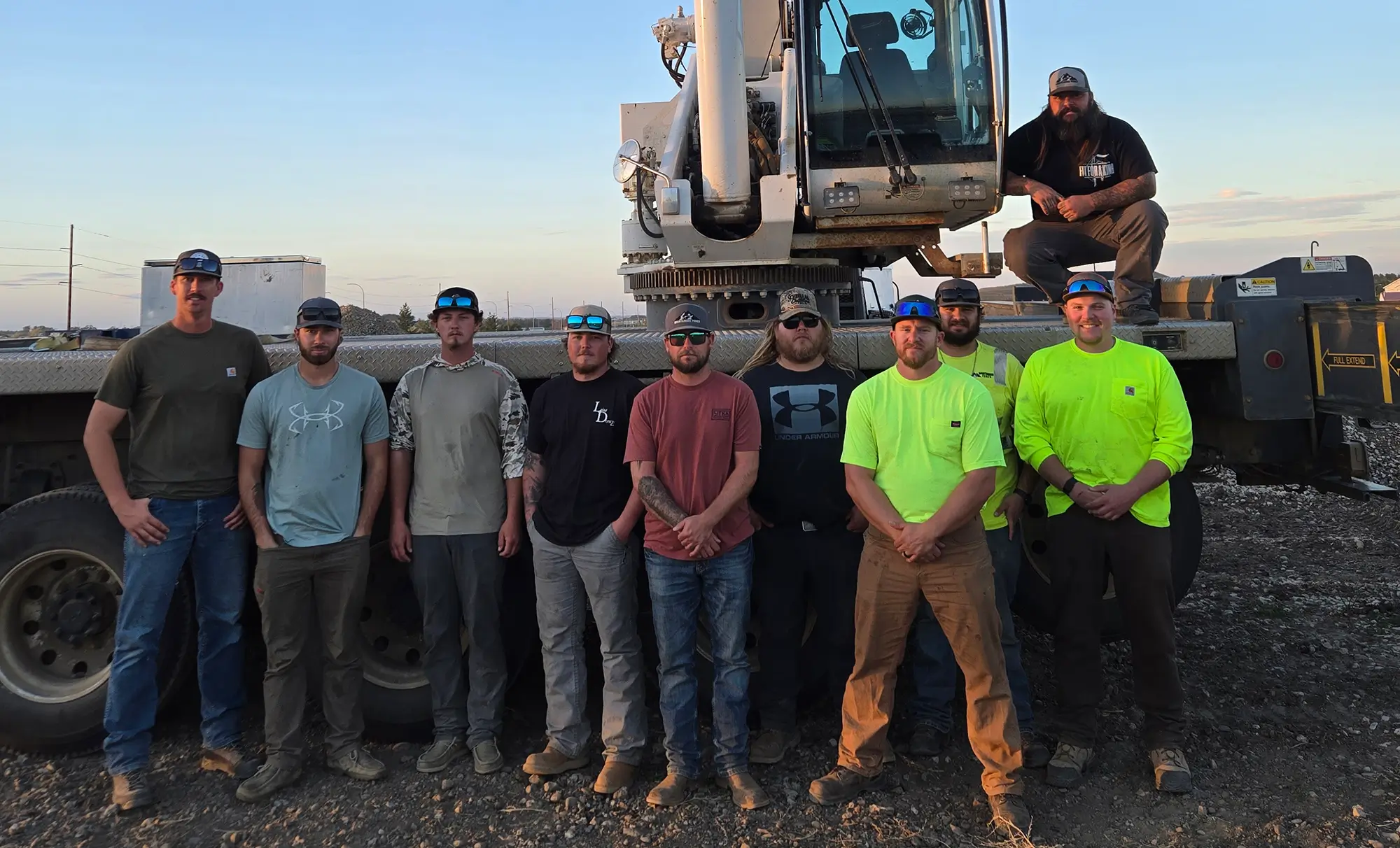
On-Site Training
On‑site training is designed for companies that have the facilities and equipment available at their own location and prefer to keep their employees onsite for logistical or operational reasons. All on‑site training requires the company to provide the crane or equipment that will be used during the training and evaluations.
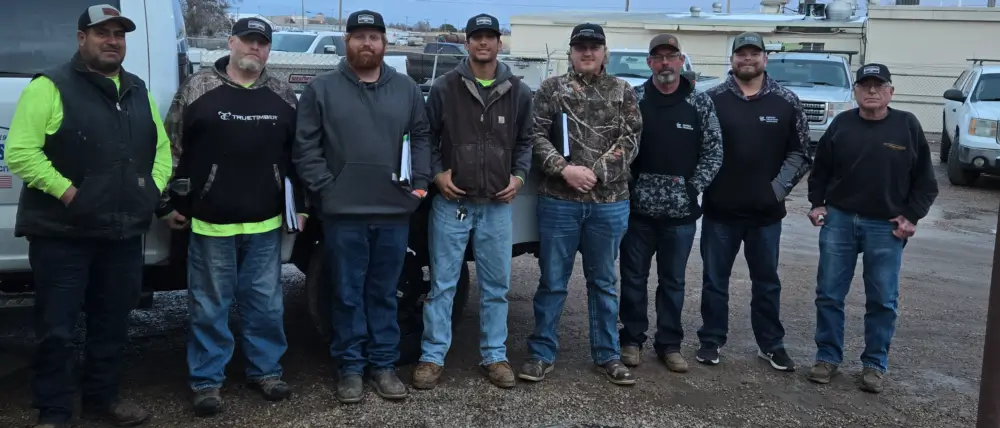
Off-Site Training
Off‑site training is intended for customers who do not have the facilities or space to conduct training at their own location. Paradise Crane Consultants will arrange a suitable rented facility; however, the company must still provide the crane or equipment needed for the training and evaluations.
Local permitting and municipal requirements
Cedar City Code Chapter 31 lists a Permit to Occupy Street With Building Material at § 31-9, separate from the excavation permit. The fee schedule updated December 3, 2025 lists a $25 Street Occupancy Permit fee and a $25 Excavation Permit fee under § 31-5-2. Road excavation adds a $25 non-refundable fee per application plus bond fees. For excavation, § 31-5-7 requires a 14-day closure cash bond and § 31-5-11 requires an 18-month guarantee cash bond, each at least $400 or $5 per square foot, whichever is greater. Confirm current fees with the city.
Section 31-5-10 requires an insurance certificate covering injuries to persons or property from excavation and reparation of city right-of-way, plus hold-harmless language. The code text states no dollar limit. Section 31-7 requires excavations to be guarded with barricades and light. Treat neither the street occupancy permit nor the excavation permit as a crane-operation permit. Confirm with the city whether any other approval applies to your crane, plus application lead times, street-closure hours, parking rules, equipment placement and neighbor notice.
Local industry and employment
Iron County carries 25,889 covered jobs in the BLS QCEW 2025 annual average, with average annual pay of $49,908. Private construction accounts for 3,263 of those jobs (12.6%). Private manufacturing accounts for 2,667 (10.3%).
Industrial projects are on the city's record. Project-review minutes dated September 18, 2025 describe a Western Quality Foods expansion at 997 North Airport Road. It includes demolition of a garage, seven new exterior vertical silos described as ranging from 50,000 to potentially 65,000 gallons, and new electrical service and mechanical equipment.
A city news release dated April 4, 2023 announced the Iron Springs inland-port project area. It identifies BZI Steel's planned Commerce Crossroads logistics park and transloading facility, and the planned Savage Railport–Southern Utah on 74 acres.
Neither source documents a crane lift. Silo and transloading projects of this scale still put heavy loads in play. Qualify every role on the lift: operator, rigger and signal person.
Does Utah require crane certification beyond federal OSHA's?
Utah operates an OSHA-approved State Plan, so workplace safety here is enforced by the Utah Occupational Safety and Health Division (UOSH), part of the Utah Labor Commission, not by federal OSHA in most cases. The plan covers most private-sector workplaces and state and local government workplaces, subject to listed exclusions. 29 CFR 1926 Subpart CC is the federal construction crane standard. Confirm with UOSH how it applies to your worksite.
What sets Utah apart is a state certification requirement that sits outside the safety agency. Utah Code § 58-55-504 sets crane certification requirements for specified commercial construction projects. The Utah Division of Professional Licensing, within the Department of Commerce, administers them through Utah Admin. Code R156-55a-504, part of the Construction Trades Licensing Act rule, effective August 7, 2026.
The Division's rule is the official state source for the listed crane certification issuers. The Division is also the authority that determines whether another organization offers an equivalent program.
Utah Code § 58-55-504; Utah Admin. Code R156-55a-504; Utah Admin. Code R156-55a; 29 CFR 1926 Subpart CC
Is NCCER certification enough on its own?
On top of the federal baseline, Utah Code § 58-55-504 sets a state certification requirement for specified commercial construction projects, administered by the Utah Division of Professional Licensing under Utah Admin. Code R156-55a-504. The rule identifies the certification issuers it lists. Confirm with the Division whether your operators' certifications are listed or accepted, and whether an equivalent program has been approved. Do not assume that any one certification satisfies the state rule.
The official Utah sources identify no state-specific minimum experience duration beyond the federal baseline. Confirm with the Division and UOSH whether any additional operator-qualification requirement applies to your project or locality.
The federal baseline still applies. Under 29 CFR 1926.1427, operators must be certified by an accredited testing organization or an audited employer program. Certification is valid for five years, and the employer pays for it. Before an operator runs a crane unsupervised, the employer must evaluate that operator on the assigned equipment and document the evaluation.
What does the workplace safety data show?
The U.S. Bureau of Labor Statistics Census of Fatal Occupational Injuries (CFOI) puts Utah's fatal work injury rate at 3.7 per 100,000 full-time-equivalent workers in 2024, down from 4.1 in 2023.
These figures cover all industries, not cranes specifically.
What should you verify before your next lift?
Before your next covered lift in Utah, work through these checks:
- Confirm jurisdiction first. The UOSH State Plan excludes federal employers (including USPS), private-sector maritime employment, USPS mail-operation contractors, employment on U.S. military bases and facilities, and certain other workplaces. OSHA's Utah materials also identify tribal-enterprise and Indian-owned-enterprise employees on reservations or trust lands as under federal OSHA jurisdiction. UOSH reviews jurisdictional questions case by case.
- Confirm whether your project is a specified commercial construction project under Utah Code § 58-55-504.
- Check Utah Admin. Code R156-55a for the listed certification issuers, and ask the Division of Professional Licensing whether your operators' certifications are listed or accepted as equivalent.
- Confirm each operator's certification is current. Federal certification is valid for five years.
- Keep the documented employer evaluation for each operator on the assigned equipment available at the worksite.
Upcoming certification and training sessions dates
Questions
Which Cedar City permit covers occupying a street with a crane setup?
Cedar City Code § 31-9 lists a Permit to Occupy Street With Building Material, and the fee schedule updated December 3, 2025 lists a $25 Street Occupancy Permit. Confirm with the city whether either applies to your crane setup. Confirm current fees with the city.
What does a road excavation permit cost in Cedar City?
The fee schedule updated December 3, 2025 lists a $25 non-refundable fee per application, plus bond fees. Code § 31-5-7 and § 31-5-11 each require a cash bond of at least $400 or $5 per square foot, whichever is greater. Confirm current fees with the city.
Ready to schedule training in Cedar City?
Request on-site crane training in Cedar City, built around your crew, your equipment and your site.