Crane Operator Certification & Training in Boise, ID
Two facts shape crane work in Boise. Street permitting runs through the Ada County Highway District rather than the city, and the general contractor holds that permit, not the crane company. Meanwhile, the largest project in the valley is changing phase, from erecting steel to setting tools.
This page covers which ACHD permit applies when a crane goes into the right-of-way, what it costs, and what Ada County's industry mix means for how your lifting crews are qualified.

Training Services Offered in Boise
Based in Albuquerque, our instructors travel to you. Train at your own facility, or we'll arrange a rented site nearby. Either way, your crew trains on the crane they actually run.
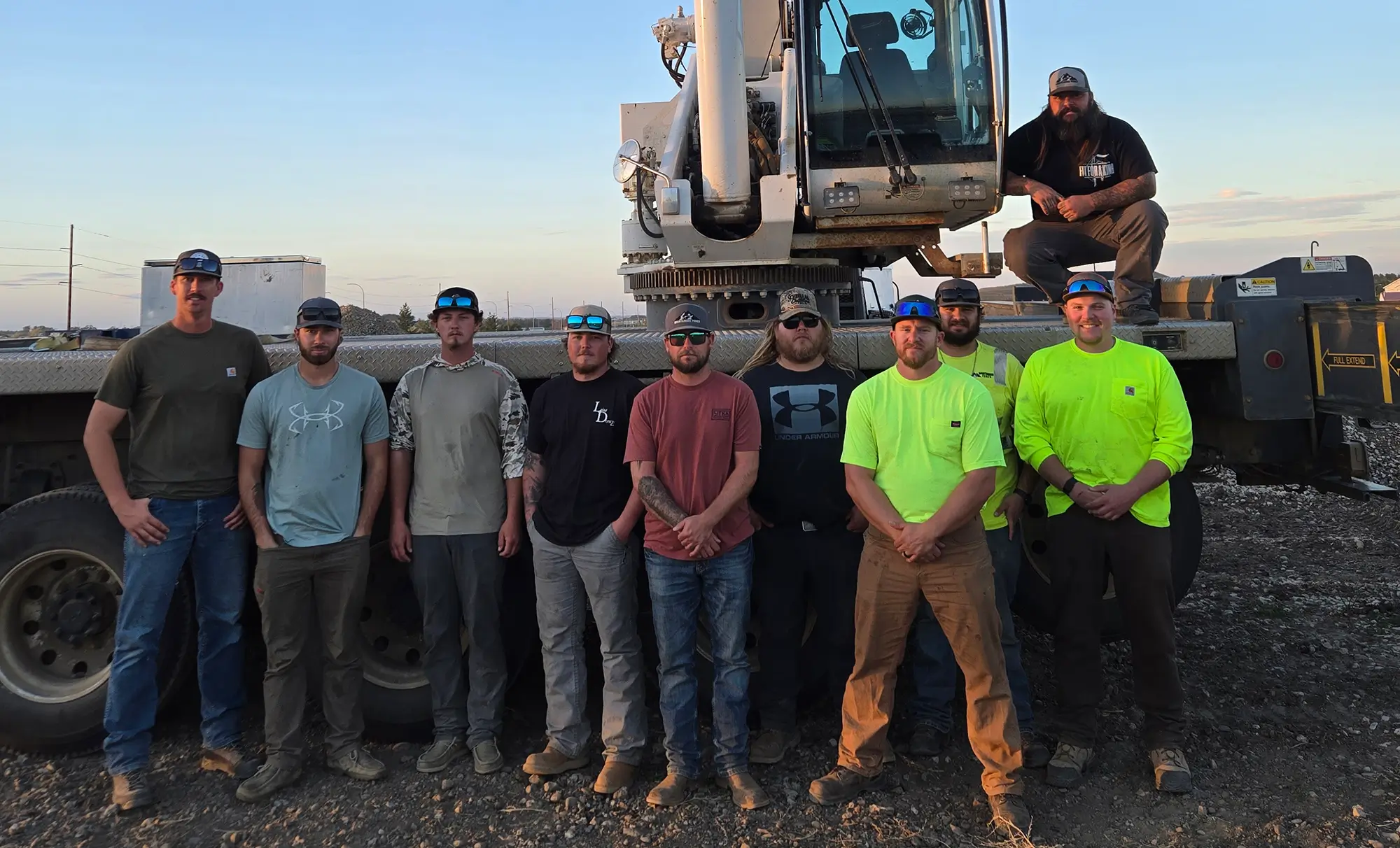
On-Site Training
On‑site training is designed for companies that have the facilities and equipment available at their own location and prefer to keep their employees onsite for logistical or operational reasons. All on‑site training requires the company to provide the crane or equipment that will be used during the training and evaluations.
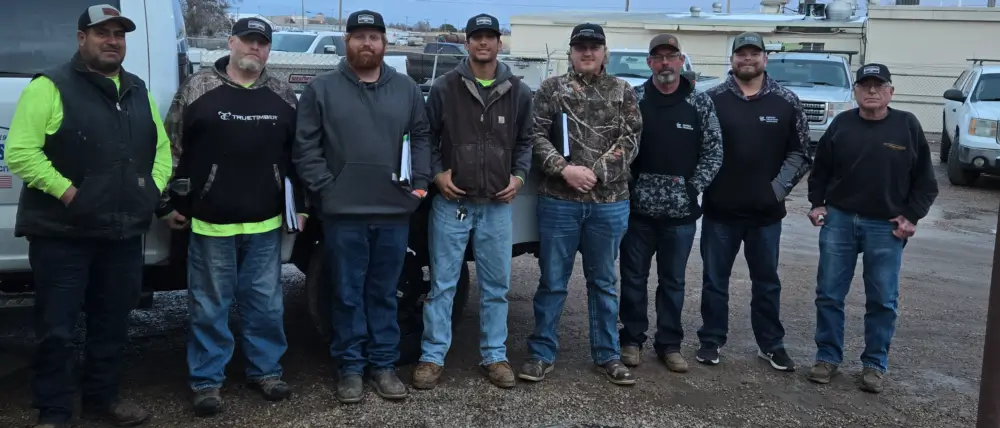
Off-Site Training
Off‑site training is intended for customers who do not have the facilities or space to conduct training at their own location. Paradise Crane Consultants will arrange a suitable rented facility; however, the company must still provide the crane or equipment needed for the training and evaluations.
Local permitting and municipal requirements
Boise does not license crane operators, and the City is not the main permitting agency for its streets. ACHD issues right-of-way permits for public streets in Boise under Section 6000 of its policy manual. Its definition of encroachment includes placing equipment in or over the right-of-way, so a crane set on a street, sidewalk or shoulder needs a Temporary Highway Use permit.
The general contractor must obtain the permit in its own name and name a job superintendent. ACHD does not issue permits to subcontractors, so a crane company working under a GC cannot pull its own. Listed fees are $85 a day on arterials, $60 on collectors and $30 on local streets. ACHD decides within five working days, and full closures need written approval and a closure sign posted seven days ahead.
Expect to keep lanes open 7–9 a.m. and 4–6 p.m. on weekdays on arterials and collectors. The permit requires $500,000 per occurrence in public liability with ACHD named as co-insured, a surety bond of at least $25,000, and a traffic control plan filed with the application, prepared to MUTCD Part 6 by a project engineer or a person with current traffic control certification.
Two City permits can apply on top: a Parks Construction Use License ($40) to stage on or cross park property, and downtown meter reservations at $17 per space per day. State highways go through ITD.
Local industry and employment
Ada County carried 294,260 covered jobs in 2025, at an average annual wage of $73,633. Construction accounted for 24,094 of them. Manufacturing was smaller, at 18,426, but paid an average of $147,436, about twice the county average.
Much of that premium traces to one project. Micron broke ground on its Boise memory fab in October 2023, with about $15 billion planned through the end of the decade and 600,000 square feet of cleanroom, which Micron describes as the largest single cleanroom in the U.S. The steel frame took about 70,000 tons of steel. The first fab reached cleanroom blowdown in spring 2026, and Micron expects first wafer output in mid-2027.
Blowdown marks the hand-off from erection to tool installation. The crane work does not end; it changes character. Steel picks are repetitive and planned in bulk. Tool sets are individual lifts of expensive, sensitive equipment into a finished building, each with its own rigging plan and its own signals.
Crews moving between those two phases need training that treats critical-lift planning as a skill to be qualified, not a document to be filed.
Why does Idaho's power-line clearance formula fall short of federal Table A?
Idaho wrote no crane standard of its own — federal OSHA enforces 29 CFR 1926 Subpart CC here directly, out of the Boise Area Office, and there is no OSHA-approved State Plan. What Idaho did write is a clearance formula, and the formula is the problem. Idaho Code 55-2402 requires ten feet from any high-voltage overhead line, meaning anything above 600 volts, rated 50 kV or less, and above 50 kV it adds four-tenths of an inch per kilovolt. A crew that works out 12 feet 11 inches for a 138 kV line has done real arithmetic and may reasonably believe it is covered. It is not. Federal Table A in 29 CFR 1926.1408 requires fifteen feet for any line above 50 kV up to 200 kV.
The shortfall is structural rather than accidental. Table A is a staircase: ten feet to 50 kV, fifteen to 200, twenty to 350, twenty-five to 500. Idaho's formula is a straight line drawn between those steps, so it meets the federal distance only at 50, 200, 350 and 500 kV and permits a shorter one at every voltage in between. The gap is widest just above each step. At 69 kV, a common transmission voltage, Idaho's formula allows ten feet eight inches where OSHA requires fifteen — a shortfall of more than four feet.
The second Idaho-specific fact is that the clearance you need may not be available at all. To work inside the statutory distance you must notify the utility in writing, and both parties must sign an agreement identifying the arrangements and the payment. The utility may charge its actual costs, may require payment in advance, and may refuse outright if it judges the work would jeopardize the performance, integrity, reliability or stability of its system or any system interconnected with it. No deadline binds it and nothing obliges it to say yes. The civil penalty for violating the statute is up to $500, which is trivial next to what sits behind it: if a violation causes contact with the line, the contractor is liable to the utility for all damage to its facilities and all costs and expenses it incurs, including damages the utility owes to third parties.
Idaho Code 55-2401 to 55-2405; 29 CFR 1926 Subpart CC
Is NCCER certification enough on its own?
NCCER certification is the foundation for crane work in Idaho, and because the state issues no crane operator license, there is no second state credential to earn. No crane or hoisting credential appears among the professions regulated by the Idaho Division of Occupational and Professional Licenses.
What applies is the federal rule. Under 29 CFR 1926.1427, an operator must be certified for the type of equipment being operated by an accredited crane operator testing organization, that certification is valid for no more than five years, and subsection (c)(3) requires the employer to provide it at no cost to the employee. The employer must then evaluate each operator on the specific equipment and configuration they will run and document it — the operator's name, the evaluator's name and signature, the date, and the make, model and configuration — and keep that record available at the worksite. A certificate alone does not make an operator qualified.
What Idaho adds is a training obligation that is practical rather than credential-based. Operators and signal persons here have to carry two sets of clearance numbers: the state formula, which governs when the utility must be notified and when liability attaches, and federal Table A, which governs the distance you actually hold. Confusing the two is how a crew ends up compliant with the statute and cited by OSHA on the same lift.
What does the workplace safety data show?
Idaho recorded 45 fatal work injuries in 2024, down from 48 the year before, according to the Census of Fatal Occupational Injuries published by the Idaho Department of Labor with the U.S. Bureau of Labor Statistics.
Construction accounted for 18 of them, a private-industry count measured against a statewide total that covers all ownerships, against 6 the year before. In a single year construction went from roughly an eighth of Idaho's workplace deaths to 40 percent of a smaller total.
A single year does not make a trend, and counts this small move sharply on a handful of incidents. It is still a shift worth knowing about before planning work here, and it is the steepest one-year change in any state we train in.
These are statewide figures covering all industries, not crane-specific data.
What should you verify before your next lift?
Before your next covered lift in Idaho, work through these in order:
- Determine whether any part of the equipment, load line or load could get within twenty feet of an overhead line. That is the federal trigger under 29 CFR 1926.1408, and it applies at any voltage.
- Get the line's voltage from the utility, then compute both numbers: Idaho's statutory formula and federal Table A. Hold the larger. Between 50 and 200 kV that will almost always be Table A's fifteen feet.
- If work must go inside the state clearance, send written notice and get the written agreement signed before anyone mobilizes. Assume you are paying the utility's actual costs, possibly in advance, and assume the request can be refused.
- Confirm each operator holds a current certification for the type of equipment being operated, within its five-year validity, from an accredited testing organization.
- Confirm the documented employer evaluation for that operator on that specific equipment is available at the worksite.
- Confirm the annual inspection by a qualified person is within twelve months and that monthly inspection records cover the last three months. Equipment idle three months or more needs inspection before use.
Upcoming certification and training sessions dates
Questions
Who pulls the right-of-way permit for a crane in Boise?
The general contractor. ACHD issues Temporary Highway Use permits in the contractor's own name, with a named job superintendent, and does not issue them to subcontractors. If your crane company works under a GC, the GC files.
Can a crane close a lane during rush hour in Boise?
Not on ACHD arterials and collectors as a rule. The policy manual restricts lane closures from 7 to 9 a.m. and 4 to 6 p.m. on weekdays, and lanes must reopen if work stops for more than four hours. Plan lifts around those windows.
Ready to schedule training in Boise?
Request on-site crane training in Boise, built around your crew, your equipment and your site.