Crane Operator Certification & Training in Baton Rouge, LA
Paradise Crane has trained crane operators since 1996, for clients including the U.S. Department of Energy, Sandia National Laboratories and Los Alamos National Laboratory. We're based in Albuquerque and bring NCCER crane and rigging training to your crew, on the equipment you actually run. Individual operators can prepare for NCCER certification in our open-enrollment classes in Albuquerque.
Paradise Crane also brings that training to Baton Rouge. Our instructors come to your facility or job site and build the course around your organization: your crew, your cranes and the lifts you actually make.
Before we train a crew in Baton Rouge, we look at the city's own rules for crane work: its codes, its right-of-way permits and the conditions they put on a lift. This page covers the Street Closure Permit Baton Rouge requires for a crane lift in City-Parish right-of-way, the lead times and insurance paperwork, and what heavy bridge work means for how your lifting crews are qualified.

Training Services Offered in Baton Rouge
Based in Albuquerque, our instructors travel to you. Train at your own facility, or we'll arrange a rented site nearby. Either way, your crew trains on the crane they actually run.
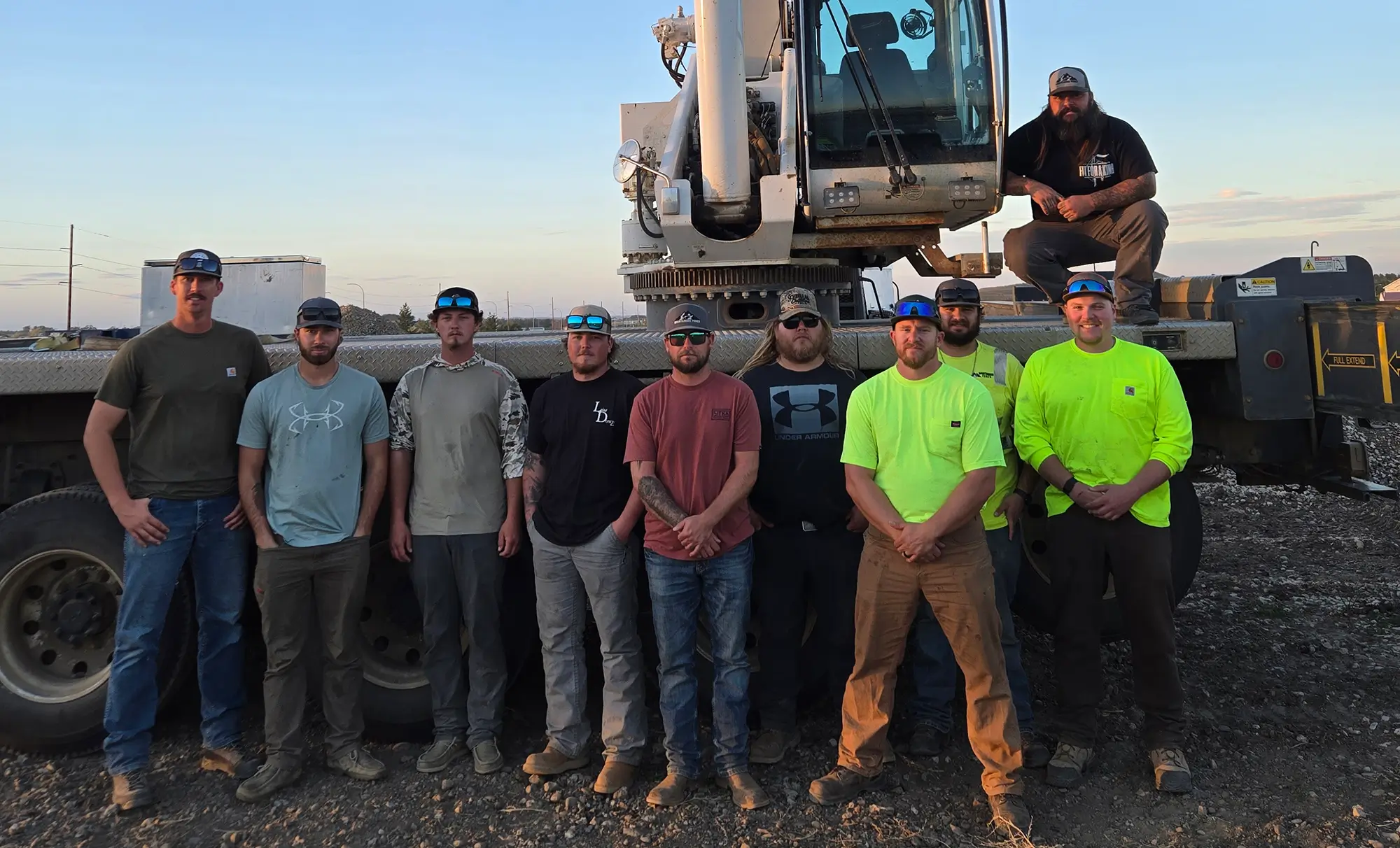
On-Site Training
On‑site training is designed for companies that have the facilities and equipment available at their own location and prefer to keep their employees onsite for logistical or operational reasons. All on‑site training requires the company to provide the crane or equipment that will be used during the training and evaluations.
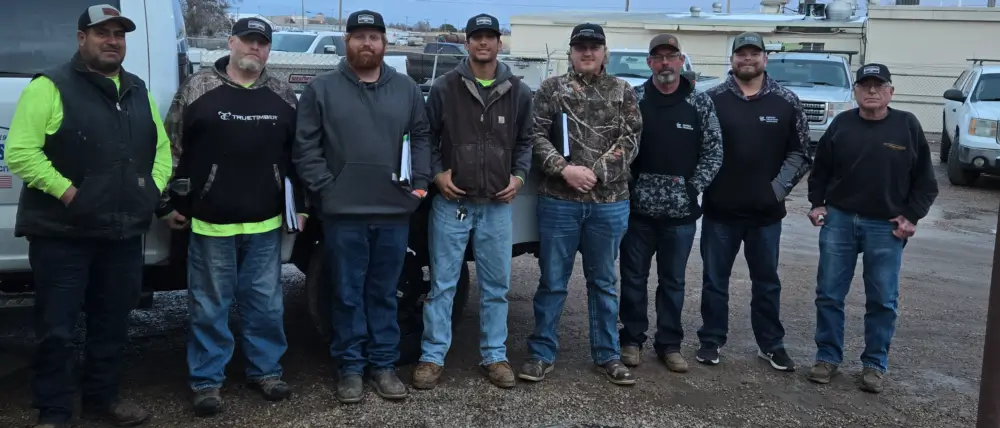
Off-Site Training
Off‑site training is intended for customers who do not have the facilities or space to conduct training at their own location. Paradise Crane Consultants will arrange a suitable rented facility; however, the company must still provide the crane or equipment needed for the training and evaluations.
Local permitting and municipal requirements
A crane lift in City-Parish right-of-way requires a Street Closure Permit for the area the lift occupies. It is a closure requirement, not a permit to operate a crane. Meet all its requirements, including a petition from directly affected residents and a map or sketch. Work-related road or lane closures also use a Construction Permit from the Traffic Engineering Division, Department of Transportation and Drainage.
Provide the indemnification agreement and proof of insurance at least 30 days before the lift. Submit the traffic control plan to Traffic Engineering at least 7 days before. The permit holder furnishes, installs and removes barricades and devices as Traffic Engineering and/or law enforcement direct. Construction closures must be signed per the MUTCD. A closure involving a state highway needs permission from Louisiana DOTD and Louisiana State Police Troop A.
The $1 million per incident limit (minimum two incidents' coverage) is stated on the Street Closure Permits page for block party, neighborhood party and parade permits. Confirm with the city what limit applies to your lift, which permit governs, the fee, the code section, closure hours and flagger or pedestrian requirements.
Local industry and employment
East Baton Rouge Parish carries 270,640 covered jobs at an average annual pay of $67,999 (BLS QCEW, 2025 annual average, county level). Private construction accounts for 25,575 of them, 9.4%, at $96,879.
In a Winter 2025 account of its Louisiana DOTD I-10/I-12 College Drive project, Boh Bros. described a complex rigging design to lift and place an approximately 120-foot rebar cage into a drilled shaft. It also used self-propelled modular transporters to move and set a bridge girder frame of roughly 450,000 pounds. The company reports delivery by May 2025.
Other work: The Newtron Group announced groundbreaking on October 22, 2024 for a 62,000-square-foot campus at 13926 Airline Highway, with Buquet & LeBlanc as general contractor. The City-Parish announced the Fraternity Street Bridge replacement complete on April 3, 2024.
Bridge-scale work puts every role on the lift under load. Qualify the whole crew, not one seat.
Does Louisiana have its own crane rules, or does federal OSHA apply directly?
Louisiana is not an OSHA-approved State Plan, so federal OSHA enforces workplace safety for most private-sector workers in the state. The federal OSHA Baton Rouge Area Office serves Louisiana. State and local government workers are not covered by federal OSHA. The governing standard for cranes in construction is 29 CFR Part 1926, Subpart CC, which covers §§ 1926.1400–1926.1443, subject to its scope and exclusions. Louisiana has no State Plan adoption-by-reference rule; federal OSHA applies the federal standard itself.
Louisiana does have a separate statute, R.S. 40:1681, "Placing of hoisting apparatus; floor re-enforcement." It addresses the placement of hoisting machines or engines used in building construction, support for equipment placed above ground level, and protection of public streets or alleys from hoisted construction materials. It is a Louisiana statute, not a state adoption or amendment of Subpart CC.
29 CFR Part 1926, Subpart CC (§§ 1926.1400–1926.1443); 29 CFR 1926.1427; Louisiana R.S. 40:1681
Is NCCER certification enough on its own?
Louisiana's approach to operator qualification runs through the federal baseline. 29 CFR 1926.1427 requires the employer to ensure covered operators are trained, certified or licensed, and evaluated before operating covered equipment, subject to listed exceptions. If no qualifying government license applies, the rule allows certification through an accredited crane operator testing organization or an audited employer program. The rule does not name a particular certifying organization. For any Louisiana state or local licensing, certification or experience requirement beyond the federal baseline, confirm with the federal OSHA Baton Rouge Area Office.
Under the federal baseline, certification is valid for five years and the employer pays for it. It does not finish the job: before an operator runs a crane unsupervised, the employer must evaluate the operator on the assigned equipment and document it.
What does the workplace safety data show?
The U.S. Bureau of Labor Statistics Census of Fatal Occupational Injuries puts Louisiana's fatal work injury rate at 5.1 per 100,000 full-time-equivalent workers in 2024, down from 5.6 in 2023. These figures cover all industries, not cranes specifically.
Because federal OSHA enforces crane work in Louisiana, the Baton Rouge Area Office is the enforcement contact for private-sector employers and workers: 9100 Bluebonnet Centre Blvd, Suite 201, Baton Rouge, LA 70809; (225) 298-5458.
Louisiana's OSHA-listed 21(d) On-Site Consultation Program is administered by the Louisiana Department of Labor / Louisiana Workforce Commission. It is a consultation resource, not the OSHA enforcement office.
What should you verify before your next lift?
Before your next covered lift in Louisiana, work through these checks:
- Confirm jurisdiction first. Federal OSHA covers most private-sector workers in Louisiana, but state and local government workers are not covered by federal OSHA.
- Confirm the equipment and work fall within the scope and exclusions of 29 CFR 1926 Subpart CC.
- If the work involves hoisting machines in building construction, review Louisiana R.S. 40:1681 on placement, support above ground level and protection of public streets or alleys.
- Confirm each operator's certification is current and that the documented employer evaluation for that specific equipment is available at the worksite.
- Confirm with the federal OSHA Baton Rouge Area Office, (225) 298-5458, whether any local or other requirement applies to your job.
- Use the Louisiana Department of Labor / Louisiana Workforce Commission 21(d) On-Site Consultation Program for compliance assistance, not as the enforcement office.
Upcoming certification and training sessions dates
Questions
Which Baton Rouge permit covers a crane lift in the street?
A Street Closure Permit for the area the lift occupies, according to the City-Parish crane-lifts page. Work-related road or lane closures also use a Construction Permit issued by Traffic Engineering. Confirm with the city which one applies to your lift.
How far ahead do I submit paperwork for a crane lift in Baton Rouge?
Provide the indemnification agreement and proof of insurance at least 30 days before the lift. Submit the traffic control plan to Traffic Engineering at least seven days before the lift. Both are stated requirements.
How do I set up on-site crane training for my crew?
Request a quote with your crew size, location and the equipment you run. Our instructors travel to your facility, and your company provides the crane or equipment used for training and evaluations.
What if we don't have a place to train?
We'll arrange a suitable rented facility near you. Your company still provides the crane or equipment used for training and evaluations.
How far ahead should we book training?
About a month ahead is best. If you need training sooner, call us. Shorter timelines are sometimes possible.
How is crane training priced?
Each job is quoted on crew size, location, equipment and travel.
Can operators get certified online?
No. Certification requires a hands-on practical exam on real equipment, so it can't be earned through online training. That's why we train at your site, on the equipment your crew actually runs.
Can an individual operator train without an employer?
Yes. Open-enrollment classes in Albuquerque prepare individual operators for NCCER certification.
Ready to schedule training in Baton Rouge?
Request on-site crane training in Baton Rouge, built around your crew, your equipment and your site.