.webp)
Ask most people what OSHA requires for forklift operators, and you'll get the same answer: they need a forklift certification. The problem is that the answer isn't entirely accurate.
After years of providing equipment training, qualifications, inspections, and accident investigations, one of the biggest misconceptions I see employers carry is confusing certification with qualification. The two terms get used interchangeably, but they don't mean the same thing from a compliance standpoint. More importantly, many employers focus on obtaining a card and completely overlook the reason OSHA created these requirements in the first place: preventing serious injuries and fatalities.
Forklifts may look simple to operate. That simplicity is exactly what makes them dangerous.
The most common mistake I see is employers assuming that because someone can get on a forklift and make it move, they know how to operate it safely. That's not true.
Forklifts are relatively easy to learn. Within a short time, most people can drive forward and backward, raise the forks, and move material around a warehouse. But being able to operate a forklift and being competent to operate one are two very different things. Competency comes from proper training, practical experience, safe operating habits, an understanding of the equipment's limitations, and the ability to recognize hazards before they become incidents.
We continue to see accidents caused by operators who were never properly trained or evaluated — some resulting in serious injuries and fatalities that were entirely preventable.
At its core, OSHA requires forklift operators to be qualified to operate the equipment safely. That means employers must ensure operators have received training and demonstrated they can safely operate the specific type of forklift they'll be using. Training must include both formal instruction and practical hands-on evaluation.
Previous experience isn't a substitute. Even if an employee has operated forklifts for years, employers should still verify competency and maintain documentation showing that an evaluation occurred. As I tell customers regularly, training with no record is essentially the same as no training at all. If OSHA asks for proof and you have nothing, it becomes very difficult to demonstrate the training ever happened.
This is where many companies fall short. Employers should be keeping training records, written exam results, practical evaluation records, sign-in sheets, qualification records, and refresher training documentation. Good records don't just demonstrate compliance—they show that the company took reasonable steps to ensure operator competency, which matters significantly if something ever goes wrong.
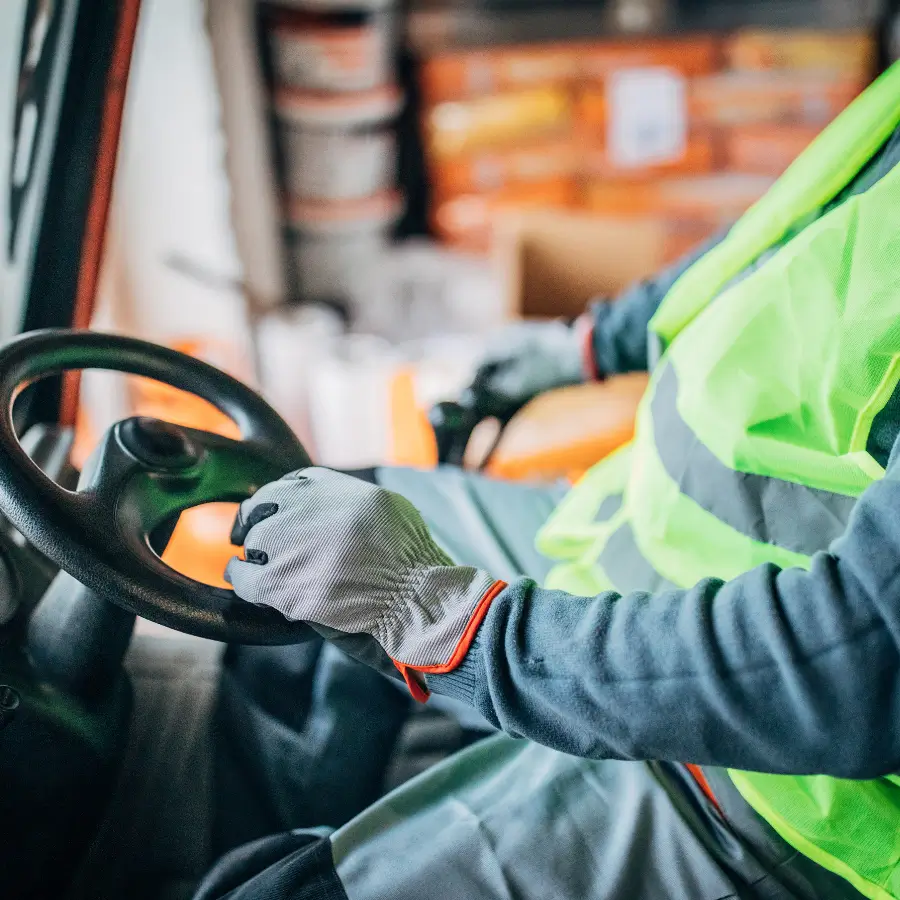
OSHA requires operators to be evaluated at least once every three years. But that's the minimum standard, not the goal. Depending on your operation, waiting the full three years may not always be appropriate. Additional training or re-evaluation should happen when an operator is observed working unsafely, after any accident or near miss, when workplace conditions change, when a different type of forklift is introduced, or when an operator is showing poor judgment in the field. If someone is driving erratically, traveling with elevated forks, speeding, or ignoring safety procedures, don't wait for the calendar to tell you to act.
Through inspections, qualifications, and accident investigations, the same problems appear repeatedly.
Not wearing seatbelts is one of the most dangerous. Many operators assume they can jump clear if a forklift tips—in reality, that instinct is often what gets people killed. When a forklift overturns, operators without seatbelts can be thrown from the compartment and crushed. We've been involved in multiple incidents where seatbelt use would have reduced the severity of injuries or prevented fatalities entirely.
Driving too fast is another consistent problem. Operators grow comfortable with equipment and start pushing the pace. Forklifts have a high center of gravity and become unstable in turns, on uneven surfaces, or when carrying loads. Speed removes the margin for error.
Traveling with forks elevated is a violation we see regularly. Forks should be kept low while moving. Elevated forks affect stability, reduce visibility, and increase the risk of load shift or striking objects.
Skipping or rushing through inspections may be the most overlooked issue of all. Many of the forklifts we inspected have obvious problems that should have been caught long before we arrived.
When operators treat inspections as paperwork exercises rather than safety tools, serious conditions go unnoticed—and sometimes those conditions become fatal.
One investigation stands out. A forklift had severely worn wear pads that had exceeded the manufacturer's replacement criteria. The condition either wasn't identified during inspections or was ignored. When the operator placed the forklift in reverse to reposition it, the excessive wear allowed movement in the boom assembly that caused the load — an engine block on a wooden pallet — to shift unexpectedly. It fell and struck a worker, who did not survive.
When the investigation was complete, two things were clear. Proper inspections likely would have caught the worn components before the lift ever happened. And proper training would have helped operators and supervisors recognize how serious that condition was. This wasn't an unusual mechanical failure or a complicated sequence of events. It was basic inspection and maintenance practices not being followed. And someone lost their life because of it.
Just because someone tells you they can operate a forklift doesn't mean they're competent to operate one. Verify it. Provide proper training. Document it. Evaluate their performance. Keep monitoring them after they start.
Forklifts are easy to learn and unforgiving when operated incorrectly. At the end of the day, OSHA's requirements aren't really about paperwork or credentials — they're about making sure every operator goes home at the end of the shift. That's worth taking seriously.