Paradise Crane has trained crane operators since 1996, for clients including the U.S. Department of Energy, Sandia National Laboratories and Los Alamos National Laboratory. We're based in Albuquerque and bring NCCER crane and rigging training to your crew, on the equipment you actually run. Individual operators can prepare for NCCER certification in our open-enrollment classes in Albuquerque.
Oklahoma runs its crane work under the federal rulebook. The state is not an OSHA-approved State Plan, so federal OSHA covers most private-sector employers and workers, and 29 CFR 1926 Subpart CC applies directly to private construction crane work. Oklahoma's own program covers only state and local government workplaces.
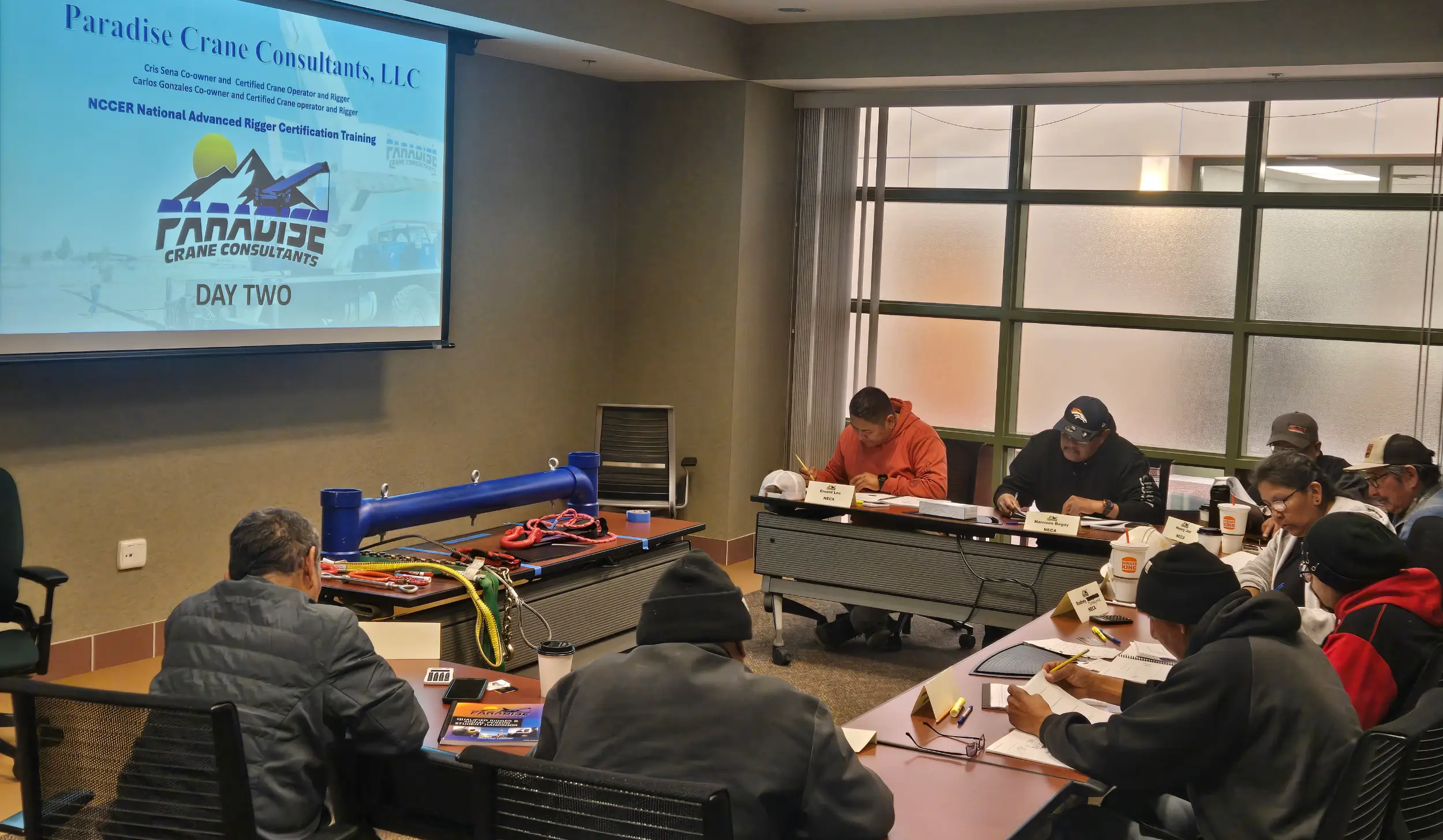
Individual operators can prepare for NCCER certification in open-enrollment classes in Albuquerque. For crews, Paradise Crane travels to your Oklahoma facility or job site and trains on the equipment you actually run.
Oklahoma does not run its own OSHA-approved State Plan, and that is the key difference. Federal OSHA covers most private-sector workers in the state, including construction, so the federal crane rule, 29 CFR Part 1926, Subpart CC (Cranes and Derricks in Construction), applies directly to private-sector crane work. The OSHA Oklahoma City Area Office is the federal office listed for Oklahoma private-sector employers and workers.
Oklahoma's separate program covers the public sector. The Oklahoma Department of Labor's Public Employees Occupational Safety and Health (PEOSH) Division administers it, and OAC 380:40-1-2(a) adopts 29 CFR Part 1926, including Subpart CC, by incorporation as currently published and as later revised. The text of that rule does not state crane-specific changes to Subpart CC; its listed exceptions address other matters, including certain definitions and general-industry provisions.

Oklahoma's adoption rule does not state a crane-specific operator evaluation requirement beyond the federal one. Oklahoma's own training mandate is general: under 40 O.S. § 403(E)(2), covered public employers with 25 or more full- or part-time employees must provide safety classes to each type or class of employee no less than quarterly. That is a general safety-class requirement, not a crane operator credential. Confirm with the Oklahoma Department of Labor whether any state crane operator license or registration applies to your work.
The federal baseline governs operators. Under 29 CFR 1926.1427, operators must be certified by an accredited testing organization or an audited employer program. Certification is valid for five years, and the employer pays for it. The federal rule also names accreditation by a nationally recognized accrediting agency as part of the testing-organization option. Confirm which certifications your employer's program accepts. Before an operator runs covered equipment unsupervised, the employer must evaluate the operator on the assigned equipment and document it. The rule lists exceptions for derricks, sideboom cranes, and equipment rated at 2,000 pounds or less.
The U.S. Bureau of Labor Statistics Census of Fatal Occupational Injuries (CFOI) reports 73 fatal work injuries in Oklahoma in 2024.
Transportation incidents accounted for 35 of those deaths and falls, slips and trips for 13.
These figures cover all industries, not cranes specifically.
Paradise Crane delivers certification preparation and safety training tailored to your equipment type, crew size, and project needs.
Prepare your crew for nationally recognized certification exams with classroom and hands-on instruction.
Develop rigging skills and communication protocols essential for safe lift operations on your jobsite.
Train supervisors and coordinators to manage complex lift operations and equipment setup safely.
Meet OSHA requirements with qualified person training in fall protection systems and hazard recognition.
Ensure your team understands hazards and entry procedures for confined spaces and excavation work.
Train crane inspectors to identify defects and verify safe operating conditions for overhead crane equipment and related systems.
Paradise Crane has trained crane and heavy equipment operators since 1996, including work with the U.S. Department of Energy, Sandia National Laboratories, and Los Alamos National Laboratory.
Select a city below to learn more about on-site crane training and certification availability in your area.
Before your next covered lift in Oklahoma, work through these checks:
Common questions about setting up crane training with Paradise Crane.
Yes. Paradise Crane delivers on-site training anywhere in the state. We coordinate scheduling and logistics around your crew's location and availability.
That's our standard approach. We bring classroom and hands-on instruction to your jobsite, yard, or facility to minimize downtime and travel.
Paradise Crane recommends scheduling four to six weeks in advance. This allows time to coordinate travel, prepare materials, and align with your crew’s availability. Paradise Crane can in some cases accommodate classes booked as late as 7 days in advance, as long as our teaching schedule allows.
We provide certification preparation for NCCER and support training for crane operators, riggers, signalpersons, and lift directors. Paradise Crane also offers OSHA qualification classes and specialized safety training, including fall protection and confined space training.
Request on-site crane certification preparation and operator training tailored to your crew, equipment, and location anywhere in Oklahoma.